We sent the following statement yesterday, January 3, 2026, to Spiegel, taz, RBB24, RBB Fernsehen, and Radio Eins. Due to political calculations, our statement has not been made public to this day, except for a brief broadcast at 5:30 a.m. on Radio Eins. Afterward, all quotes disappeared following our intervention. This is not in the interest of those politically responsible at Stromnetz Berlin, the city of Berlin, the business community, the police, and other political forces. The media outlets contacted are acting accordingly to prevent any substantive discussion.
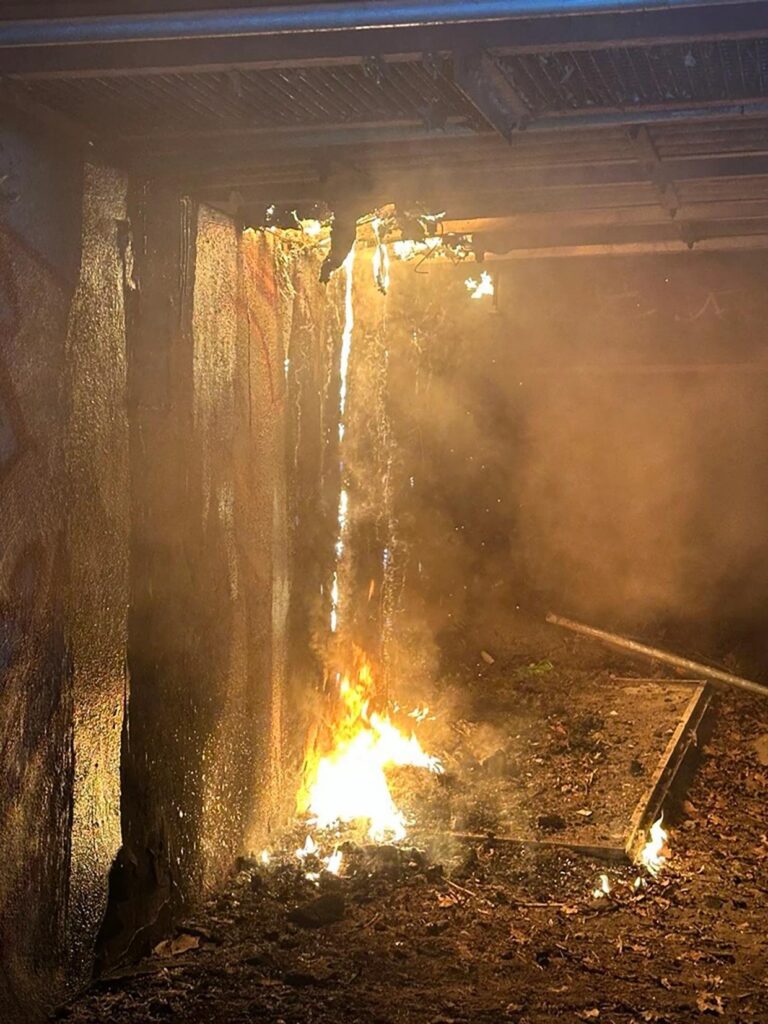
Stromnetz Berlin initially downplayed the damage caused by the fire at the cable bridge. While Stromnetz Berlin was likely able to compensate for the sabotage of the power plant in approximately 50,000 households by purchasing expensive electricity, the question of why this was not possible for approximately 40,000 households in Nikolassee, Wannsee, Zehlendorf, and parts of Lichterfelde is something Stromnetz owes the public an answer for. The ball is now in Stromnetz Berlin’s court.
We would like to express our sincere apologies once again for the inconvenience caused to the less affluent, more vulnerable members of the population. They were not the intended target of this action. We ask the public for mutual aid and solidarity. In particular, we request assistance for those requiring care and their families, the destitute residents of these neighborhoods, people who are isolated and those overwhelmed by the situation.
As already mentioned, our sympathy for the owners of the many villas, the real estate companies, the embassies, and other elite wealthy individuals in the area is limited. The rich and their self-centered, antisocial lifestyle are currently destroying the planet.
The sabotage of the gas-fired power plant is, among other things, a necessary measure against the expansion of fossil gas power plants in Germany. In our statement, we outline the connections between wealth, an imperial life-mode, and the destruction of our livelihoods, which we all must oppose.
We ask the residents of Bremer Straße to maintain confidentiality. For further verification: There were approximately 64 pipes under the cable bridge, most of which were carrying high-voltage cables. We connected these with four construction stakes to ensure a short circuit.
[beginning of original letter to media]
INTRODUCTION
Volcano Group: Cutting off the power of those in power
NEW YEAR’S GREETINGS 2026. HAVE COURAGE!
We can no longer afford the rich.
We can begin the end of the imperial life-mode.
We can stop the plundering of the earth.
In the greed for energy, the earth is being drained, sucked dry, burned, ravaged, razed, raped, and destroyed. Entire regions are rendered uninhabitable by the heat. They simply burn up. Or habitats disappear beneath the waves during floods or due to rising sea levels. Shutting down fossil fuel power plants is DIY. Have courage. We know we must stop this destruction. We know we are not alone. Don’t give up hope for a world with space for life, instead of greed for money, power, and destruction. Last night, we successfully sabotaged the gas-fired power plant in Berlin-Lichterfelde. This caused power outages in the wealthier districts of Wannsee, Zehlendorf, and Nikolassee. Power outages were not the goal of the action; the fossil fuel industry was. We apologize to the less affluent people in southwest Berlin. Our sympathy for the many villa owners in these districts is limited. We explain why in our post below. Our action for the public good is socially beneficial. We also address this issue in more detail in our letter regarding the action.
The attack on the gas-fired power plant is an act of self-defense and international solidarity with all those who protect the earth and life. The infrastructure that serves the “technological assault” and promotes the destruction of the earth can be sabotaged. Fossil fuel energy production can be stopped. Smart city metropolises, like Berlin, can be prevented. Stromnetz Berlin, a building block of this catastrophic vision of a smart city, has been hit.
For us, it goes without saying that we ruled out any risk to human life at all times.
Our detailed explanation is attached.
NEW YEAR’S GREETINGS 2026. HAVE COURAGE!
Greed for power, greed for energy, greed for destruction.
In the greed for energy, the earth is being drained, sucked dry, burned, ravaged, razed, raped, and destroyed. Entire regions are rendered uninhabitable by the heat. They simply burn up. Or habitats disappear beneath the waves during floods or due to rising sea levels. Several thousand inhabitants of Tuvalu in the Pacific are already seeking refuge in Australia.
Last year, the CO₂ concentration in the atmosphere rose to 423.9 parts carbon dioxide per million, a value that surpasses all previous records. At the same time, climate scientists agree that the massive transatlantic ocean currents will collapse sooner or later due to global warming. This collapse of the ocean currents, which has so far afforded the North a mild climate, is only one part of the catastrophe that awaits us. The extent of this devastation is simply ignored, abstracted, and discussed at global climate conferences until the scale of the destruction disappears into tables and declarations of intent.
But the hunger for energy is insatiable, devouring the earth’s crust and our lives, among other things, to feed artificial intelligence, which then spouts stereotypes and absurdities, confusing, disorienting, and/or manipulating us. Meanwhile, language, expression, and vitality are increasingly reduced, mutilated, and limited with each new “training” of the AI on previous data.
We feed our data to the so-called “clouds,” which are nothing more than gigantic, energy-guzzling data centers and server farms. These also consume our drinking water and churn out numbers that bombard our screens with useless, supposedly important spam until we’ve forgotten how to look our neighbor in the eye. Having become dependent on these small devices, we’re always ready to send an emoji and feed “Big Brother,” whose algorithm registers our deviations from the norm and answers our search queries before we’ve even finished thinking. We sit among our friends while the feeds devour us, sinking into our devices instead of having real conversations. We’re managing our own surveillance, and it’s totalized. [The tech companies are in the hands of the powerful men we give them[. We consume the colorful images that the machines filter and serve up to us, starving from loneliness and alienation in front of our screens. We are becoming ‘swiping zombies,’ knocking each other over in traffic. We are prisoners in a digital system that, increasingly, deprives us of our right to exist unless we submit to its rules and relocate our lives to social media, chat, and artificial realities. We can’t receive money, book tickets or buy anything with cash. Without access to the digital world, we are increasingly excluded, losing touch with what seems normal. We fear what will happen to us, and instead of switching off our devices and removing the power of those who track, monitor, observe, and manipulate us, we bury ourselves even deeper in our screens. We are blinding ourselves to the knowledge for the dissemination of which Edward Snowden risked his life. We are turning a deaf ear to the cries of Indigenous peoples and farmers who see the planet’s life support system burning before their very eyes. On the contrary, with every post we feed the fire that is encircling us and driving temperatures to new record highs every year. One day we will simply sit in front of glowing screens or inert devices, dying of thirst and hunger. It’s no longer hard to imagine. Continue reading “Berlin, Germany: Volcano Group – Shutting down fossil-fuel power plants is DIY. Have courage!”