
Skip to content

Dark Nights

For Mutual Aid & Solidarity

  • Contact
  • Distro
  • Direct Action
  • PGP Key
  • Financial Solidarity

Tag: JURNAL ANARKI

Chile: Interview with Synthesis anarchists Boina Anarquista

Posted on 2025/02/16 - 2025/02/17 by darknights

Chile: Interview with synthesis anarchists Boina Anarquista

Interview between synthesis anarchists Boina Anarquista in Chile and JURNAL ANARKI in Indonesia.

1. What motivates you to create this counter-information newspaper?

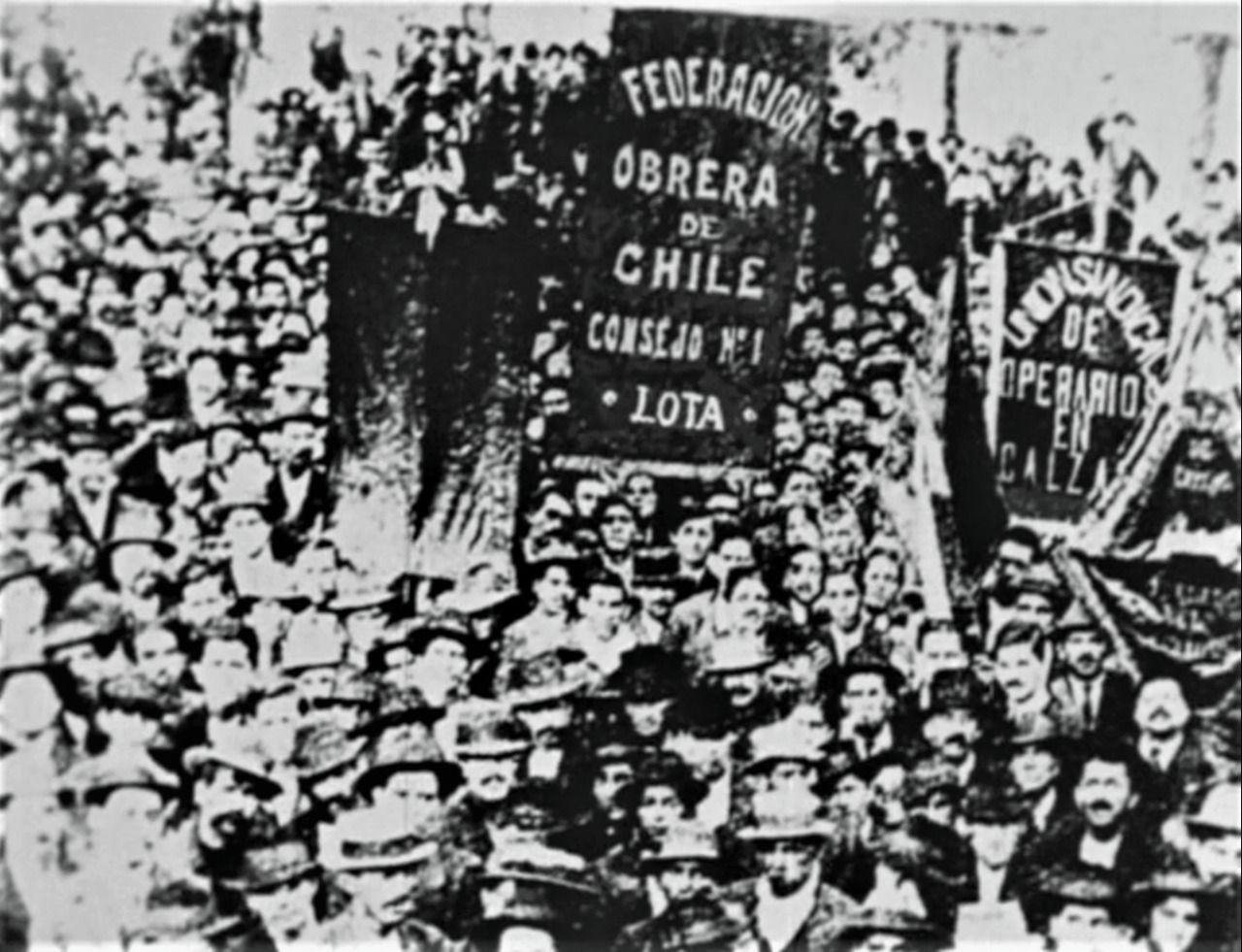
A: Hello, good day. Well, the platform began as a newspaper, edited precariously with Word. What motivated us was that nearly 11 years ago, in 2013, when the waves of the student movement in Chile were still present, we started researching and came across a book about anarchist propaganda in Chile. We were amazed by how much of it existed in the 1920s.

Around that time, there were other physical-format newspapers: El Surco (2009-2013), El Amanecer (from Chillán, in central-southern Chile) (2011-2013), El Sol Ácrata (from Calama, northern Chile; 2011-2024), Acracia (from Valdivia, far south of Chile; 2012-2019) and Solidaridad, a Libertarian-Communist newspaper, aligned with the branch closest to especifismo or platformism (2010-2016).

It was within this context that we decided to found a newspaper called Periódico La Boina (2014), which only released 7 issues. Financial problems, time constraints, and lack of coordination led to its discontinuation, but we noticed that the website’s visits kept growing, reaching over 100,000 per year.

The need to communicate, reflect, critique, share, and discuss with other comrades enriches our ideas and fosters camaraderie, especially through printed propaganda. What I see as a downside—and something we are also guilty of—is that there’s a lot of digital propaganda circulating on social media. While it’s positive to have more contact with comrades from other places, the information becomes more instantaneous, preventing deeper reflection. It also introduces anxiety over likes, making everything faster.

We believe it’s necessary to return to printed propaganda without neglecting the digital. It’s essential to discuss and reflect as the anarchists of the past used to do.

2. In our informal conversation, you mentioned your involvement in a historical archive project. Could you tell us more about it?

A: Yes, I am currently part of a group called Archivo Histórico La Revuelta, which has existed since 2009. The mission of the archive is to preserve the memory of anarchist history. Archivo La Revuelta publishes a magazine called Acontratiempo, where we present research by comrades on the history of anarchism in Chile and elsewhere.

The issue is that, according to some historians, anarchism arrived in Chile in the 1890s and lasted until 1930, when the last mass anarchist unions existed (of course, there were experiences in the 1950s and 1960s, and we have found active comrades in the 1970s, but they are marginal compared to Marxist groups). After that period, anarchism experienced a revival, gradually growing with counterculture and punk in the 1990s. So the archive has the mission of preserving anarchist memory in this region, both from the 20th century and from the late 1990s and early 2000s. There are many struggles led by younger comrades, as young as 16 years old, who may not be as familiar with the struggles fought in the early 2000s, for example.

That’s why the archive doesn’t just focus on the history of anarchism from 100 years ago but also on the present. We aim to collect and reconstruct the history of anarchism from the 1990s, when there were many zines and the first newspapers, to understand what interested comrades of those years and to share those struggles and discussions with younger comrades so they can learn about the efforts and ideas of those who came before them.

On the other hand, anarchist research has emerged in recent years. Its main historians might include Eduardo Godoy, Manuel Lagos, or study groups like the Grupo de Estudio José Domingo Gómez Rojas, which has the Editorial Eleuterio.

Currently, the archive operates in a physical space called Casa Anarquista La Termita, which is shared with other anarchist projects. Also, with comrades dedicated to research, we are also organizing the IV Congress on Research about Anarchism(s) – Santiago – October 2025. The first Congress was held in Buenos Aires, Argentina (2016); its second edition was in Montevideo, Uruguay (2019), and São Paulo, Brazil (2022).
Continue reading “Chile: Interview with Synthesis anarchists Boina Anarquista” →
Posted in InterviewsTagged Anarcho-Nihilist, Archivo Histórico La Revuelta, Augusto Pinochet, Caso Bombas 2010, Chile, Coordinadora Arauco-Malleco (CAM), Frente Patriótico Manuel Rodríguez (FPMR), Individualist Anarchist, Indonesia, JURNAL ANARKI, Mapu-Lautaro, Mapuche, Mapuche National Liberation Movement, Mauricio Morales, Military Junta, Movimiento de Izquierda Revolucionaria (MIR), Periódico Anarquista La Boina, Resistencia Mapuche Malleco, Synthesis anarchism, Weichán Auka Mapu

Chile: Interview with the band La Lira Libertaria

Posted on 2025/02/16 - 2025/02/16 by darknights

Chile: Interview with the band La Lira Libertaria

Interview between the band La Lira Libertaria in Chile and JURNAL ANARKI in Indonesia.

1. What motivates you in creating this band? The song “Armate” feels like a homage to the memory of insurrectionary Mauricio Morales, how do you elaborate your music and band with anarchist revolt?

The band was formed to show political solidarity and fill the spaces that we frequented around 2009 and a little before: squat houses and social centers mainly. At first the Lira was a paper piece of popular poetry that we printed that year and that rescues the tradition of the popular poets of the late 19th century and early 20th century, but with anarchist content. The formation as a musical band began later around 2010 in the context of the “Bombs Case” and sought to contribute to the spaces that were hit. The song Ármate is undoubtedly a tribute to the comrade Mauricio Morales Duarte who fell in action on May 22, 2009. The lyrics are an adaptation of one of his poems, and the girl who sings it with us was his partner, which is little known. We wrote it for the second commemoration of his death, and we presented it at the now defunct “Cueto con Andes” social center, where Punky Mauri himself visited and contributed to. Some time later, comrade Luisa Toledo would make her words even more well-known: beautifully violent. Sometimes people confuse this and think that they are words from our dear grandmother Luisa, but she took them because it was her favorite song by the band. That way, the songs and its stories are directly related to our recent political processes, and to the revolt and resistance against the neoliberal model in Chile.

2. From our informal discussion in the past you hinted that most of you come from the specific tendency of combative anarchy, can you tell us more about this?

Yes, we all met at the time we were studying, around 2006 onwards, and we were part of the riots and street-based struggles, like so many young people in Santiago. That is why we lived through the processes of the student rebellions of those years and the protests for the release of political prisoners, environmental projects, the denunciation of capitalist democracy and the anarchist movement.

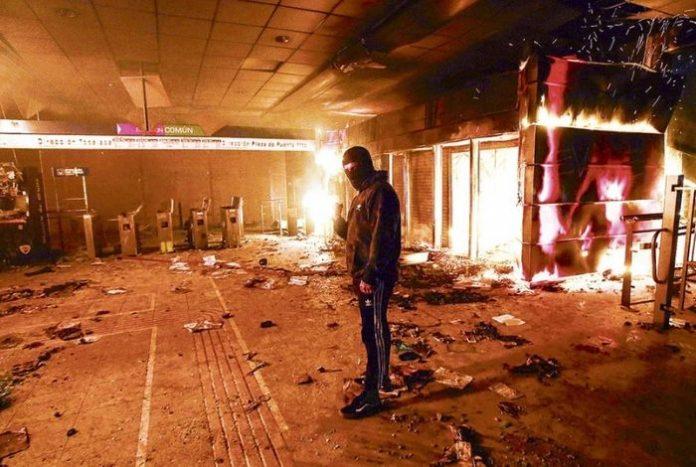
The insurrectional anarchist movement was constantly attacking the system in that decade and even later, when the band was already formed. That’s what our songs are about, that’s why in them there are stories of attack, escape, prison and joyful rebellion too. The band grew up with this marginal discourse, and with the October 2019 revolt it achieved greater notoriety, since it had been talking about the contradictions of the capitalist model for a long time.

3. People from non-latin speaking countries are amazed by the growing anarchist tension in Chile, especially the diverse anarchic movement, the regeneration of the youth, and the especially heavy repression that the anarchists faced amidst all of this yet still retain their combative and insurrectionary action – what’s really making all of this possible?

As I see it, the commitment to the struggle is explained since it is part of generations and generations of combatants, since the times of dictatorship (1973-1990) and even before. It is linked to our families, to our disappeared detainees, and to the indigenous culture itself, which tells us that the Mapuche tirelessly resisted the Spanish.

In that political environment we grow. This is even stronger considering that democracy stained its hands with the blood of the fighters against the dictatorship, and imprisoned those who continued fighting against capitalism. Figures like Claudia López, murdered in the commemoration of the coup d’état in 1998, and so many other Chilean and Mapuche young people, this fueled since childhood our desire to fight, our desire for freedom and our love for our compañeros.

Perhaps that is the most important component, and what explains everything: the love of the struggle and the memory of the comrades who fell fighting and those who still fight to this day. That is why anarchists, despite being beaten time and time again, maintain their action, because it is also a way of carrying within us our beloved compañeros who were taken from us. Continue reading “Chile: Interview with the band La Lira Libertaria” →

Posted in InterviewsTagged Bombs Case, Chile, Chilean "Revolt" October 18, Claudia López, Colonialization, Conspiracy of Cells of Fire, Día del Joven Combatiente, Greece, Indigenous, Indonesia, Joven Combatiente, JURNAL ANARKI, La Lira Libertaria, Luisa Toledo Sepúlveda, Manuel Vergara, Mapuche, Mauricio Morales, Punky Mauri, Vergara Toledo brothers
Honour to the combative memory of Snizana Paraskevaidou
Video: Conspiracy of Cells of Fire – Phoenix Project – An account of the FAI/IRF Project ‘Phoenix’ (Black International) 2015

Counter Information

  • A2Day (Belarus, Ukraine, Russia)
  • Act for freedom now! (Greece, World)
  • Anarchist Federation (World)
  • Asranarshism (Middle East)
  • Athens IMC (Greece)
  • Attaque (France, World)
  • Avtonom (Russia)
  • Bandilang Itim (Phillipines)
  • Barrikade (Switzerland, World)
  • Blessed is the Flame (Greece, World)
  • Chronik (Germany)
  • Contra Info (Latin America, World)
  • Contra Toda Nocividad (Spain)
  • Corrispondenze Anarchiche (World)
  • Czarna Teoria (Poland)
  • Deutschland IMC (Germany)
  • Earth First! (UK)
  • Finimondo (Italy, World)
  • Il Rovescio (Italy, World)
  • Informativo Anarquista (Chile)
  • Insendier (Indonesia, World)
  • It's Going Down (USA, Canada)
  • June 11th (USA, World)
  • Kontrapolis (Germany)
  • La Nemesi (Italy, World)
  • Legiun (Indonesia, World)
  • MTL Contre-Info (Canada)
  • North Shore Counter-Info (Canada)
  • Philly Anti-Cap (USA)
  • Resistenze al nanomondo (Italy, World)
  • Rote Hilfe CH (Switzerland)
  • Rote Hilfe DE (Germany)
  • Sans Nom (France)
  • Secours Rouge (Switzerland, World)
  • Squat.net (World)
  • Switch Off (Europe)
  • Takku (Finland)
  • Unoffensive Animal (World)
  • Urban Guerilla - Archive (1960s-1980s)

Security

  • Tails USB
  • TOR Project
  • Ears and Eyes
  • No Trace

Anarchism

  • Edzioni Anarchismo
  • Elephant Editions
  • Anarchist Libraries
  • Anarchist FAQ
  • AK Press UK
  • Active Distribution
  • Anarchist Black Cross Federation USA - Guide
  • Solidarity International
  • Prisoner Solidarity
  • ABC Brighton - Guide

Anti-State Radio Broadcasts

  • 1431AM (Thessaloniki, Greece)
  • A-Radio (Vienna, Austria)
  • A-Radio Berlin (Germany)
  • Radio Kurruf (Chile)
  • Radio Libertaire (France)
  • B(A)D News Radio (Worldwide)
  • Channel Zero (USA)
  • Frequenz A (Leipzig, Germany)
  • It's Going Down (USA)
  • Anarchy Radio/John Zerzan (USA)
  • The Final Straw (USA)
  • Radio Blackout (Italy)
  • Radio Onda d'Urto (Italy)
  • Radio Bandito (Italy)
  • Radio Ondarossa (Italy)
  • Black Hole (Ljubljana, Slovenia)
Proudly powered by WordPress | Theme: micro, developed by DevriX.