Long Live Anarchy
Tag: Conspiracy of Cells of Fire
Part III: Short video clips for worldwide destructive anarchy
Part II: Short video clips for worldwide destructive anarchy
Part II: Two more video clips for worldwide destructive anarchy. ‘Armed Joy’ + ‘Black International’. First clip narration is from Alfredo M. Bonanno‘s seminal Armed Joy. One of the most important pamphlets of the late 20th Century, for which Alfredo was imprisoned in Italy. The book has been translated into many languages and continues to circulate. The message of the book is as vitally urgent today as it was when it was first published. Second clip honours our slain anarchist comrades and our internationalist tendency of attack. This civilization will be ruins…
For practical black anarchy.
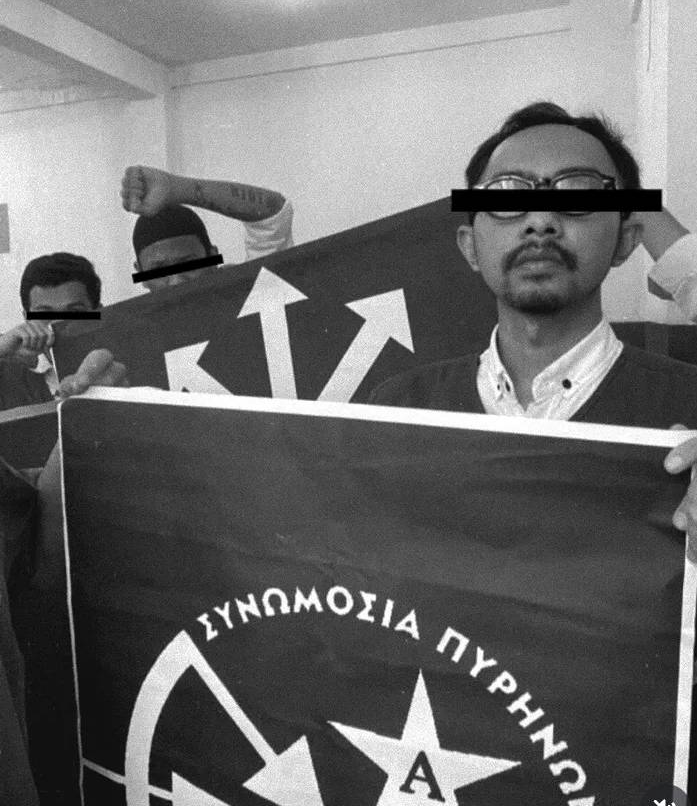
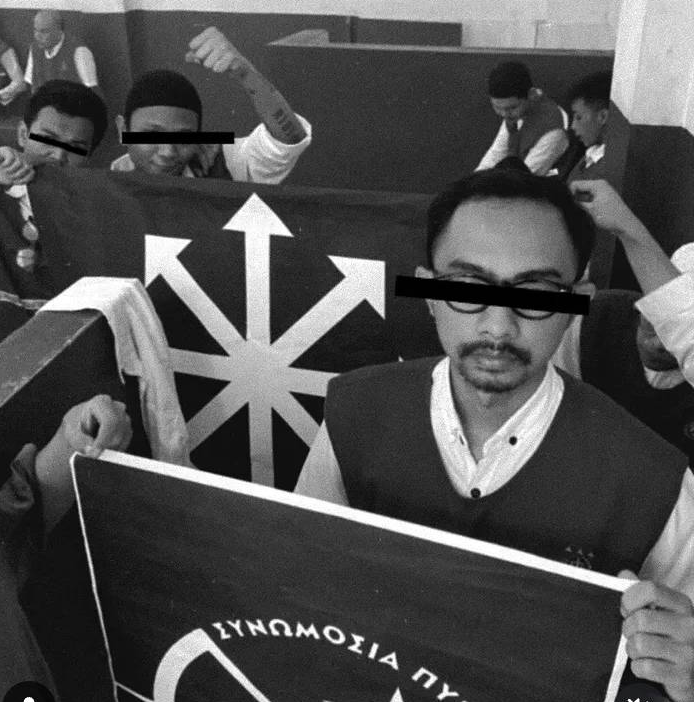
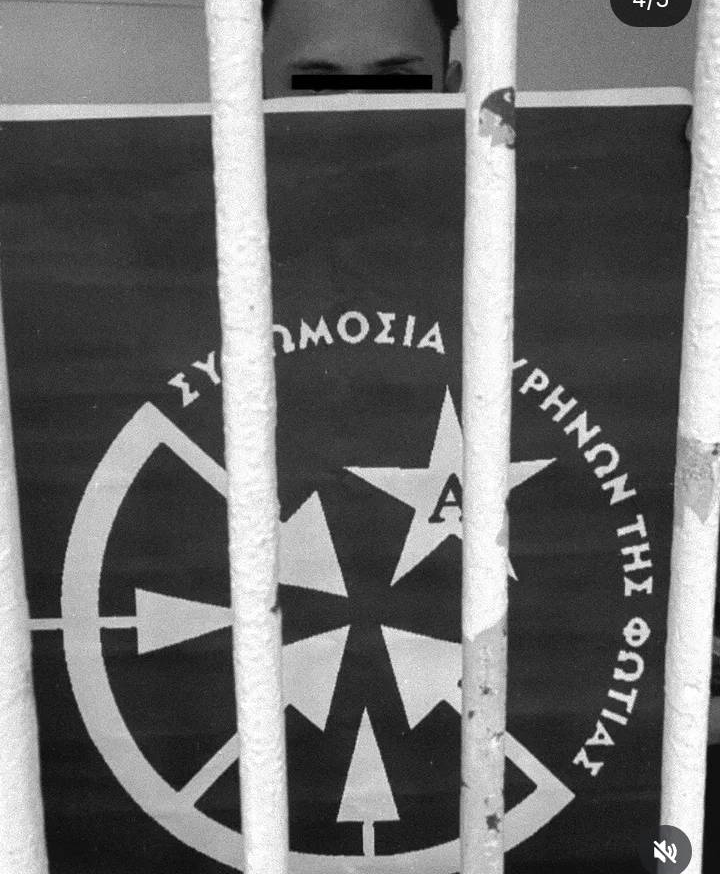
INDONESIA – Update on the Trials of Bandung Anarchist Prisoners (Chaos Star Case)


On April 16, 2026, the verdicts were delivered for five of our comrades at the Bandung District Court. The details are as follows:
* Albi: sentenced to 6 months in prison for the Bandung unrest in August–September 2026.
* Pem: sentenced to 9 months in prison for the arson attack on the police post in Gentong, West Java.
* Herdi: sentenced to 9 months in prison for the arson attack on the police post in Gentong, West Java.
* Nopal: sentenced to 1 year in prison for the arson attack on the police post in Gentong, West Java.
* Adit: sentenced to 1 year in prison for the arson attack on the police post in Gentong, West Java.
Also, the first trial of our comrade Dena, also known as Apip or Scoobydoomz, has been postponed and is now scheduled for April 24, 2026.
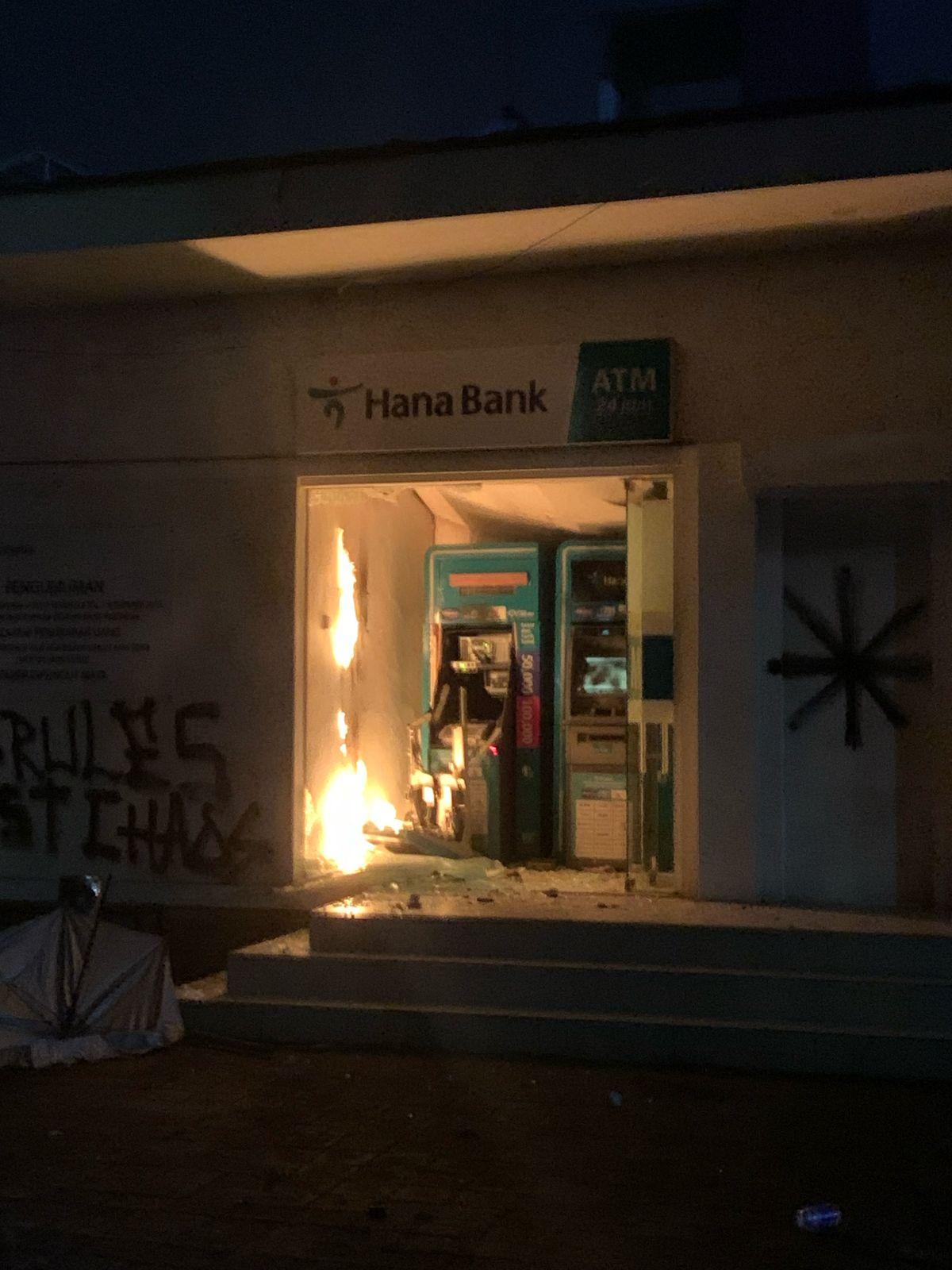
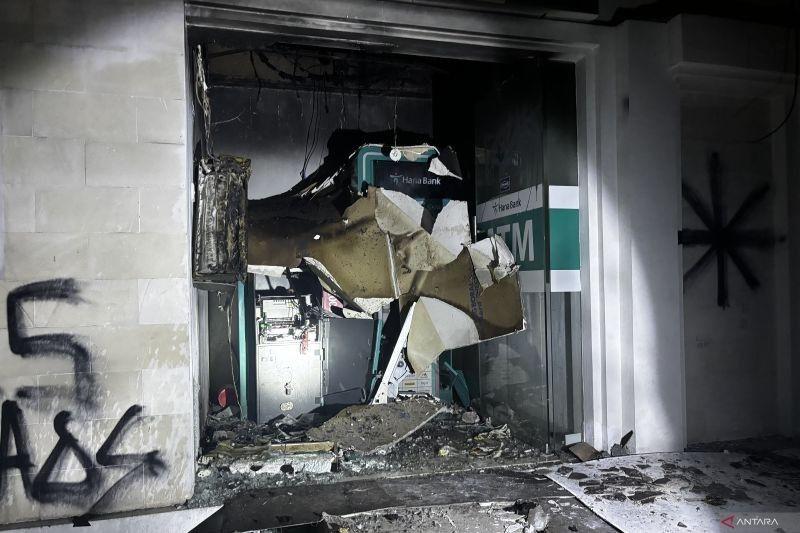
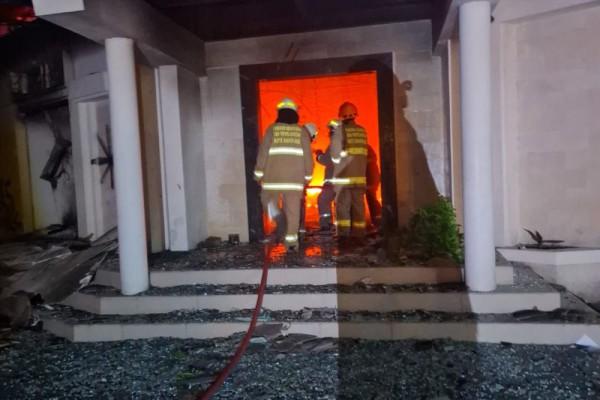
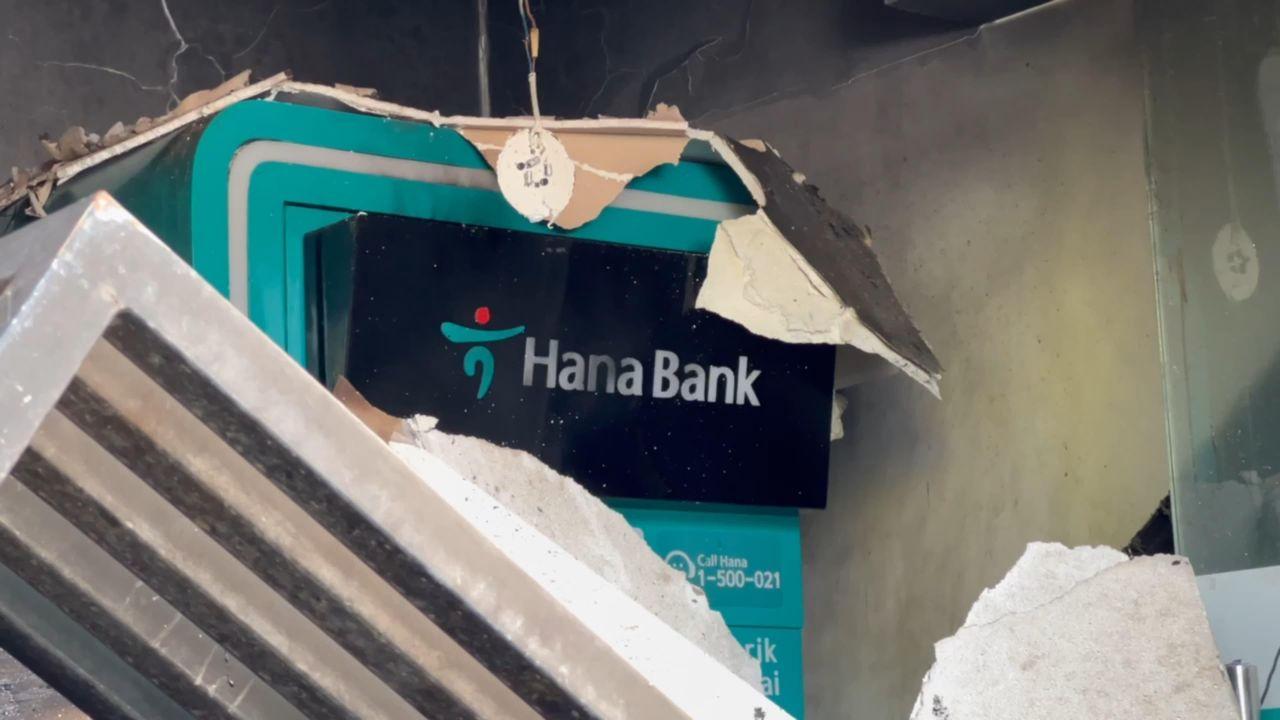
This trial marks the beginning of proceedings against comrades involved in the arson of Hana Bank during protests against the Indonesian Military Bill in March 2025. Adit, Nopal, and Jalus may face further trials for separate charges.
Note:
Adit and Nopal have already faced two trials on different charges, and the combined sentences they currently face total three years in prison, not including the upcoming verdict for the Hana Bank arson in Bandung.
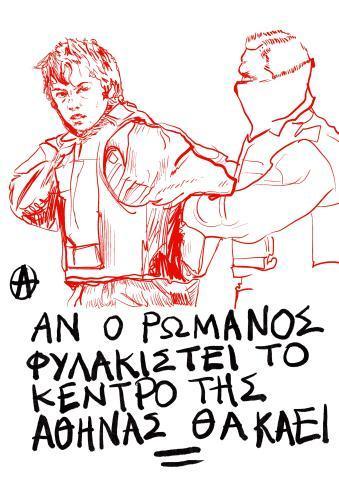
Gregorius Hugo, also known as Bake or Bex (informant), received only 7 months and 15 days—a sentence that can be considered virtually a free pass due to time already served in police and prosecution custody. This light sentence, despite his key involvement in the Gentong case, confirms his role as an informant/dead fucking snitch and his cooperation with the authorities! We advise international networks to cut ties with him.
For anarchy and the black international!
Going Underground.

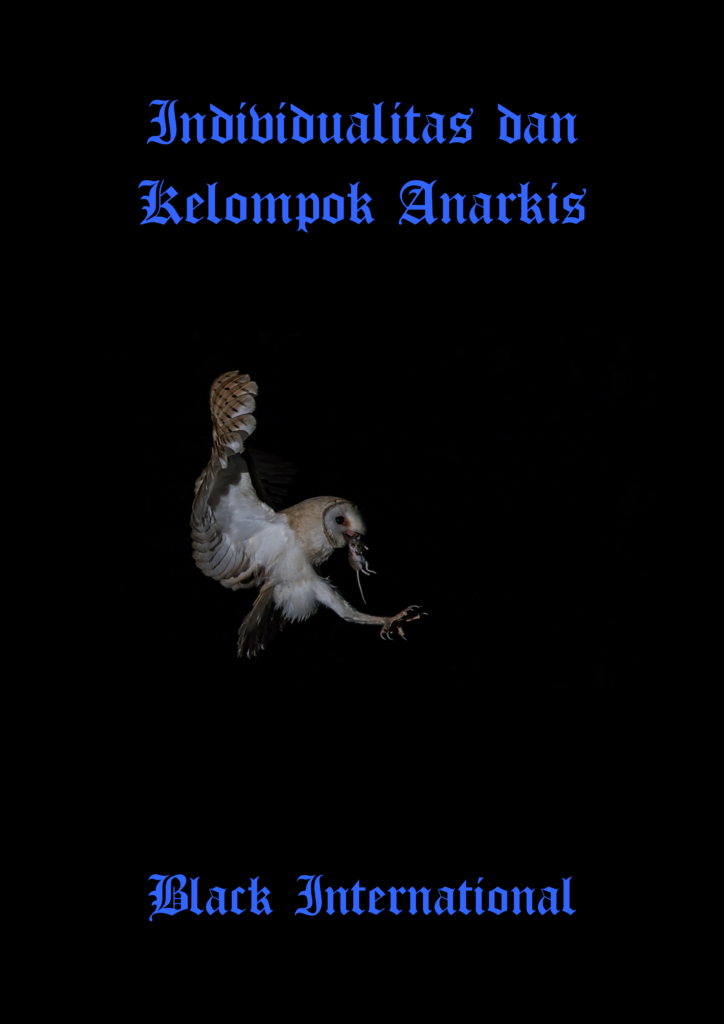
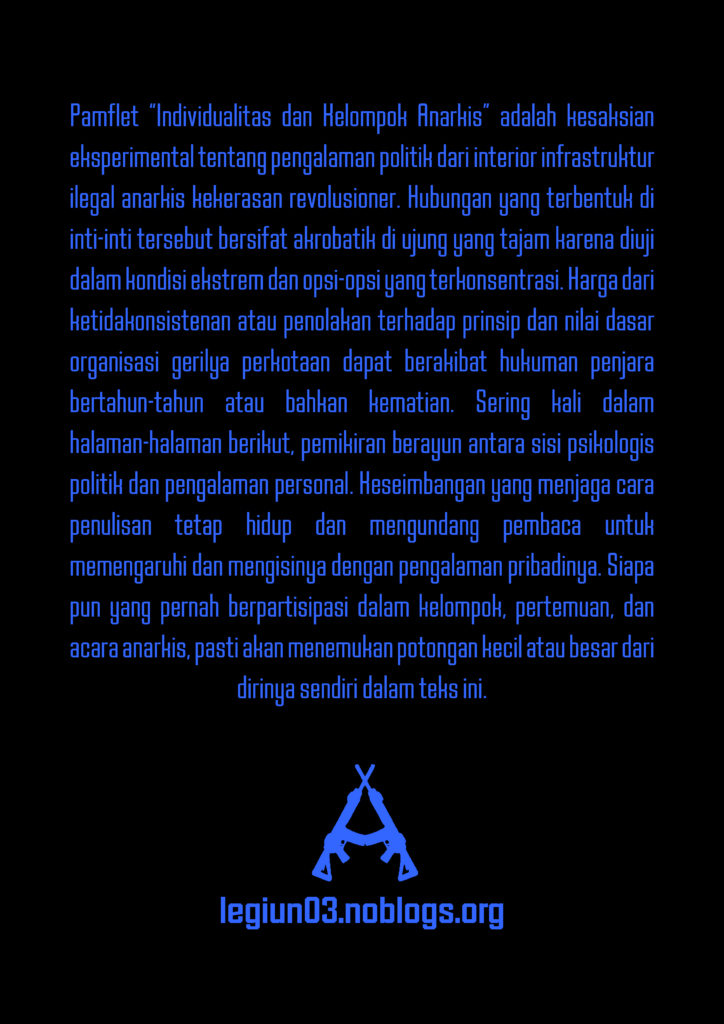
Indonesia: Individualitas dan Kelompok Anarkis
Daftar Isi:
Alih-Alih sebuah Prolog | Introduksi | Pemikiran Dasar untuk Memahami Sistem yang Eksis | Perselisihan dan Pilihan untuk Menyerang | Pemikiran Awal terkait Kelompok | Syarat Bergabung dalam Persekutuan | Tujuan | Penugasan | Kemistri Relasi dan Penggunaan Praktisnya | Manajemen Hubungan dan Keretakan | Kesalahpahaman terhadap Hal yang Jelas | Struktur Organisasi | Epilog; Catatan tentang Anarki Baru | Anarchist Haunt “Nadir” – Thessaloniki 7/12/2013; Spyros Mandylas, Anggota Pertemuan Anarchist Haunt “Nadir” | Christos Tsakalos, Sel Anggota Terpenjara Konspirasi Sel-Sel Api, FAI-IRF | 28/02/2014 – Wawancara Christos Tsakalos di Radio 105FM | Cell of Chaotic Strike | Pertanyaan tentang Organisasi


Source: Leguin
Short video clips for worldwide destructive anarchy
Two short videos which have been made and are circulating. For international revenge and solidarity. Free the prisoners, honour the dead.
Bristol, UK: Transcript of a talk by anarchist comrade Toby Shone at BASE for International Week of Solidarity with Anarchist Prisoners, August 2025
This is the rough transcript of Toby‘s talk at the solidarity event for anarchist prisoners on August 31st, 2025, at BASE social centre in Easton, Bristol, UK.
Hi everyone
Welcome to BASE social centre, I’m Toby Shone, I’m an anarchist ex-prisoner from the Forest of Dean. I was in the Operation Adream case, which was a co-ordinated international police operation which involved British, Dutch and German police, at least, we could say. I spent three years in various prisons in UK, mostly under 23 hour lockdown in conditions of solitary confinement. I also had 9 months in a secure bail hostel under anti-terrorist restrictions, and 3 months of bail conditions where I had to sign every day at a police station in the Forest.
I want to thank BASE for giving me this opportunity to talk. I’m not going to talk at length. And I want to properly thank all the comrades in Bristol who supported me during my imprisonment. The last time I was here for the International Week of Solidarity event, which was in 2023, I was out on license. As you probably know, the Counter-Terror Police South West had a surveillance team outside, and this event was a major reason cited by the National Security Division for my subsequent abduction back to prison. I have the surveillance report here from the police, so you can see the material on BASE, see the angle where the police took the surveillance photograph from, and see how the Counter-Terror Police South-West regard us. So it gives me great pleasure to be here with you all, to remember our prisoners and write them letters, to eat and exchange with everyone. It has a lot of meaning for me to be here and speak to you. Continue reading “Bristol, UK: Transcript of a talk by anarchist comrade Toby Shone at BASE for International Week of Solidarity with Anarchist Prisoners, August 2025”
Notes on New Anarchy – A talk about the New Anarchy trend by Conspiracy of Cells of Fire, Spyros Mandylas and Cell of Chaotic Strike (2013)

The following interviews were given by Spyros Mandylas and Christos Tsakalos (CCF) on events organized by anarchist collectives (mentioned above each interview) and on self-organized anarchist radio 105FM. In addition, a brochure of Cell of Chaotic Strike accompanies the collected speaches. Some parts within the text might sound repetive, exactly because there were similar questions on different interviews. The point of this article, was to collect most of them (if not all), in order to give a clear picture of what New Anarchy is.
—Dubus Dumno
Anarchist Haunt “Nadir”. Thessaloniki 7/12/2013
Spyros Mandylas, member of the meeting of the Anarchist Haunt “Nadir”.
Q: Would you like to start by telling us which political features shape New Anarchy and how it differs from the traditional one? Also, what kind of problems do you spot within the so-called “official” anarchy?
S.M: In those last few years New Anarchy is being discussed quite a lot, this new drift, so it would be right to give a definition as well; what do we mean with this term and what is its difference with traditional anarchy and that what is called the “official anarchist movement”. The “trend of New Anarchy” is what we used to say some time ago, a new anarchy within Anarchy. I believe that’s how it all started. Its main features are anti-societism, the anarcho-indivualist perception, existential analyses, informal organization, direct action – which is a very basic feature, nihilist perception and much more. We will now look into some individual points to better clarify what this trend is, what this thought is. By “anti-societism” we do not mean, obviously, a pogrom against the populations and innocent citizens. Anti-societism speaks of a war that is waged against the state and, at the same time, harshly criticizes society. So what we are saying is this: the rulers and the administrators of power, are given their positions by certain someones; someone elects them and someone tolerates them. For this reason, the “oppressed” citizen is not without responsibilities. This passivity and voluntary slavery is a problematic situation, which should not be left untouched and out of criticism. Now, another important structural difference, in relation to traditional anarchy, is that New Anarchy does not speak of a social catechism; it speaks of anarchist diffusion of ideas. It’s completely different. This new trend is not meant to persuade, but to communicate. New Anarchy does not talk about the revolution, placing it in an indefinite future, but it talks about the present, here and now. New Anarchy presupposes the coupling of theory and practice and does not want clappers, but accomplices. New Anarchy, as I have experienced it, is aimed for minorities. Nowadays, when various means such as strikes, funeral-like marches, symbolic building-occupation and protests are ineffective and act as decompression valves; we do not consider it just a wrong strategy, we consider it stupid to when you call yourself an anarchist, yet fight for better living standards. Anarchy cannot replace the welfare state, nor can it be a kind of union for students and workers as it has become in recent years.
Q: How would you comment on the term “vanguard” that has been attributed to New Anarchy?
S.M: This characterization of the New Anarchy trend has, in fact, been attributed to some others. This characterization is completely wrong in relation to what this new current stands for. I’ll start by saying what I read recently: “Anyone who thinks they know everything is doomed to learn nothing.” What is true is that there is no person, no book and no trend that says how the revolution will take place. The constant revolt does not obey any truth and has no recipe for how this theoretical revolution will take place. This characterization of “vanguard”, I personally, return it to the official movement, which believes that its actions and interventions in various, cinematic, intermediate struggles, will act as a trigger for the social or any other revolution. Anyone who considers themselves a pioneer is arrogant and, therefore, is doomed to stand still in a situation.
Q: You are involved in the part of New Anarchy’s idea-diffusion. How important do you think it is for a bridge to exist between the trends of New Anarchy and why do you think that the state, in addition to armed action, is targeting such actions? An example of this phenomenon is translation networks and the international media. What do you think is their role?
SM: Speaking of New Anarchy, we are essentially talking about a dialectical relationship between theory and praxis, between the public image and the illegal. This relationship is, I believe, a very important part of New Anarchy. This new trend is essentially made up of direct action teams, collectives, blogs, websites and radios, book/brochure publication or translation groups and much more. This tendency, organized on the characteristics of informal organization, affinity groups, internationalist solidarity and having a specific political analysis, is a very significant and difficult opponent for our enemies. Essentially, when we talk about New Anarchy, we are talking about concepts such as “anti-societism”, “anarcho-individualism” … We are talking about an existential analysis and view that goes beyond the stagnation of a class orientation and refers to the sabotage of social relations.
For New Anarchy, revolution is not placed at an indefinite time in the future, but it is demanded in the present, as we believe that mass preparation cannot in any case be one of the preconditions for revolution. New Anarchy speaks of war on the state and harshly criticizes society. It is clear that for the suffering of the oppressed, the oppressed themselves are not without responsibilities. For me, they are a voluntary mass that through various procedures have advocated for their tyranny.
Now, regarding why the state, in addition to armed formations of direct action, is also targeting public structures (translation and publication structures and so on), this is due in part to the fact that it fully realizes the effectiveness of these operations in ongoing anarchism; the uprising. To be more specific, I believe that the state would prefer armed groups, without public speech and presence. As it would also prefer to see the international media become consumed by harmless, theoretical analyses. So when the state sees that there are some bridges between the two, it makes total sense for it to do everything it can to break them down. In practice, we can see this in Italy over the last two years, where we several repressive operations had taken place; in operation “Ardire”, in operation “Shadow”, we saw exactly this thing. We have seen persecution not only against individuals for direct action but also against translation websites. As it happened, for example, with the “Culmine” website and the “Kerveros” publications. This means they’re doing a good job. If half thing is the immediate action, the other half is how it will reach the recipient.
Operation Phoenix, for example, has already counted eight strikes. The four have taken place in Greece and the other four have taken place in Indonesia, Russia and Chile. If it weren’t for all these networks, that didn’t exist before, we wouldn’t have learned anything. So, we notice how they interact together and how much they break down borders. In recent years, a large volume of political texts has been translated from language to language on these sites and translation networks. For example, there, today you will find the book “Armed Joy” by Nadir Publications. At the same time, a week ago, the book “Armed Joy” was published in Indonesian. The books of the Conspiracy of Fire Cores and the Black International are constantly being translated. This is a terrific job, it is very important. Continue reading “Notes on New Anarchy – A talk about the New Anarchy trend by Conspiracy of Cells of Fire, Spyros Mandylas and Cell of Chaotic Strike (2013)”
Bandung, West Java, Indonesia: “Reject the National Army law”, “No Rules, Just Chaos”, and “Burn World Bank” wrote by a group of informal affinity


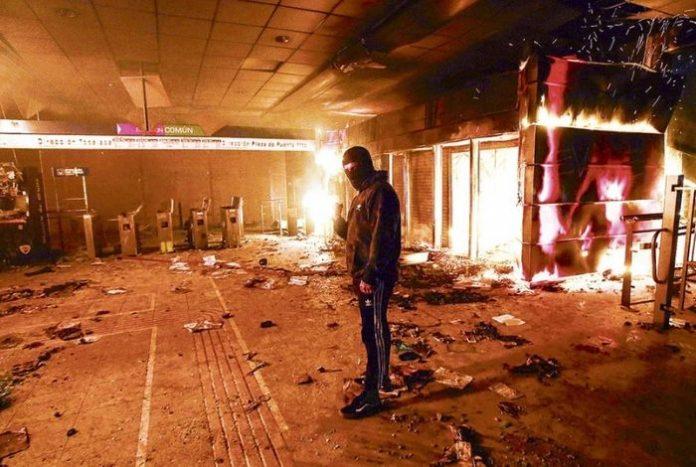
We are responsible for the burning of Two Hana Bank ATM machines, the Hana Bank office building, a capitalist-owned advertising videotron, and a motor vehicle belonging to the Indonesian National Army. The arson occurred after a space occupation carried out by demonstrators in the aftermath of a demonstration against the passage of the Indonesian National Army Law (TNI law), the arson occurred in Bandung, West Java on Friday night 21/03/2025.
The action carried out by the demonstrators in front of the Regional House of Representatives (DPRD) was not ignored at all by anti-riot police, despite the throwing of molotov cocktails, propane, stones and firecrackers into the veranda of the building. Until in the end, we chose direct action by burning at several points above.
We are completely beyond the authority of the language of the state and capitalism, we are irrationality, we are a form of the illogicality of the authority of the language itself. We are one of the informal organizations of the end of the world who do not believe in the coming of enlightenment for tomorrow, because for us the future is a new form of suffering. We are a fire that devours entire city buildings at night. We do not believe in the revolution of the left and other social anarchists. We are writers and poets, insurrection is poetry, poetry is insurrection.
Death to The State!
Death to The National Army!
Death to an Entire Civilization!
Burn The World Bank!
Long Live The Conspiracy of Cells of Fire!
Long Live The Free Association of Autonomous Fire!
Long Live FAI/IRF Long Live Anarchy!
Chile: Interview with the band La Lira Libertaria
Interview between the band La Lira Libertaria in Chile and JURNAL ANARKI in Indonesia.
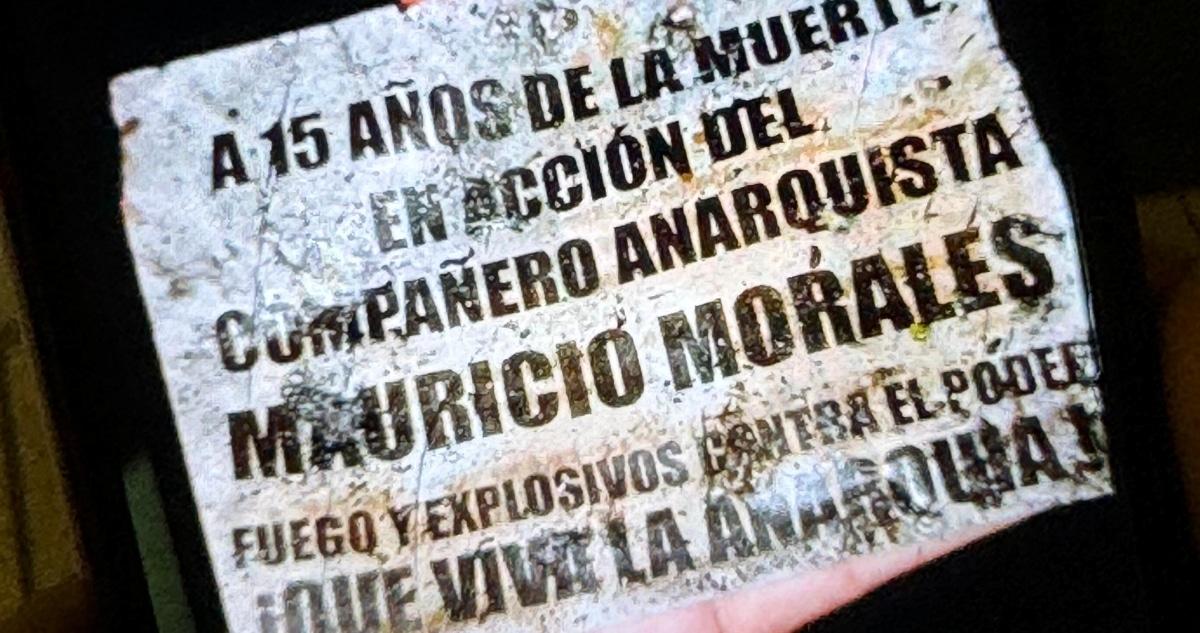
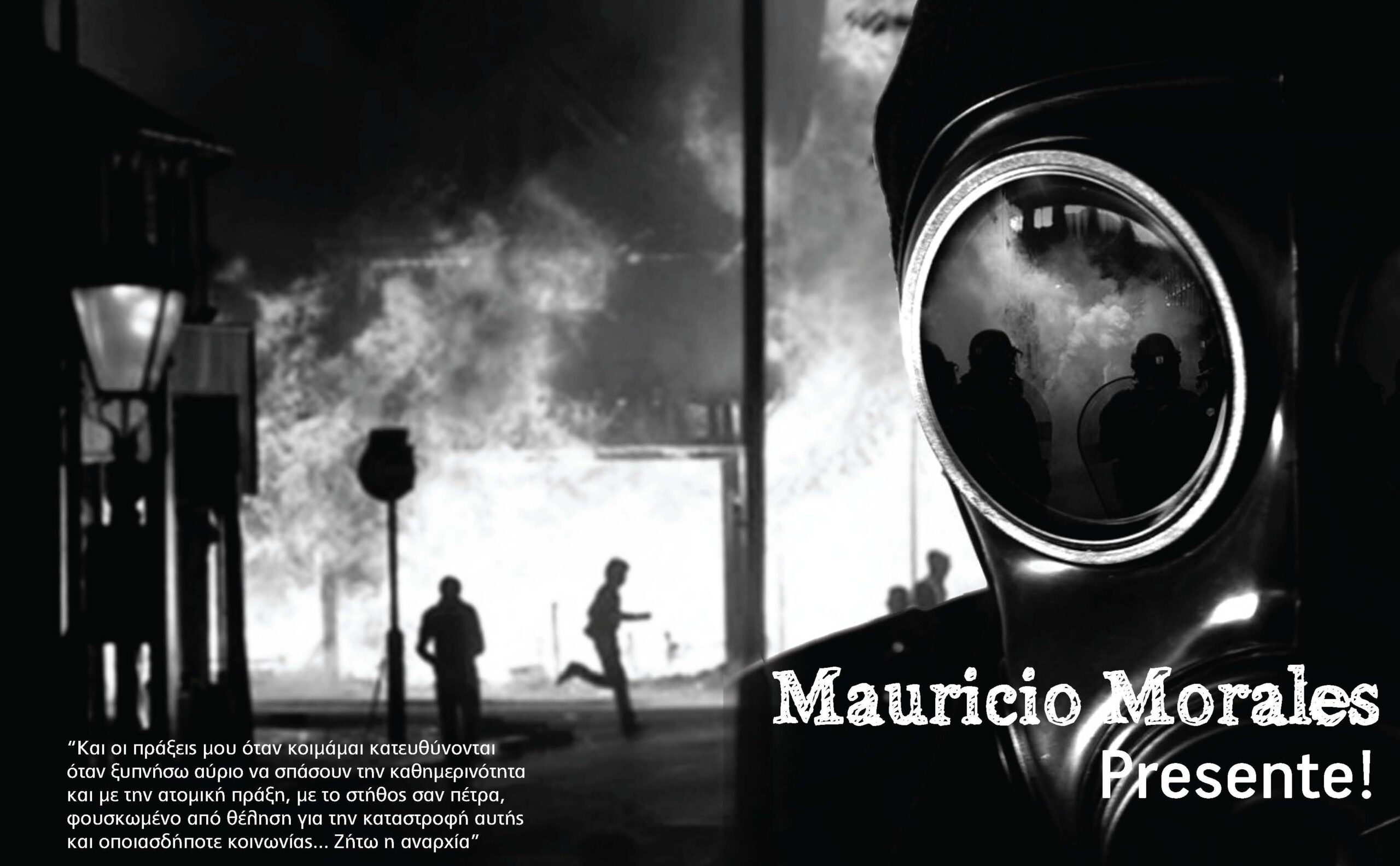
1. What motivates you in creating this band? The song “Armate” feels like a homage to the memory of insurrectionary Mauricio Morales, how do you elaborate your music and band with anarchist revolt?
The band was formed to show political solidarity and fill the spaces that we frequented around 2009 and a little before: squat houses and social centers mainly. At first the Lira was a paper piece of popular poetry that we printed that year and that rescues the tradition of the popular poets of the late 19th century and early 20th century, but with anarchist content. The formation as a musical band began later around 2010 in the context of the “Bombs Case” and sought to contribute to the spaces that were hit. The song Ármate is undoubtedly a tribute to the comrade Mauricio Morales Duarte who fell in action on May 22, 2009. The lyrics are an adaptation of one of his poems, and the girl who sings it with us was his partner, which is little known. We wrote it for the second commemoration of his death, and we presented it at the now defunct “Cueto con Andes” social center, where Punky Mauri himself visited and contributed to. Some time later, comrade Luisa Toledo would make her words even more well-known: beautifully violent. Sometimes people confuse this and think that they are words from our dear grandmother Luisa, but she took them because it was her favorite song by the band. That way, the songs and its stories are directly related to our recent political processes, and to the revolt and resistance against the neoliberal model in Chile.
2. From our informal discussion in the past you hinted that most of you come from the specific tendency of combative anarchy, can you tell us more about this?
Yes, we all met at the time we were studying, around 2006 onwards, and we were part of the riots and street-based struggles, like so many young people in Santiago. That is why we lived through the processes of the student rebellions of those years and the protests for the release of political prisoners, environmental projects, the denunciation of capitalist democracy and the anarchist movement.
The insurrectional anarchist movement was constantly attacking the system in that decade and even later, when the band was already formed. That’s what our songs are about, that’s why in them there are stories of attack, escape, prison and joyful rebellion too. The band grew up with this marginal discourse, and with the October 2019 revolt it achieved greater notoriety, since it had been talking about the contradictions of the capitalist model for a long time.

3. People from non-latin speaking countries are amazed by the growing anarchist tension in Chile, especially the diverse anarchic movement, the regeneration of the youth, and the especially heavy repression that the anarchists faced amidst all of this yet still retain their combative and insurrectionary action – what’s really making all of this possible?
As I see it, the commitment to the struggle is explained since it is part of generations and generations of combatants, since the times of dictatorship (1973-1990) and even before. It is linked to our families, to our disappeared detainees, and to the indigenous culture itself, which tells us that the Mapuche tirelessly resisted the Spanish.
In that political environment we grow. This is even stronger considering that democracy stained its hands with the blood of the fighters against the dictatorship, and imprisoned those who continued fighting against capitalism. Figures like Claudia López, murdered in the commemoration of the coup d’état in 1998, and so many other Chilean and Mapuche young people, this fueled since childhood our desire to fight, our desire for freedom and our love for our compañeros.
Perhaps that is the most important component, and what explains everything: the love of the struggle and the memory of the comrades who fell fighting and those who still fight to this day. That is why anarchists, despite being beaten time and time again, maintain their action, because it is also a way of carrying within us our beloved compañeros who were taken from us. Continue reading “Chile: Interview with the band La Lira Libertaria”