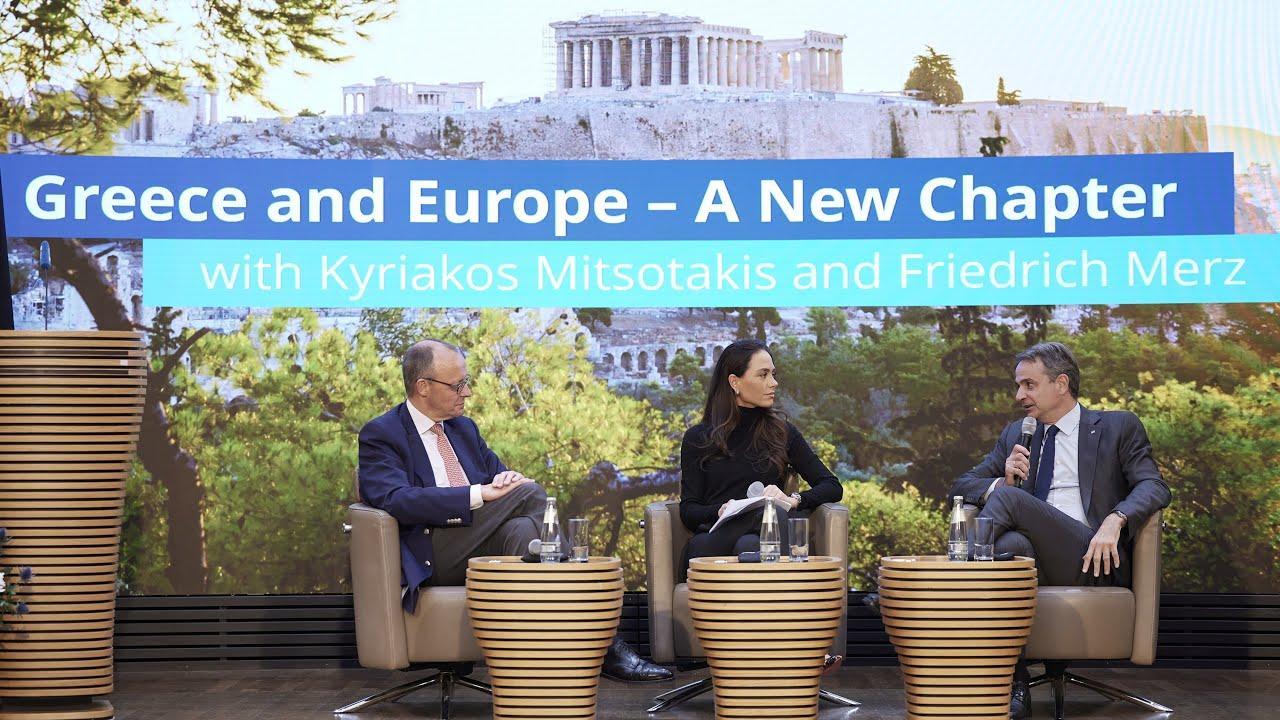
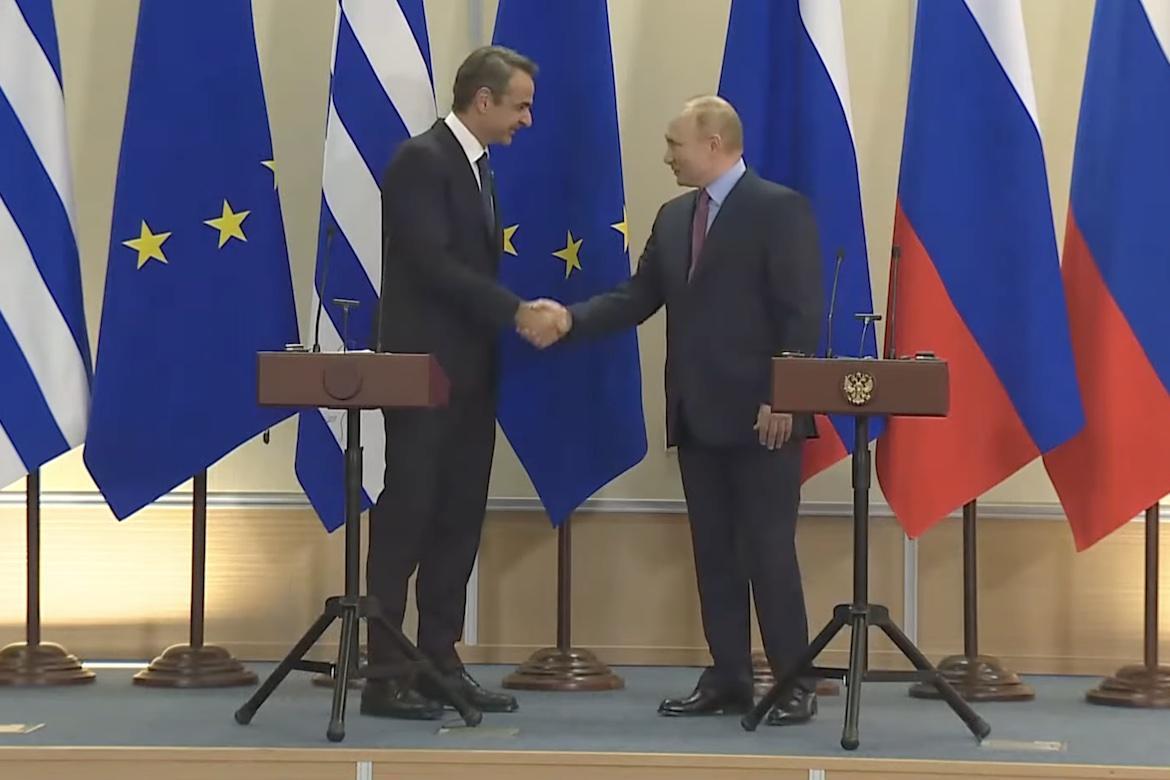
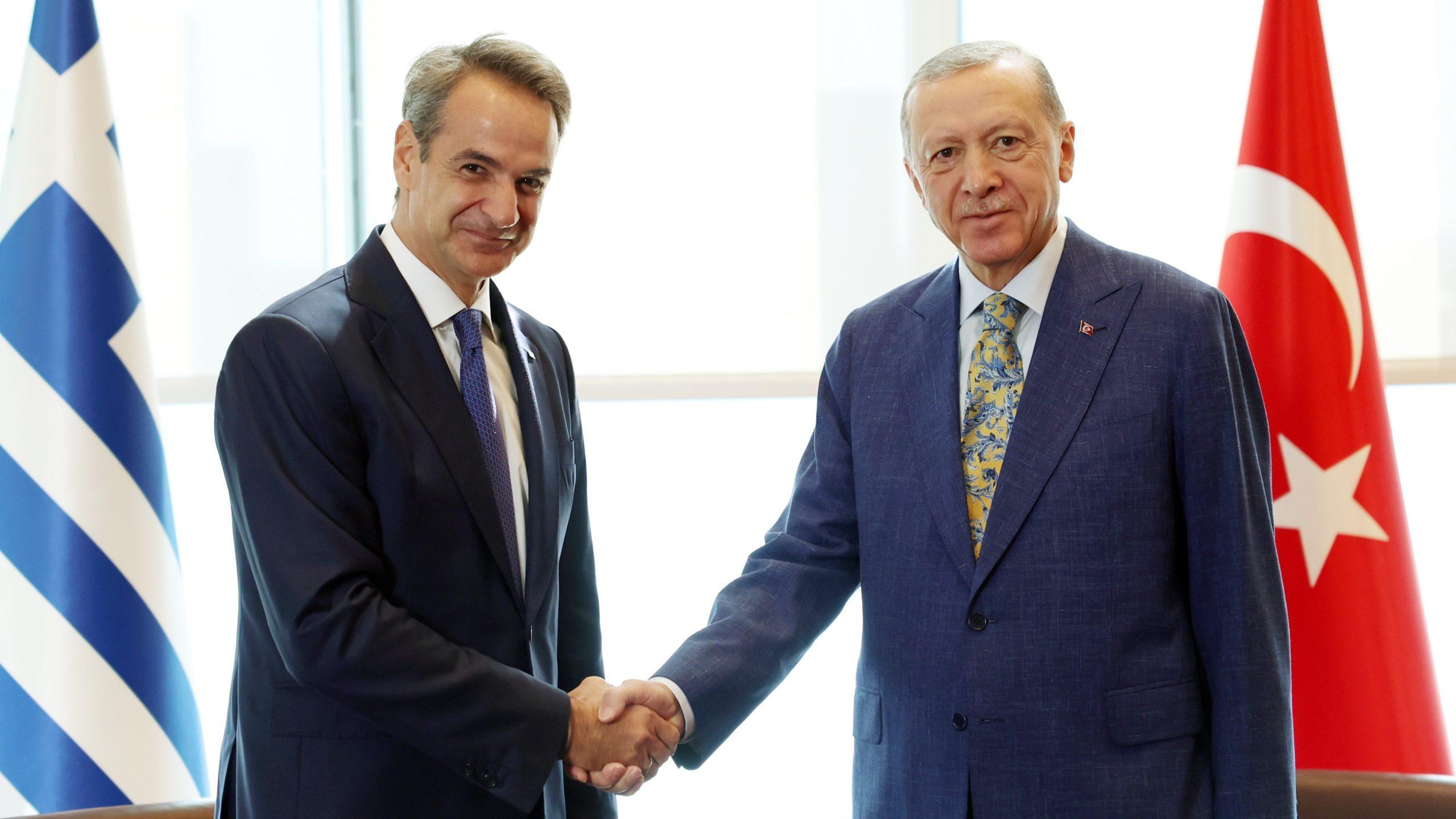
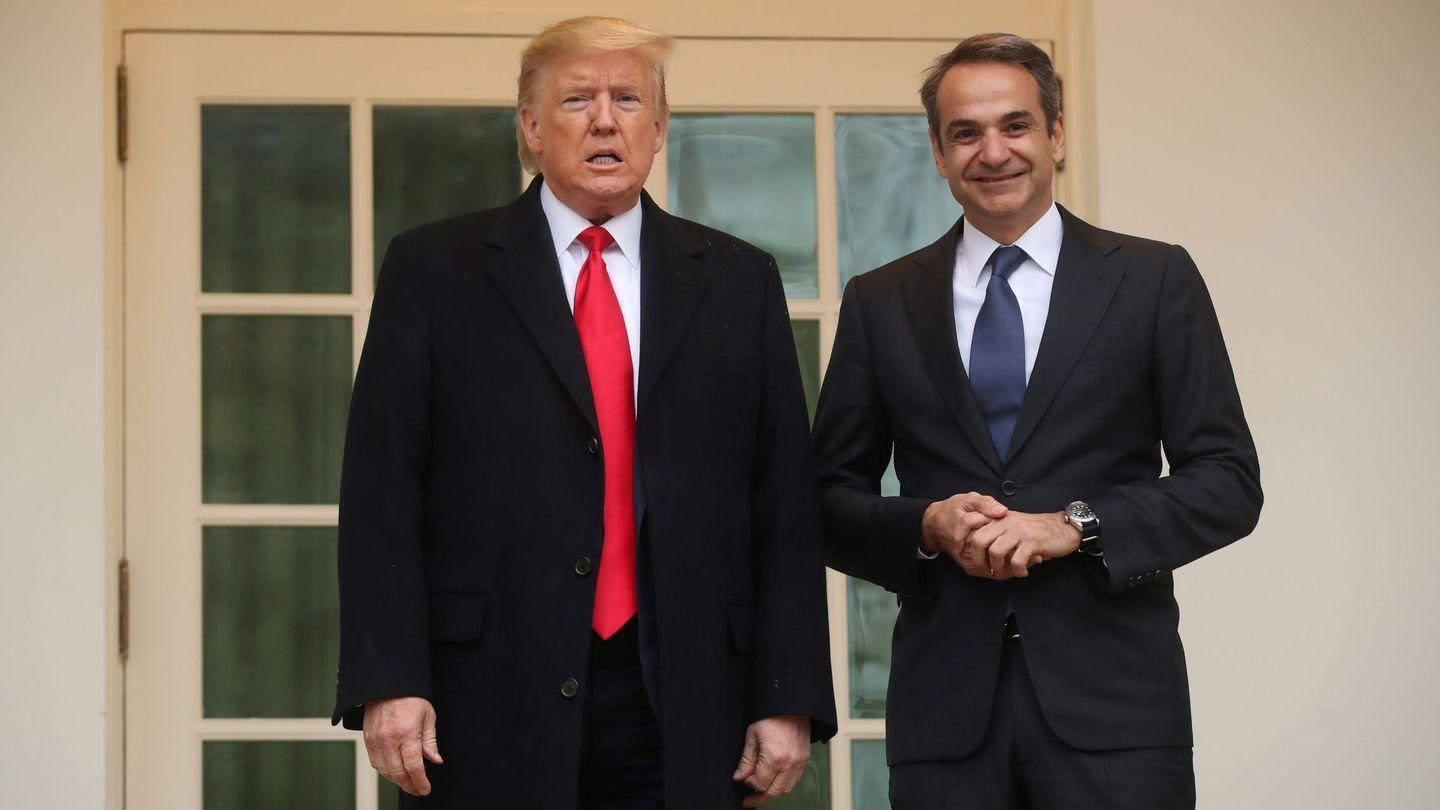
Mitsotakis is the Prime Minister of Greece and, along with his party, New Democracy, bears responsibility for the authoritarian transformation of this southeastern pillar of the EU and NATO.
Greece is on the front lines of the war on migration (Pylos massacre, 1), tramples over corpses as a pioneer of neoliberalism and corruption (Tempi train “accident,” 2), has an impressive track record of police killings (3) and also deserves to be held accountable for the imprisonment of comrades in the Ambelokipi case.
Impairing this regime’s ability to act can save many lives. The personnel who, on behalf of the Greek government, commit numerous murders, acts of torture, arrests, and pushbacks, require a constant supply of substantial financial resources and social legitimacy. These resources must be targeted.
The police cooperation agreement reached in December shows the direction New Democracy is heading. The following quote is not satire:
“Citizen Protection Minister Michalis Chryssochoidis and China’s Public Security Minister Wang Xiaohong signed a police cooperation agreement Tuesday in Athens, strengthening ties between the two countries on key security issues. According to a ministry statement, the agreement focuses on combating organized and financial crimes, drug trafficking and managing illegal migration. It also includes provisions for information sharing, technical expertise and officer training to enhance operational capabilities.
Chryssochoidis proposed forming a coordinating committee to prioritize actions against organized crime, aiming to improve the efficiency and effectiveness of both countries’ police services.
The meeting at the Greek ministry was attended by senior officials from China’s Public Security Ministry, China’s ambassador to Greece, the head of the Hellenic Police, and high-ranking Greek police officials, as well as the minister’s diplomatic advisor.
Both sides reaffirmed strong cooperation between Greece and China, emphasizing their shared commitment to addressing common security challenges and promoting social stability.“
(from the regime-controlled media: https://www.ekathimerini.com/politics/foreign-policy/1255251/greece-and-china-sign-police-collaboration-agreement/)
What “social stability” in the Chinese model means for Mitsotakis is evident in the increasing permanent surveillance of several city districts by drones and the crackdown on universities, where any opposition is to be stifled in order to make them compliant as think tanks of the old elites. In drone development, Greek universities are collaborating with ELTA Systems of Israel Aerospace Industries (IAI), despite student resistance.(4)
Industries that fund the Greek government (and are therefore essential to the functioning of the police, the judiciary, and the Coast Guard)
Greece aims to produce green hydrogen. Among the pioneers are the Greek energy companies Motor Oil [Hellas] and PPC [DN:Known as ΔΕΗ or DEI in Greek], which founded the joint venture Hellenic Hydrogen in early 2023 to implement hydrogen projects locally. The first planned project, North-1, is expected to generate up to 200 megawatts of hydrogen. German machinery suppliers could provide the equipment for the plant.
The expansion of the natural gas network and the construction of the hydrogen network also offer opportunities for German manufacturers. In addition, the Greek power utility Admie is expanding the capacity of the Greek power grid, primarily toward neighboring countries in the north of the country. In early 2025, Admie decided how the undersea cable from Cyprus to Greece, the Great Sea Interconnector, will be built. Additional international interconnectors are planned. Germany is by far the most important supplier of power generation equipment. In the first nine months of 2024, exports of such equipment rose by 120 percent compared to the previous year. With a share of around 10.5 percent of total Greek imports, Germany remains the most significant supplier.
Tourism infrastructure to be expanded – German visitors are the second-largest source of revenue
Expanded and improved services, along with an extended tourism season, would generate more revenue. This is particularly important for Greece, especially since tourism accounts for about a quarter of the country’s gross domestic product. Last year, it was largely thanks to revenue from the tourism sector that the country did not slip into recession despite high inflation and the energy crisis. Visitors from Germany spent nearly 50 percent more than in the same period the previous year.
Green technologies, digital services, modern facilities, and new forms of tourism are set to be available to visitors in Greece starting in 2025. EU funding is being provided for the implementation. Greece is investing heavily in modernizing the tourism industry. “Tourism companies in the country must meet guests’ higher expectations,” Olympia Anastasopoulou, Secretary General for Tourism Policy and Development at the Greek Ministry of Tourism, told Germany Trade & Invest.
The most significant project, in terms of funding, is the modernization of approximately 50 yacht harbors, marinas, and anchorages to promote yacht tourism. By utilizing renewable energy, purchasing electric vehicles, and installing electric charging stations, the ports are aiming to achieve green certification. Public institutions also plan to use the grants to build new shopping centers and parking lots. The project also calls for the digitization of all port services.
“Tourists’ expectations for digital services to be offered across all sectors are rising,” confirms Anastasopoulou, adding: “This means that tourism companies must implement modern IT systems and analyze and utilize the data.” Because: “Guests expect tailored services at competitive prices,” Anastasopoulou describes the current trend.
So-called “smart” tourism spans all sectors of the tourism industry. Funding from the EU Recovery Fund will support agritourism, mountain tourism, and winter tourism, as well as tourism in the areas of diving, health, and gastronomy. By 2025 at the latest, modern facilities such as ski resorts and thermal springs are expected to be available to visitors.
The Ministry of Tourism anticipates that numerous companies will seize the opportunity to use the grants to modernize their products and services. For this to succeed effectively, companies, regional and public agencies, and the government must work closely together. Currently, the cement industry has a major influence on policy. Coastal areas as well as squares and parks in cities are being extensively sealed with concrete.(5)
Greece aims to generate about 80 percent of its electricity needs from solar, wind, and hydro power by 2030. For this reason, thousands of forest fires are set each year (9,500 in 2024) to make room for wind turbines and solar panels. The forest fire season, which used to run from May to September, has been extended to April through November. It is suspected that arsonists acting on behalf of the industries profiting from this are behind these fires.
There are plans to invest heavily in expanding the power grids and simplifying the permitting process. The Greek government has taken on both tasks: The Greek plan for utilizing the European Union’s recovery fund includes the expansion of the grids. Law 4951/2022 accelerates the permitting process.
To achieve the ambitious targets by 2030, onshore and offshore wind farms with a capacity of 9.3 gigawatts and solar power plants with a capacity of 14.1 gigawatts are to be installed. This represents nearly a threefold increase in the currently installed capacity. According to the Greek government’s new energy and climate plan, a total of 28.7 gigawatts of renewable energy capacity is to be installed by 2030.
Large-scale projects are already in the planning stages: For example, the German energy company RWE, together with its Greek partner PPC Renewables—a subsidiary of the formerly state-owned electricity company PPC —plans to install photovoltaic systems with a capacity of around 2 gigawatts.
The subsidiaries of the German project developer Abo Wind are very active in the Greek market. BayWa r.e. Solar Systems Single Member also plans to offer customized solutions for photovoltaic systems in the near future, including modules, inverters, the mounting system from novotegra, and storage systems. Opportunities for German developers and investors remain strong, particularly with regard to acquiring licenses on the secondary market.
Selected Major Projects in Greece
– Northern Crete Highway; contractor for the Neapoli-Agios Nikolaos section: Aktor; start of construction: 2023; contractor for the Chersonissos-Neapoli section: consortium of GEK Terna, Aktor, and Intrakat. The companies involved here are undertaking the construction of the controversial new metro line in Athens, including the station in Exarchia. Aktor and GEK Terna have frequently come under fire in the past; they are also involved in the construction of new prisons. (6)
GEK Terna made a high-profile donation to Prime Minister Mitsotakis for the renovation of the apartments damaged on October 31 in Ambelokipi.
– Feasibility study, financing, operation, maintenance, and use of the undersea tunnel between the island of Salamis and the mainland; environmental impact study to be approved. Three potential investors: Terna, Metka, and Vinci Concessions, Aktor Parachoriseis. Vinci is not only involved in French prison construction projects but also operates the highways in Greece.
– Patras-Pyrgos highway; contractors: Terna S.A., Aktor S.A.; co-financing from the EU Partnership Agreement; completion by 2025.
The Ellinikon Mega-Project: A Project of Particular Significance
Foreign interest in Greek real estate continues to grow. Foreign buyers are purchasing either vacation homes or properties suitable for tourism. The “Ellinikon” mega-project is of particular interest to German manufacturers and suppliers.
On the site of the old Athens airport, Greece’s tallest building, the Riviera Tower, hotels, approximately 9,000 luxury apartments and villas, shopping and convention centers, sports facilities, and a marina will be built. The majority of the planned residential buildings have already been sold.
The consortium consisting of the Greek construction company Intrakat and the French construction group Bouygues was awarded the contract to advise the architectural firms on the “Riviera Tower.”
The construction and operation of the integrated casino resort under a 30-year concession agreement were awarded to Ekaz Ellinikou, a subsidiary of the Greek construction group GEK Terna. The project is valued at approximately 1 billion euros. For the casino, GEK Terna is partnering with casino operator Hard Rock International.
The infrastructure across Greece is also set to be made more attractive to tourists. The Hellenic Corporation of Assets and Participations S.A. (HCAP), the state-owned asset management fund, plans to modernize 22 additional state-owned airports.
Potential investors for Kalamata Airport:
– the French airport operator Egis Airport Operation
– the Greek construction company Aktor
– the French airport operator Aéroports de la Côte d’Azur
– the German company Fraport AG, parent company of Fraport Greece, which has already taken over and modernized fourteen Greek regional airports
– the Greek firm Pileas SA, part of the Konstantakopoulos Group, which owns the luxury tourist resort Costa Navarino in Pylos, near Kalamata
– the Greek construction company GEK Terna
– the Indian conglomerate GMR Airports, which is jointly building the new airport in Kastelli, Crete
– the Greek construction and energy group Mytilineos
The Minister of Tourism expects another record-breaking year of growth in 2025, which is expected to reflect the government’s successful strategic approach.
In a speech to Parliament, Kefalogianni emphasized that the geographical and seasonal diversification of tourism has been a key factor in this success. The goal is to expand tourism activities to all regions of Greece and throughout the entire year. This approach not only supports the economy but also helps reduce unemployment and public debt as the country returns to primary budget surpluses.
For the year 2025, the minister presented several key initiatives to further strengthen Greece’s competitiveness as a global travel destination. These include:
– Use of artificial intelligence (AI) to enhance the travel experience through modern platforms and innovative tourism offerings.
– New regulations for short-term rentals to improve the quality of hospitality.
Kefalogianni also highlighted the growing interest of international hotel groups, which are increasingly investing in less developed regions of Greece. At the same time, the country’s rich cultural heritage and diverse natural environment should be brought more into focus to enhance Greece’s tourism brand. The minister called for continued cooperation between the government, the private sector, and workers to secure the progress made and establish tourism as a long-term driver of the Greek economy.
Greek construction companies dominate the market. Foreign companies form consortia with domestic firms to improve their chances. Only six Greek construction companies are classified in the highest construction category, which means they can bid on all public projects regardless of the investment budget. As a result, these construction companies are involved in all major infrastructure projects. One of the most important construction companies in Greece is AKTOR S.A., with branches in Germany: Herhof GmbH, Kalkgraben 2, 35606 Solms, and Wendenstr. 29, 20097 Hamburg-Hammerbrook
Only a few foreign construction companies are represented in Greece, for example the German group Hochtief PPP Solutions GmbH and the French company Vinci Concessions. The French construction group Bouygues also intends to operate in Greece. Bouygues is under fire in France for its involvement in the construction of prisons.
Lengthy permitting processes and issues at the regional and local levels hinder the implementation of projects. Bureaucratic hurdles and local resistance delay the completion of projects
The acceleration of the permitting process, thanks to reforms introduced by New Democracy in 2020 (including the extension of the wildfire season), points the way toward removing obstacles in the PV market in the interests of the oligarchs.
The rampant bureaucracy burdens project developers and investors: “Although the government has a positive attitude toward foreign investors and renewable energy, the bureaucratic requirements of the energy regulator and the grid operator are immense,” confirms Panos Sarris of Abo Wind. “Compounding the problem is a cautious or, in some cases, hostile attitude on the part of regional authorities, as well as resistance from local communities, which in many cases stems from personal interests,” he adds. “Cautious” and “hostile,” however, are euphemisms for the mood in those regions that have been affected by wildfires and subsequent flood disasters in recent years.
“Our investment program is facing delays of more than two years,” says Sarris, describing the consequences of bureaucratic hurdles. “We hope that the government will take all necessary measures to change this situation, which will naturally benefit the entire market,” he says, summarizing the hopes of the entire industry. Whether the looming climate catastrophe—2024 was the hottest year on record in Greece—will soon lead to a clash of interests with the tourism industry is an intriguing question. Studies by the University of Athens predict alarming climate changes for Greece in the coming years.(7)
As part of the 4th Innovation Forum, the German-Greek Chamber of Industry and Commerce is organizing a networking dinner on November 12, 2024, in cooperation with the Embassy of the Federal Republic of Germany.
This event was not only an opportunity for participants to network, but also marked the festive conclusion of the anniversary celebrations marking the 100th anniversary of the German-Greek Chamber of Industry and Commerce. It served as a tribute to the long-standing cooperation and joint efforts in the development of Greek society. The event was attended by prominent political figures as well as leading representatives from the fields of business, research, and science, along with representatives from startups.
Platinum Partner for the 100th Anniversary of the AHK was: COSMOTE (Deutsche Telekom)
Gold Partners were: BASF, Bayer, Boehringer Ingelheim, PPC, Veridos Matsoukis
Silver Partners: ABO Wind, Athens International Airport, LIDL, Siemens,
Golden Event Sponsors: Robert Bosch, Jungheinrich, Merck
Event Sponsors: IPTO, iQnovus (Quest Group Innovation Center), Raycap, Schüco
Against this backdrop, it makes sense to take a closer look at the activities of companies and industries that are profiting from the Greek tragedy. In doing so, we’ll end up with old acquaintances: corporations that are also involved in environmental destruction and prison construction elsewhere. Industries that make life unaffordable in cities like Berlin, Barcelona, or the Canary Islands. Gentrification/tourism, the cement industry (e.g., Lafarge), smartification/surveillance, and militarization—both externally and internally—go hand in hand. Comrades in Thessaloniki had the following to say about the attack on the car rental company Avance:
“We sabotage the ‘tourism machine’ by any means necessary. We destroy the image of the ‘beautiful country-tourist destination’ through practical propaganda and provocations that damage the state apparatus.”(8)
Mitsotakis needs a lot of money to push through his agenda against the internal enemy—the anarchists and the exploited—and he needs an external enemy—the migrants—in the hope of distracting society from those responsible for the looming crisis. Whether or not the limited forces of radical resistance can accelerate a loss of power is irrelevant. Nor does it matter whether another government in Greece would be “less bad.” As a text on the unrest in Turkey puts it:
“It doesn’t matter that the majority of demonstrators want the dictator Erdoğan to go and be replaced by the nationalist Imamoğlu. Today we can fight shoulder to shoulder for the overthrow of Erdoğan, and tomorrow we can campaign for the removal of Imamoğlu. Once we destroy the greatest existing power, we will fight to destroy the second-greatest power, and then the third, until there is no other power left over us. This anarchist perspective requires support for all threats to Erdoğan, his state, his police, and his judiciary.”(9)
Without wishing to speculate on the legal developments in the Ambelokipi case, it may be advisable for the international solidarity movement not to wait until escalation becomes inevitable. Based on the experiences of the hunger strikes in recent years—by Dimitris Koufontinas, Alfredo Cospito, and Giannis Michailidis—it makes sense to have goals ready and not to tie the carrying out of actions to the health conditions of prisoners.
Resistance against the techno-industrial system and against the patriarchy cultivated by Greece’s New Democracy, resistance against the devastation of nature and the resulting social misery, the struggle against Fortress Europe, the quest for a freer life—all these are reasons to attack the corporations and structures that serve the custodian of the Mediterranean mass grave. A state that holds our comrades Marianna, Dimitra, Dimitris, Nikos, and A.K. hostage in the class war.
(1) https://borderviolencelesvos.noblogs.org/files/2023/08/Pylos_Final_Ge.pdf
(2) https://darknights.noblogs.org/post/2025/03/15/athens-greece-direct-action-cells-responsibility-claim-for-the-incendiary-attack-on-the-house-of-mep-eliza-wozemberg/
(3) https://griechenlandsoli.com/2024/09/27/polizisten-schlagen-pakistani-tagelang-auf-funf-verschiedenen-wachen-bis-er-schlieslich-stirbt/
(4) https://www.zougla.gr/greece/kentavros-tilemachos-kai-yperion-i-elliniki-apantisi-ston-polemo-ton-drones/
(5) https://www.ekathimerini.com/news/environment/1263091/satellite-data-reveals-a-coastal-cement-crisis/
(6) https://darknights.noblogs.org/post/2025/02/18/heraklion-greece-incendiary-attack-against-a-bus-belonging-to-the-gek-terna-conglomerate/
(7) https://www.ekathimerini.com/news/environment/1265041/athens-university-study-warns-of-rising-climate-threat-to-forests/
(8) https://actforfree.noblogs.org/2025/04/28/greece-incendiary-attack-thessaloniki-by-anarchist-arsons/
(9) https://barrikade.info/article/6925
Source: Kontrapolis