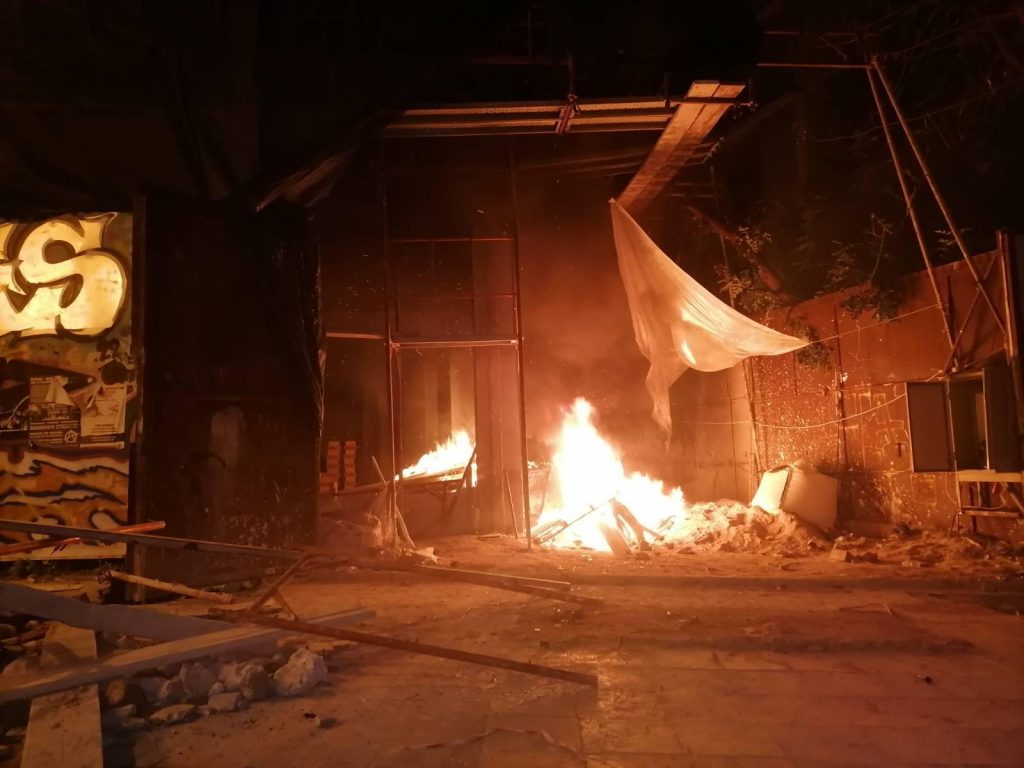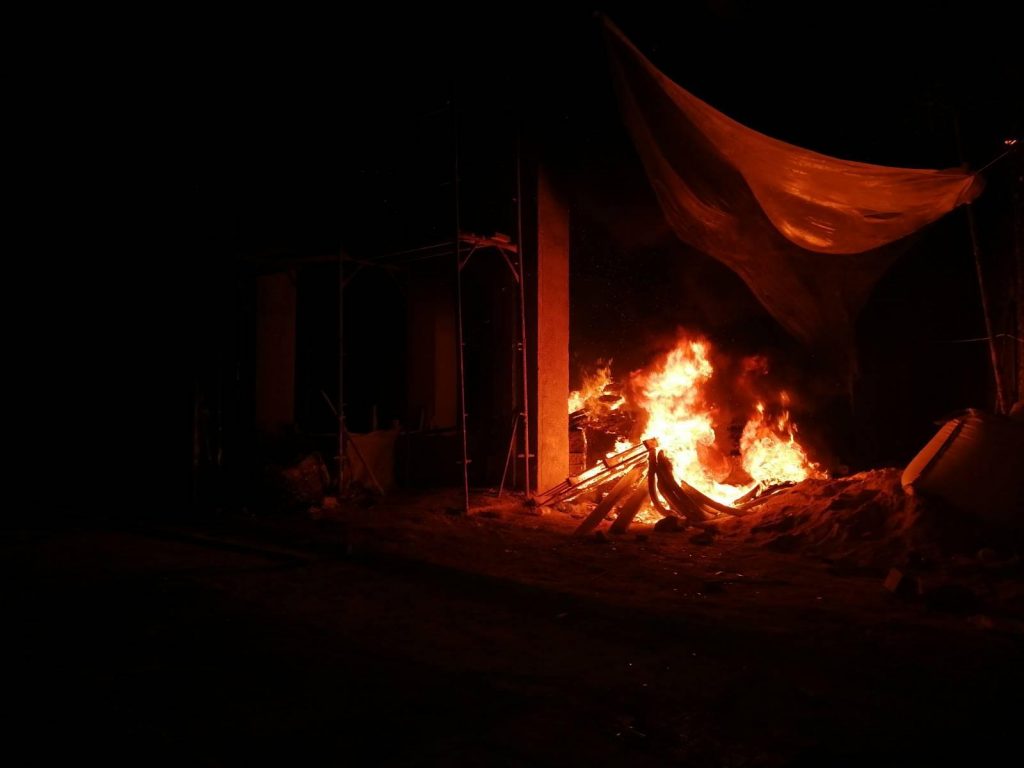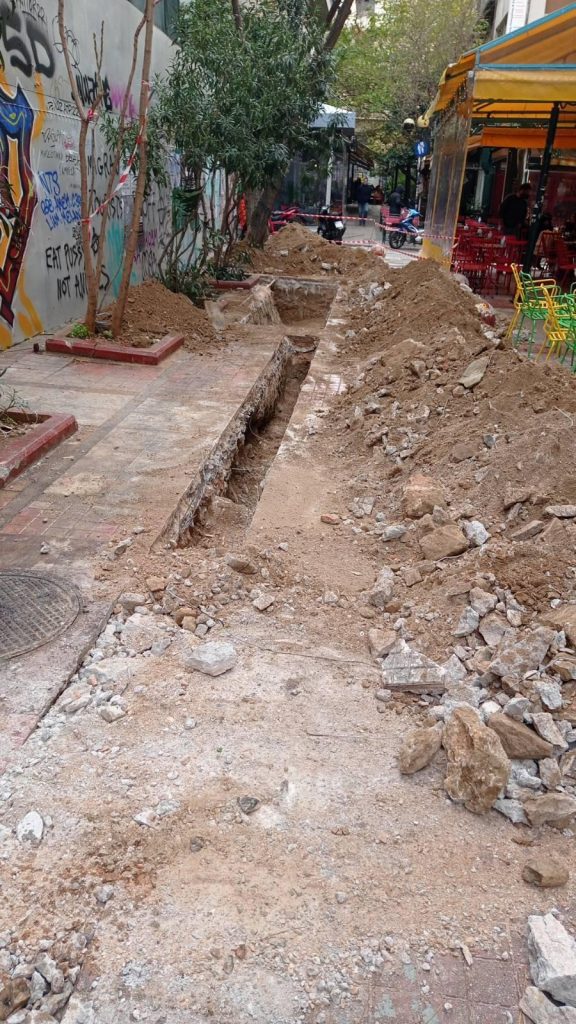
On December 15, in the evening, we attacked with an incendiary device the house of the president of ΟΝΝΕΔ (Youth Organization of New Democracy), Pavlos Marinakis, at 29 Ariannou Street in Pagrati.
Another act of direct action that is deliberately concealed by the mainstream media, aiming to protect, first of all, the target, but also to safeguard the overall prestige of power that wants the rulers to be immune away from the hands of their “impoverished subjects”. But nevertheless, we are here to refute this false security that they diligently seek to present as the privilege of the powerful.
So we too have sought out and found this particular subject who lately, apart from being outrageously provocative with his audacity and statements, seems to be on an upward trajectory in New Democracy. This is anything but coincidental, of course. This party has invested in the profile of a popular right-wing party that clearly leans towards the far right, while at the same time launching an image of sophisticated “excellence” through the universally controlled media in order to cover as large an audience as possible.
So let us say a few words about this gentleman in order to illustrate the rot that he carries and serves. Part and parcel of the vanguard of an alt right, he has given credentials of political compatibility with the obscurantism of New Democracy quite early on. A servant of a rhetoric that wants “national interest” to be identified with a creeping fascism in all aspects of social life. A nationalism of ‘everyday life’, accessible and palatable to the whole of the constituency, an extraction of political discourse through the constant promotion of social media. An outgrowth of this covert nationalist dimension is his macho statements with references to the civil war.(Tsipras if we lived in the civil war by me you would “go”) Of course we have no desire to take a position in this verbal dispute as we are sure of the role both of them would have had during the civil war. But we would like to point out to the much heavier Marinakis that he would most likely have had the end that fate had in store for his like-minded and fellow countrymen in the Meligala well.* Continue reading “Athens, Greece: Incendiary attack on the house of the president of the Youth Organization of New Democracy, Pavlos Marinakis”