BLACK AUGUST 2026
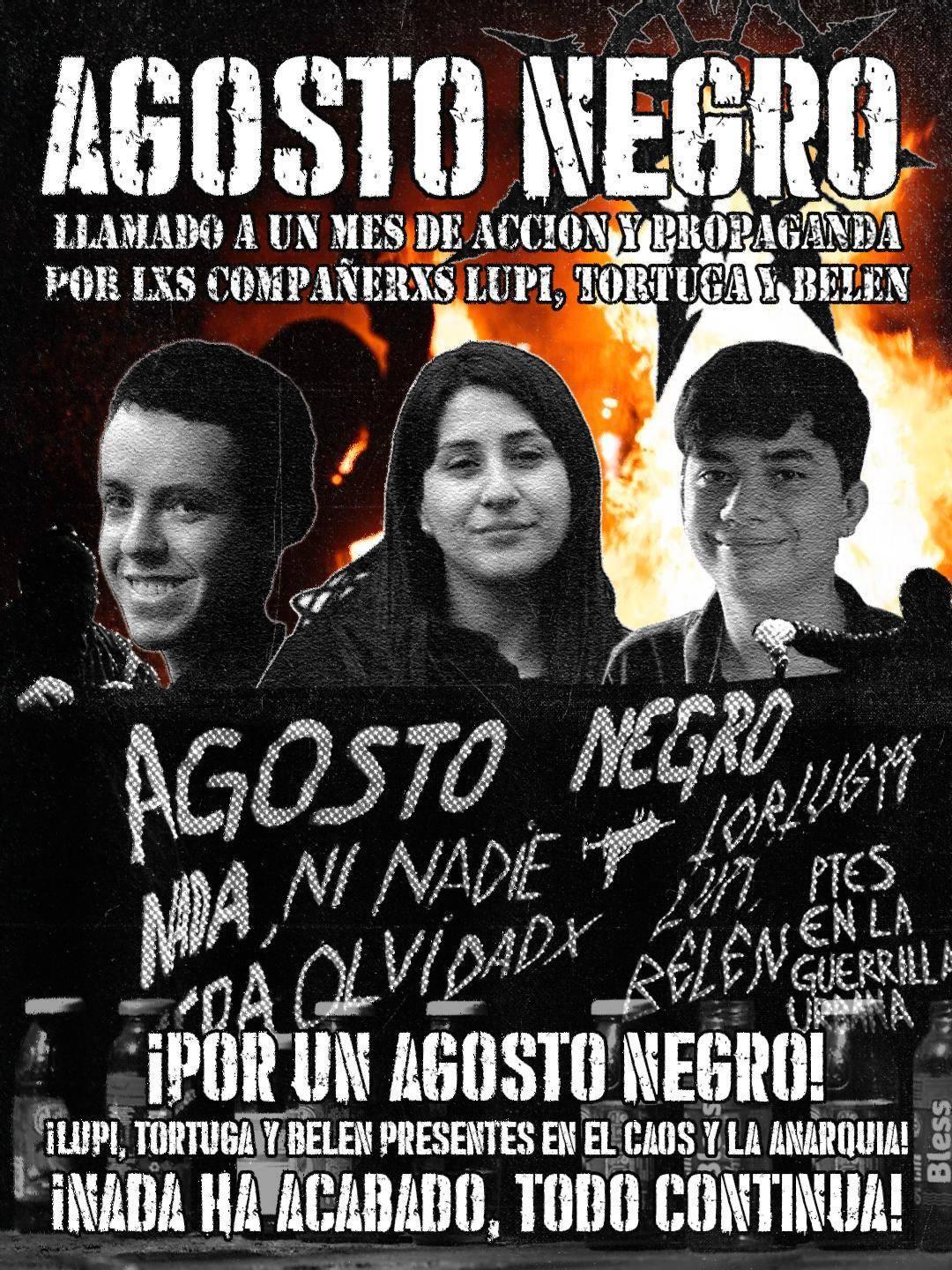
Call for a month of action and propaganda with comrades Lupi, Tortuga and Belén.
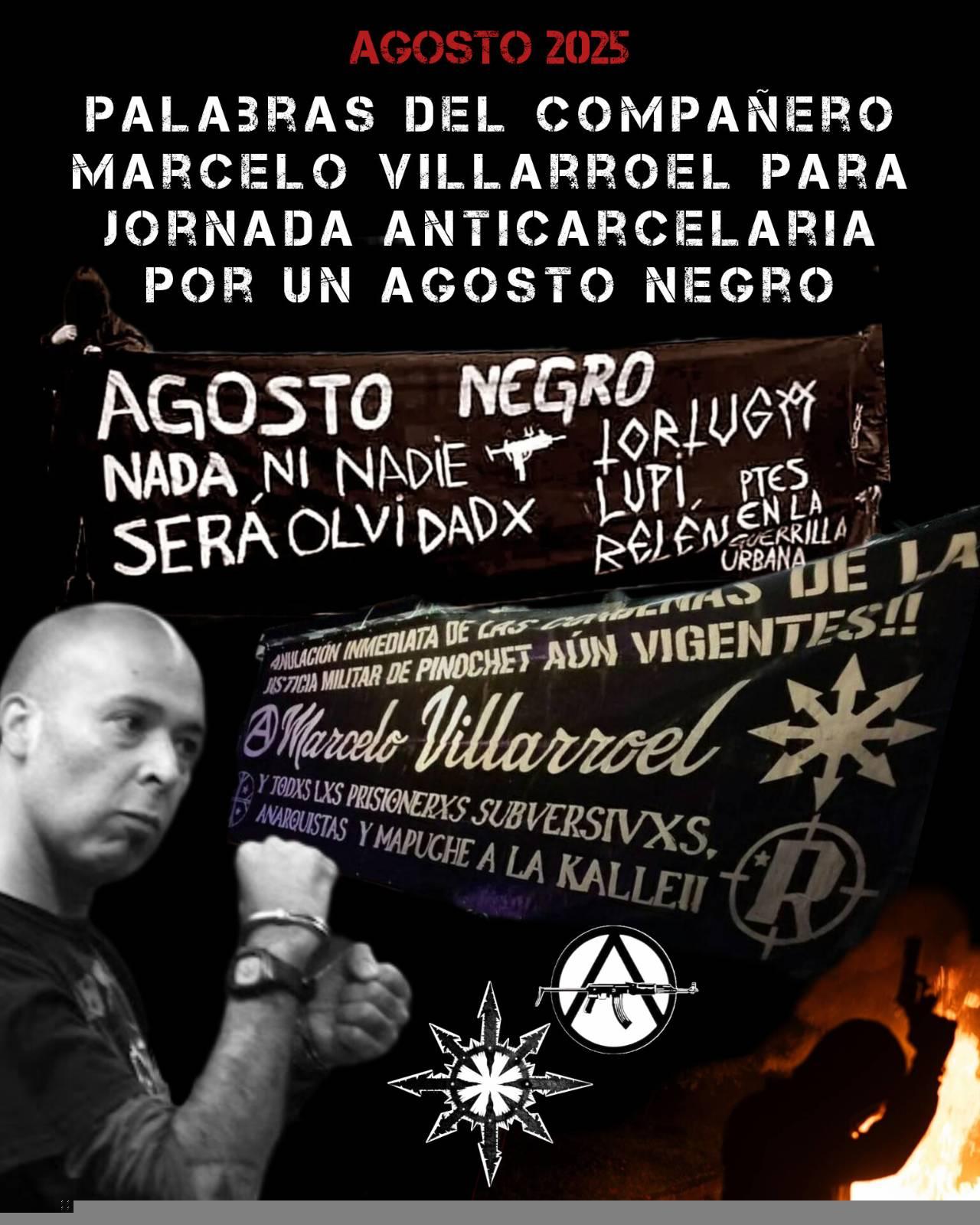
«There is no fight without blood, without prison, without clandestinity, without dead… you always have to have this clarity.
(…) Talking about death and not cornering in the grief, talking about the lives of those who left, knowing that they know their blood, we have been watering the path of the struggle and continuing it is the best tribute to all those who are no longer there… the rest are just excuses.»
–Marcelo Villarroel, anti-authoritarian prisoner.
(Interview published as part of the call for a Black August 2025).
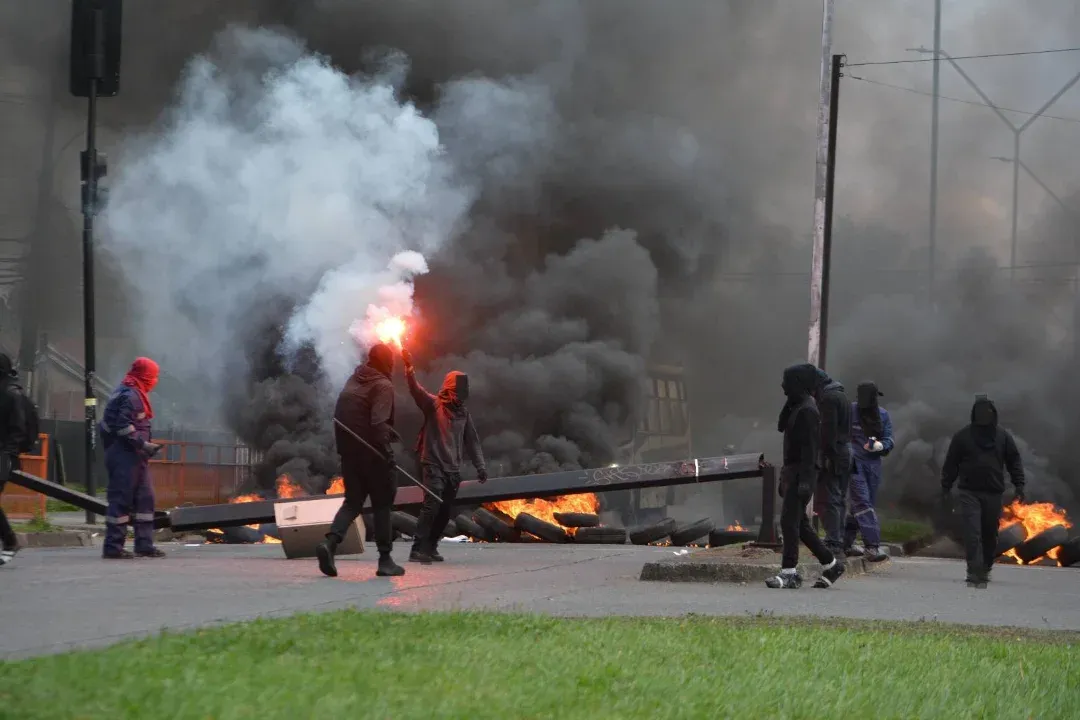
«In most of the days of violence (…) brochures or canvases related to anarchist causes have been exhibited.
In yesterday’s demonstration, hooded people held a banners with the legend ‘Black August’ and the name of 3 people linked to violent criminal acts, and even to the placement of explosive devices.»
-The bastard J. Bellolio.
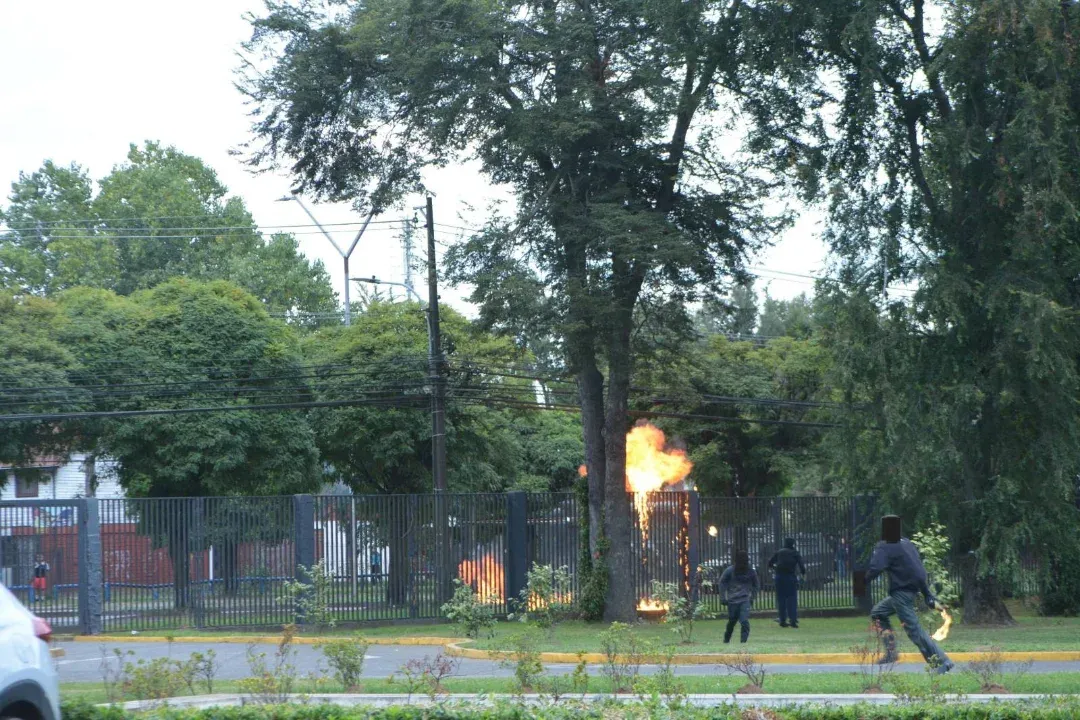
(Referring to incendiary action from the Lastarria high school on 08/13/2025).
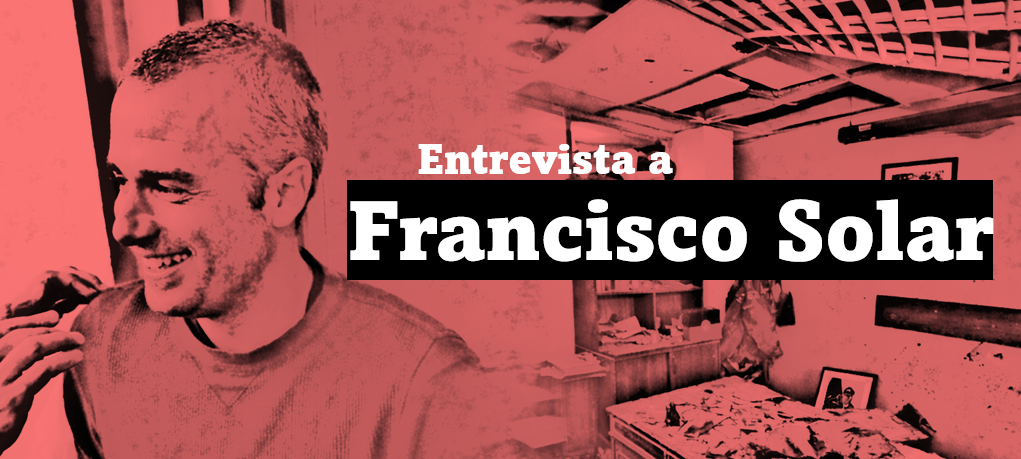
In this fourth interview, we engaged in a dialogue with our anarchist comrade Francisco Solar, acting as a bridge to spread his words and delve deeper into various topics and contexts of interest. His perspective and participation in grassroots projects are vitally important, as they break with the inaction that prison seeks to impose. Throughout this conversation, we address not only aspects related to his personal experience in prison, but also broader political reflections on the ongoing struggles and challenges facing anarchist circles.
1.- How are you doing now? Could you tell us a little about your experience in La Gonzalina prison? What differences do you see between the prison systems in Europe and Chile?
Almost a year ago, I left the maximum security wing where I had spent almost five years and moved to a high security wing with a normal regime, which basically means eight hours of yard time and the possibility of conjugal visits.
Based on the above, my situation is clearly more favorable, as I am not subject to the restrictions of a maximum security regime. However, sharing my daily life with fellow anarchists and subversives who were already in this unit makes prison life much more bearable. Escaping at times from the harmful authoritarian dynamics that exist among prisoners and trying to practice relationships that are contrary to these is a constant challenge and struggle that involves constant questioning. It is clear that we are not an island within this unit; we deal with contradictions and obviously sometimes reproduce behaviors that we say we reject. However, our dynamics, those of the anarchist and subversive prisoners, are different from those of the rest of the prisoners. Our relationships are not based on the stark authoritarianism of the other prisoners, and that is evident.
My daily routine consists of playing sports in the yard, talking and walking with my compañeros, and reading. As I have pointed out in other writings, it is important to have a daily routine, which, at least in my case, allows me to maintain a certain mental clarity and avoid falling into prison despair.
The differences between the Chilean prison system and that of Spain lie mainly in control. The Spanish prison system has managed to discipline life inside prisons through constant and prolonged adjustments to its control strategies. Through the FIES (Ficheros de Internos de Especial Seguimiento, Special Investigation and Security Unit) and dispersion, the Prison Service has pacified Spanish prisons, even managing to turn prisoners into their own jailers, as can be seen in the increasingly numerous “respect modules.”
Although the Chilean prison system is moving towards exercising control in the “Spanish” (or European) manner, the truth is that it is still a long way from achieving this. The control mechanisms are much more precarious and ineffective, which leads, among other things, to the establishment of certain “rules” imposed by the prisoners themselves within prison life. These rules are based on extreme authoritarianism that produces and reproduces relationships of outright slavery among the prisoners themselves. If solidarity was once present in these dynamics, today such relationships have been virtually relegated to make way for ostentation and the aforementioned authoritarianism that makes prison life a hostile environment. Continue reading “$hile: Interview with anarchist prisoner Francisco Solar”→
One year after the departure of Tortuga and Belén. Words from subversive comrade Marcelo Villarroel
The daily struggle and resistance against imprisonment in centers of extermination and isolation would not be possible without the fertile bond of insurrectionary complicity between different comrades in different parts of reality.
In high-security and maximum-security cells, in the furtive mountains, in cities and metropolises riddled with techno-surveillance, on the paths of the struggle to live free… there is always one of us, one who does not adapt or surrender to the vicissitudes of domination, and that is where we find Tortuga, on that path of subversive antagonism, and Belén, walking freely through Anarchy.
We walk with our dead, our prisoners, and our fugitives. This is not a slogan but pure reality. We walk with our lights and shadows that feed the eternal fire of our rebellion. We walk with a firm step, seeking change by first changing ourselves, even if it costs us.
We walk without lowering our arms and we resist, we persist, and nothing stops us, not even the death that inevitably embraces us on this long road.
A fraternal and complicit embrace to all those whom nothing and no one can stop. To those who organize, to the imprisoned comrades who wrote, and to all those who resist with dignity in prisons and cages.
One year after the departure of Tortuga and Belén, we will continue to sow chaos and anarchy!
With all our fallen brothers and sisters and comrades!
Subversive anarchist prisoners and Mapuche prisoners out of jail now!
Until we destroy the last bastion of prison society!
As long as there is misery, there will be rebellion!
As prisoners known to be opposed to order, we feel it is our duty to send our love and fond memories to three individuals who are no longer with us on this earthly plane, and to their loved ones: Tortuga, Lupi, and Belén.
We were fortunate to have known all three of them.
Tortuga, in countless days of insurrectionary expansion of the anarchist seed, giving precious moments of propaganda, music, and questioning.
Belén, in the heat of the same struggle and direct action. We all knew how she bravely and fiercely put her words into practice, and she was always greatly respected for it.
And Lupi, when we went to welcome him with our comrades from Carreta Anárquica in Santiago 1, when he was imprisoned. We tried to give him a warm and supportive welcome: bringing him delicious food and warm clothes, laughing for a while in the face of misfortune. Seeing firsthand how, despite the nervousness and fear that comes with entering prison for the first time, he maintained a stoic and proud consistency in his words and actions. We met him in prison and will never forget his innocent and beautiful energy, the light he carried above his head despite the dire circumstances.
For all of them, honor, fire, gunpowder, and flames! To remember them without these elements would be disrespectful.
Let’s bring theory into conflict: let ideas set fires.
In our colorful and dangerous hearts live the comrades who are no longer with us physically. But we, the masterless, know that they walk beside us in danger and calm.
Political violence can be understood, from an anti-authoritarian perspective, as an aggressive response that seeks to break, attack, or fracture each of the components that make up domination.
This response could be limited to damaging the symbols of authority, thus leaving a powerful propaganda message, that is, one that manages to capture each of the motivations behind the action and, ideally, causes the violent response to be repeated or spread, or at least part of it.
As I said earlier, it is possible to attack symbolically, understanding that the current system of oppression can be seen represented in different elements or physical objects, or even in people.
For example, we have the case of Sante Caserio, who stabbed French President Sadi Carnot. From my perspective, he did this because the president represented political power, which at that time had led to the deaths of his comrades Ravachol, Vaillant, and Henry. His action sought to be a direct attack on those who publicly upheld power in the territory dominated by the French state in the 1890s. In addition to carrying out revenge, Sante wanted there to be no doubt about his motivations, which is clear in his cry: “Long live anarchy!” At the time of his arrest, as well as in his court statement.
Currently, we understand that the capitalist, heteropatriarchal system of domination is intertwined with complex social and cultural relationships, in addition to material structures and the people who sustain them. Consequently, and from an anarchist perspective, I have (and have held for several years now) the following questions:
How could a decisive qualitative leap be made that goes beyond attacking the symbolic? Is it really possible to “hit where it hurts” the capitalist system, in a world where relations of domination have reached a network of networks throughout the world?
The answers to these questions have changed as I have come to understand how domination has developed and persisted, and I have tried to act on these answers by shaping the many ways in which we can destroy everything that prevents the full development of each individual.
On the long road of how anti-authoritarian political violence is exercised, the successes and failures must necessarily be a collective learning experience for those of us who stand on the same side.
Among those of us who have found ourselves in anarchist/anti-authoritarian “action,” we constantly meet new comrades, just as we painfully say goodbye to many others.
Comrades Belén, Tortuga, Lupi, your memory lives on.
Health and Anarchy!
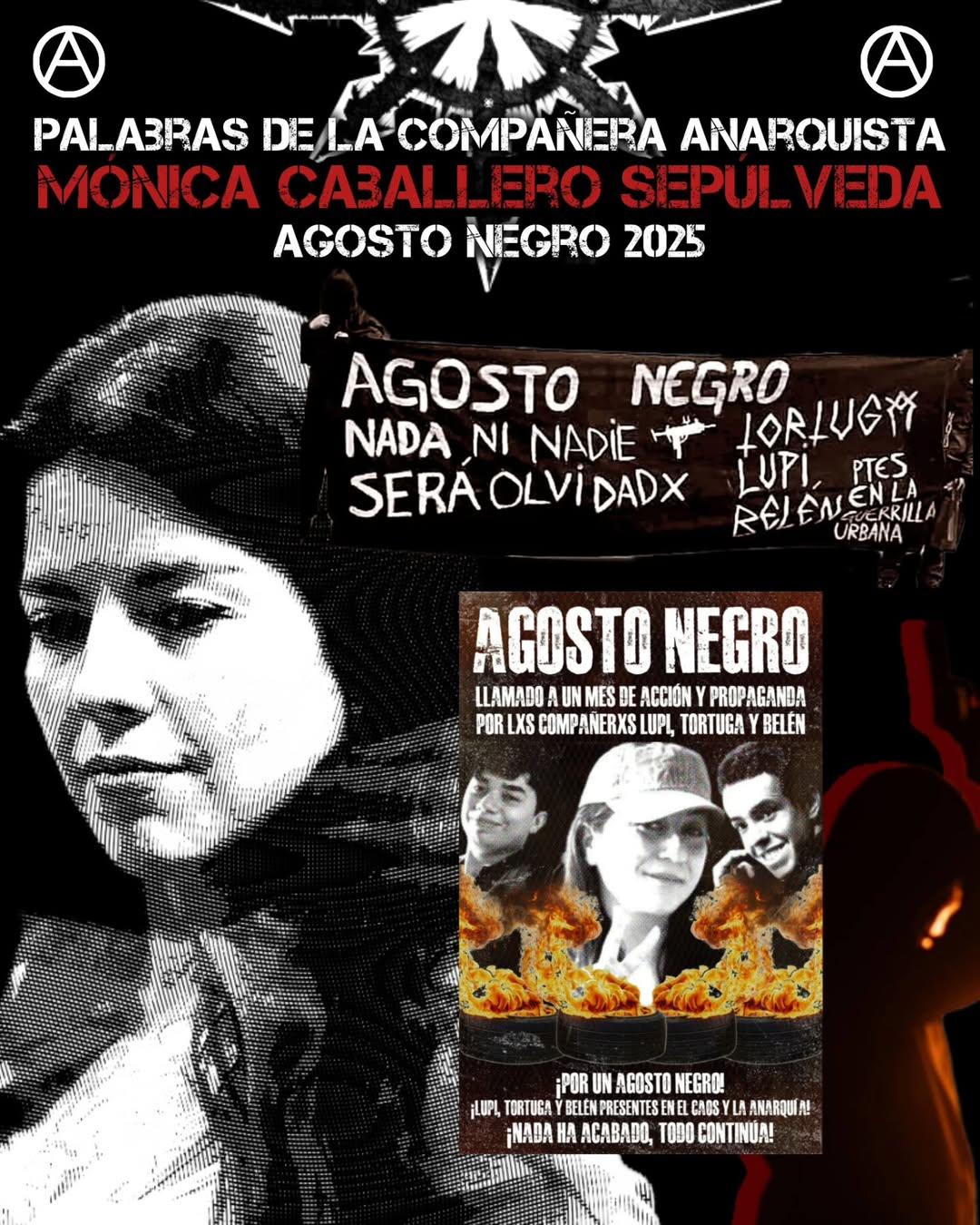
Mónica Caballero Sepúlveda Anarchist prisoner Black August 2025
August has a black memory. One that is indispensable for those who stand their ground and decide to act against domination. In memory, something from the past merges with the present, even more so when memory ceases to be words and manifests itself accurately in insurrectionary action or in a concrete gesture of solidarity. Thus, black memory manages to transcend the censorship of power and advances without temporal or generational boundaries.
There also come moments when those who kept that black memory alive become part of it. And in diffuse temporal spaces, the present, the now, memories, and memory converge once again.
There are moments when life and death, from a binary understanding, vanish, creating an instant in which nothing and everything exists.
How must those who witnessed the cowardly and despicable trial that ended in the execution of Nicola Sacco and Bartolomeo Vanzetti have felt in August 1927?
Despite the insurrectionary actions of comrades, demonstrations, and petitions of all kinds for their release around the world, they were electrocuted by the United States on August 23, 1927, at midnight.
“We must respond to their violence with our violence: revenge. We must oppose their infamous instrument that burned the bodies of Sacco and Vanzetti with our instruments of vengeance,” said Di Giovanni in Culmine, in response to the infamous execution of his comrades. He also made it happen: he blew up the Washington monument and the Ford Motor Company in Buenos Aires…
The physical separation from so many comrades is an experience that weighs heavily on us. Only by breaking free from imposed understandings can we heal the absences and learn to live with them.
Last year, two dear comrades left us physically: Luciano Pitronelo and, a few days later, Belén Navarrete, both close to people we loved very much, comrades in ideas, activists, and supporters of our comrades in prison.
After that blow, after the impact, the actions began. The banners and graffiti with their names, barricades and pamphlets with their faces, incendiary outings and other chem were once again merging the present and the recent past, in violent actions, in fire, in banners, in graffiti.
And just as others remembered and made present their comrades almost a century ago, confronting cowardly and pacifist positions, today’s actions serve the same function.
Belén Navarrete lives in the explosion that blew up the door of the Abbott Recalcine laboratory on the stormy night of May 19 this year. The cells that bear her name made her present in an act of revenge for the distribution of contraceptive pills that forced an as yet undetermined number of women and pregnant bodies into pregnancy.
In every gesture, in every action, memory and action, a mixture that fuses the present and the past, in August when the renewal of the trees reappears, when the buds are about to burst, the black memory opens the portal where we make our comrades present… every gesture… every action.
May actions thin the veil that separates life from death.
Belén Navarrete and Tortuga live in insurrectionary action.
For our comrades who transcended the earthly plane.
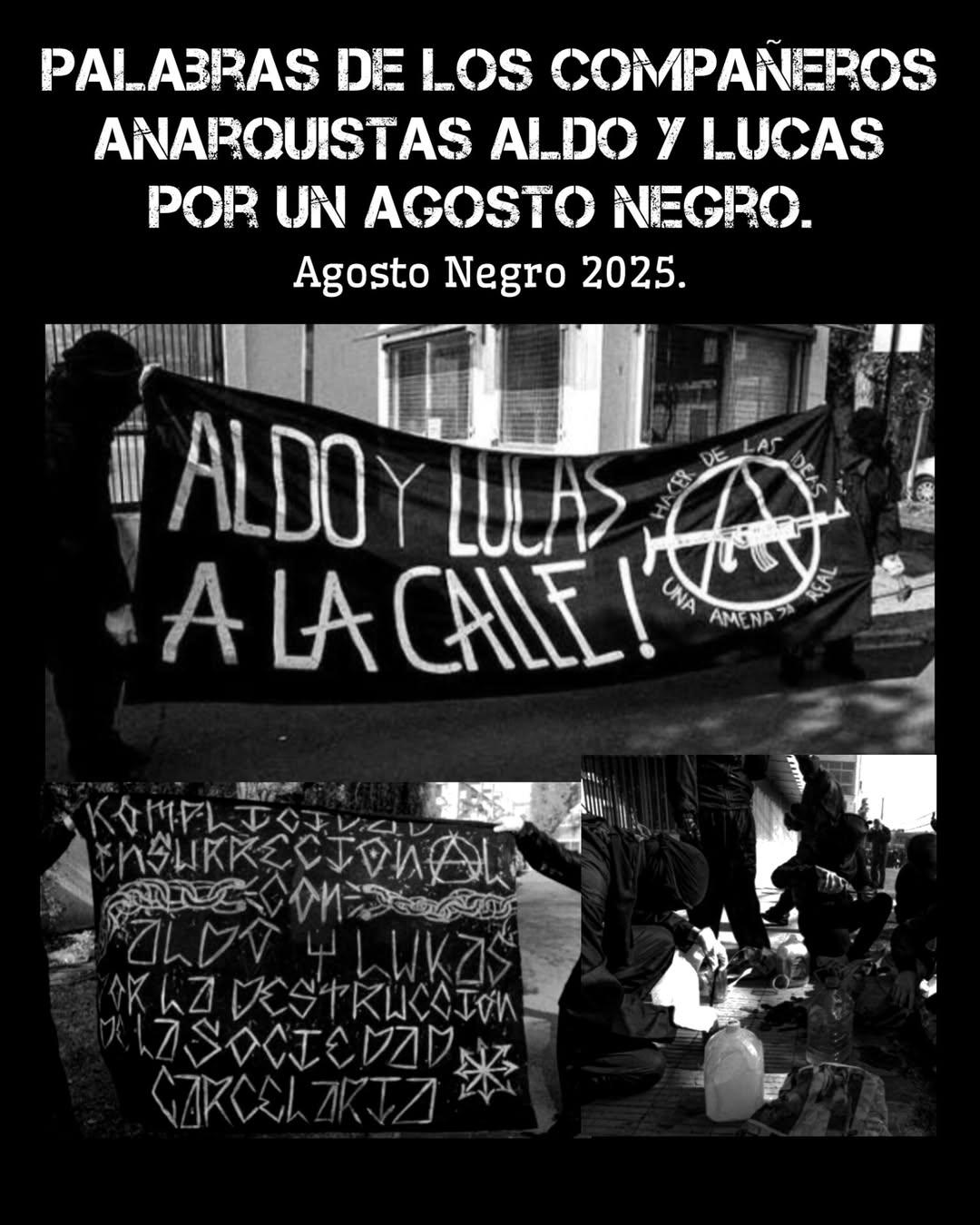
(Chile) Words from fellow anarchists Aldo and Lucas Hernández
For an August of black memory of struggle…
The absence they leave behind for their comrades must have an impact on the daily lives of those who knew them, those who exchanged more than a few words with them must miss them, and how could they not? Who is prepared for the death of a brother or sister? Even if we can put ourselves in the situation, the scenario, there is no certainty of being prepared. All feelings are personal and individual; what one feels inside must be experienced firsthand in order to speak of the loss.
We did not walk with you, we did not know you, but our comrades bear witness to your determined and resolute journey to face this reality.
These lines are to bring Luciano, Belén, and Lupi to mind, so that no comrade has to die in a distant memory, but rather be present in every moment that one decides to confront the establishment.
For Luciano, Lupi, Belén, Santiago Maldonado, Macarena Valdés, and so many others who died or were killed…
First week of a Black August. Aldo and Lucas from “La Gonzalina” and “Santiago Uno.”
14 years have passed since the morning of Wednesday, June 1 in 2011 when the comrade Luciano Pitronello, known as Tortu, was gravely wounded after attempting to place an explosive artifact in a branch of Santander Bank in Santiago de Chile. This action, though failed in its execution, turned into an inflection point, not only for his life, but also for the anarchist space that surrounded him and of which he was a part…
The Context of the Offensive and Repression
Luciano acted in a moment of high tension. Since the death in action of comrade Mauricio Morales in 2009, who tried to attack the nefarious Gendarmerie School, a repressive offensive was unleashed against anarchist spaces in Chile. The cruelest point of this persecution was on August 14, 2010, when the government of Sebastián Piñera executed a media and police frame up known as the Bombs Case. 14 comrades from different social spaces and squats were arrested, while another comrade went on the run to avoid prison.
Many spaces closed, and the anarchist environment suffered a retreat. All this was due to the fact that, for years, there had been various direct attacks against power claimed by anarchist groups.
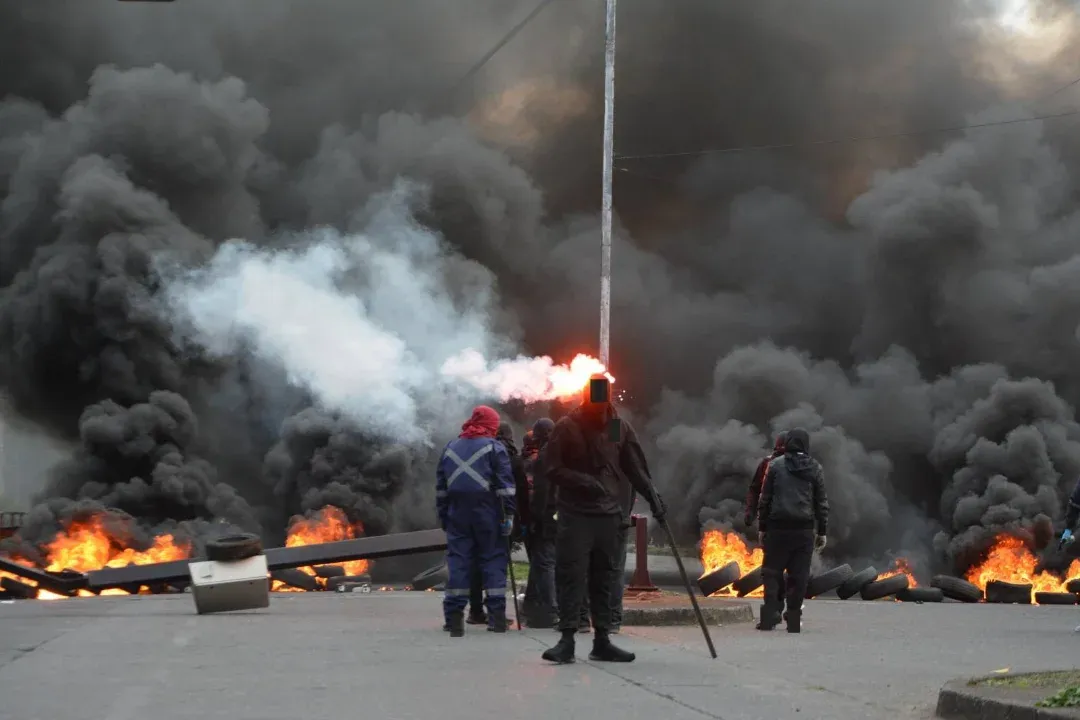
As every March 29, with greater or lesser intensity, a new Day of the Young Combatant is commemorated in different parts of the territory dominated by the Chilean state. This year the date fell on Saturday, causing that on Thursday 27 and Friday 28 high school students from Liceo de Aplicación, Liceo Manuel Barros Borgoño, INBA, Liceo 1, Instituto Nacional and Liceo Eduardo de la Barra (Valparaíso), university students at the Juan Gómez Millas campus, Universidad de la Frontera (Temuco) and Universidad de Playa Ancha (Valparaíso), and comrades in general, were rioting and confrontations with the police in high schools, universities and in the center of Santiago, also different gestures of agitation accompanied all these days.
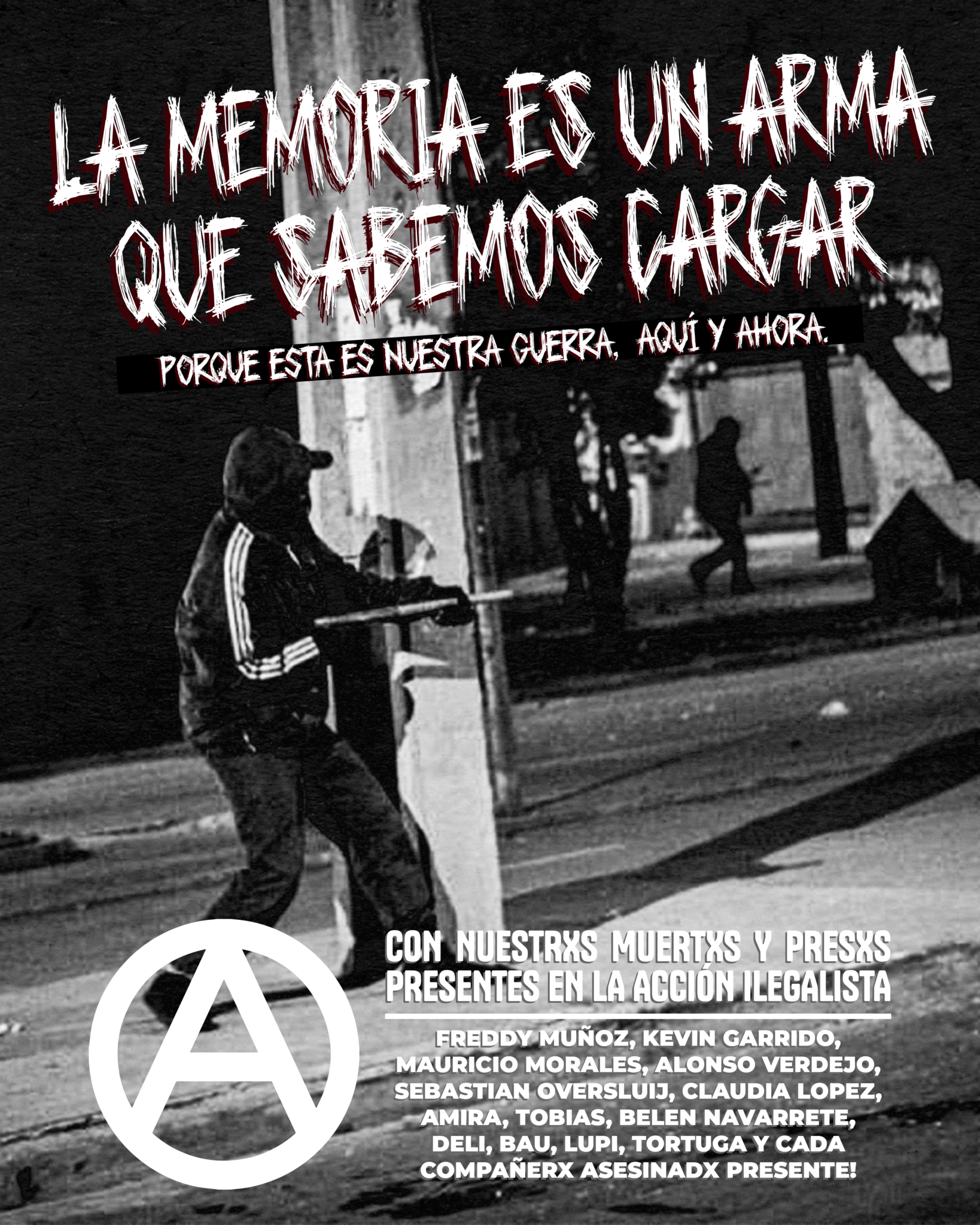
On the night of Saturday 29th the streets of Cerro Navia, Estación Central, Quinta Normal, San Bernardo, Huechuraba, Peñalolén, among others, lit up. With Molotovs, stones and homemade or industrial weapons, comrades confronted the police in a new commemoration of the Day of the Young Combatant with combative memory for Eduardo and Rafael Vergara Toledo, Luisa Toledo, Mauricio Maigret, Claudia López, Mauricio Morales, Sebastián Oversluij, Luciano Pitronello, Belén Navarrete, among so many other dead comrades who still remain present through anarchic action absolutely far from any iconic, symbolic role or elements of admiration.
Finally, the day left a total of 42 detainees who went to detention control and were released in the course of the following day.