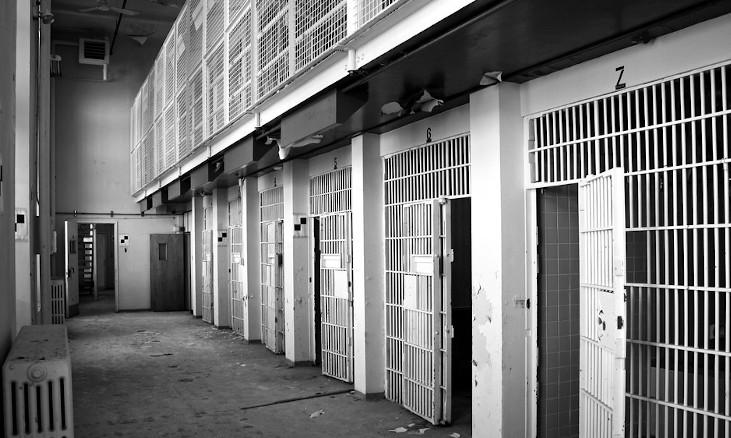
An interview recorded illegally by telephone between Toby Shone and the leading occultist and psychonaut Julian Vayne, with added vibes from chaos magickian Peter J Carroll. Recorded and transcribed when Toby was imprisoned in G4S Parc, South Wales, on 23hr lockdown.
The introduction is the transcript of a talk from prison that Toby gave at Ozora psy-trance festival in 2022. The interview was recorded by Julian in 2022, with the result that Jules was removed from Toby’s phone list on grounds of “national security” and “conveying an illegal recording outside of the prison”. This interview was thought so dangerous by the British regime that they tried to suppress it, silence Toby and stop solidarity to his case.
This pamphlet has been available in print format since 2023 and is now being released online.
No gods, no masters!
Designed, printed and distributed by the Anti-Copyright Network 2025
The former political prisoner talks about his anarchism, the 325 project and resisting the physical and mental jails that surround us all.
~ Interviewed by Elizabeth Vasileva ~
You recently spoke about the importance of solidarity and connections, between prisoners and with their supporters on the outside. Can you give us any examples of this kind of mutual or collective empowerment in the pushback against prison’s continuous repression?
Shortly before I was released in 2024, violent cell searches by a tactical unit of prison guards known as the National Search Team took place on C-wing of HMP Garth in Leyland, where I was being held. The NST took over the wing with dogs and riot gear. Cell by cell the raid took place with a lot of pointlessly brutal drama. In ones and twos we were handcuffed and placed in a locked wet room. Some prisoners were beaten, abused and a lot of our things were trashed. Some of the guys fought back, flooded their cells, banged their doors or played music really loud as a protest. The next day the whole wing refused to go back into their cells after the early morning unlock hour. As a cacophonous and unruly mob we demanded the immediate return of seized items, the replacement of damaged items and denounced the violence. This lead to the screws backing off. There was nothing at that moment that the screws could do because we all acted together, and without any leader. At the end of the lunch period, the stop-out ended.
Similar things happened in my experience when one of the prisoners was killed by depression or hopelessness. Demonstrations outside the prisons where I was held also were a strong experience that had an impact upon the guards and us. Especially when the fireworks exploded across the night sky and the comrades outside were militant. I found other prisoners to be generally supportive of each other in the roughly anti-system and criminal environment. Whenever I was transferred or moved to a different cell, the local guys usually would come to check if I was okay and if I needed anything. I helped other guys with their legal cases or prison admin, and tried to find common points of interest and subversion. We’d try to back each other, and if I had some problem, the guys would be voicing their demands too. There’s refusals and kick-offs being made in most of the prisons around the country each day about conditions and treatment. I lost track of the number of prison labour refusals and walkouts I heard about when I was inside, they are very common, as is getting on the netting that separates the landings to protest about treatment and poor conditions.
When I heard that comrades outside were carrying out revolutionary solidarity, that is when I felt our power inside the prison, I can say. From hearing about the direct actions with the Adream case in Chile, France, Italy, Indonesia and around the world, to the phone-call interventions that I was able to make from inside prison to meetings of comrades on the outside, I could feel the warmth from the comrades. Also knowing about the censored letters and books, the solidarity funds and benefit events, it was great.
For readers who don’t know 325, what can you tell us about the project and its content?
325 is an anarchist network of counter-information and direct action. In November 2020, Dutch counter-terrorist police took down the nostate.net server which held the 325 website, upon request from their German and English colleagues. The website was a long-running information clearing house of general news, reports, communiques, publications, event listings, etc. Mostly the website covered Europe, Latin America and South East Asia. 325 is also a hard-copy magazine which comes out on an intermittent basis, and dozens of publications have been published by the collective, including the newsletter Dark Nights, which has it’s own website.
Over the years, 325 has participated in an evolving participatory international network based on direct action and the support of prisoners, as well as providing space for various tendencies of anarchist, anti-capitalist and anti-civilisation groups. In recent issues of the magazine the analysis has shifted slightly to the profound new industrial changes in production and technology, such as artificial intelligence, life sciences and automation. The archive of the 325 site is an important document of social and armed revolutionary struggle over a number of years in Europe and internationally. The project started in 2003 and continues. Continue reading “UK: Wildfires will begin: An interview with Toby Shone”→
Opening the tensions of dialogue, we present the following section of interviews with individuals, collectivities and related spaces that make up the anarchic body in different parts of the world.
The interviews are a valuable contribution to the observation in detail and depth; they come, in a certain way, to broaden the view to give us feedback among comrades and to debate with perspectives and projections, that although they may be different, they converge in the ideas and practices of freedom against all authority.
Without further ado, we have in this first venture of dialogues the comrades of Espacio Fénix.
1-How and when did Espacio Fénix arise, and what projects converge in the space?
Espacio Fénix was born in the middle of the pandemic, at the beginning of 2021, in the midst of a series of ridiculous mobility restrictions and increased police intervention under the excuse of controlling and preventing the spread of covid-19.
Thus, a group of compañerxs got together, seeking to open a crack, a fissure within the asphyxiating panorama that was regulating everything, imposing the rhythm of power and where many seemed to be accommodating or waiting for the authority to give us “permission” to resume our lives.
We embarked on the idea of opening a physical space where comrades could converge, where anarchic material could circulate and where new comradeships could be woven and articulated. Thus in May 2021 we opened the doors of the space, we began to set up its infrastructure and in July we held our first activity in memory of compañero Santiago Maldonado.
Claustrofobia Ediciones, the Biblioteca Antiautoritaria Sacco y Vanzetti and various anarchic individualities converge in the space.
2-The “Ciclos de Cine” (Film Cycles) is the tool you have used the most to carry out activities. What is the significance for you of the screening of films, documentaries, etc.?
We started with the film cycles in October 2021 and we have not stopped every Tuesday, month after month, grouping the films by specific themes, seeking to stress our ideas and nourish our arguments with content, it is the beauty of the feedback between colleagues with diverse experiences and views.
From the very beginning, we proposed the screening of films as an excuse to sit down and converse, because after each screening, the central part of the activity comes to life, which is the discussion about what has been screened. There the words run, without leaders, where everyone can expose their dislikes, their liking or the results and analysis that is made of what we have seen. With this gesture we also seek to break the logic of passive spectators, of consumers, very typical of socially imposed roles.
In this sense, we have screened diverse audiovisual material, industry films, documentaries made by compañerxs, films that we like or dislike, always aiming at the discussion and tension between compas.
We do not seek to fill the cultural gaps of authority, nor to be the free panorama for those who lack resources; we seek, by different means and tools to spread our anarchic and anti-authoritarian ideas/actions, therefore the film cycles are just one more tool we choose.
Ciclo de Cine March 2024Ciclo de Cine November 2021
3-Regarding the written material, what is the importance and power that you perceive in it?
The written material certainly has another power, another depth and transcendence, of course the spoken thought is important, but writing allows the ordering of ideas, so as to be able to reflect more carefully on what is going to be exposed and to assimilate/discuss more deeply on what is read.
In a present where immediacy, image culture, the digestible and pyrotechnical, where almost the medium is the message, emptying of content many of our tools, writing/reading is a weapon, which can also serve as a refuge, where to continue polishing and sharpening our ideas.
The written material is an instrument that impels us to grow, to argue and continually revise our positions, widening our views, shining light where there was darkness.
On the other hand, it is necessary to say that written material has always accompanied anarchists, as propaganda for the dissemination of ideas, it is an effective tool to enter into dialogue with more comrades wherever they are: in the street, in prison, or other territories. It is important because it nurtures individual thinking, as well as possible collective discussions.
The written material as propaganda can bring together comrades and depending on the objectives and projections that we have, we can realize initiatives of various kinds. In the same way that we can find ourselves on the path of anarchic struggle, we can also distance ourselves from people who spread anarchist propaganda of other tendencies, for us those who are called to participate in the electoral circus, appeal to platform organization, dream of unity and large federations and those who reject legitimate political insurrectional violence – to give just a few examples – puts us in another place on the sidewalk and in several cases as enemies.
4-There are political-cultural spaces that coexist peacefully with power, while others attract police attention. Why do you think this happens? Are there more dangerous ideas-practices? If so, what would these be?
We don’t think this was the intention of the question, but it is worth clarifying to avoid pejorative atmospheres. For us, anti-power spaces/ideas/practices (truly anti-authoritarian and anarchic, leaving out and fighting the bullshit of “popular power”) by definition do not coexist peacefully neither with power, nor with authority, nor with the police and their investigators of all kinds.
Police eyes and ears are always there, to believe otherwise is naive and dangerous. They let themselves be seen or directly attack depending on conjunctures or panoramas that mark a change of rhythm.
In this sense, it is not the police harassment that defines our comrades’ ties -it is defined by our ideas, values and projections- because valuable initiatives that are undoubtedly a contribution to the anarchic tide, may not receive the police onslaught in an evident and grotesque way and not for that reason be considered “legal”, “innocent” or in any way aspire to coexist peacefully with the power. For example, at present there are activities that do not receive police interference, but that 3 or 4 years ago were seen as a danger and received harassment; we are talking about common pots or self-defense activities. It does not change the activity or the background, but it changes the perception of power or the effect it seeks to achieve as a chain reaction (fear, disarticulation, etc.).
Now, it is important to emphasize that these types of practices carried out by those in power are part of their work, and must be understood as such. They have always existed and will continue to exist, we do not say this in an alarmist way, much less to call for immobility or to “disappear” from certain spaces. Simply because it must be clear, those who consciously decide to undertake a confrontational path to power and propagate it in multiple ways, may encounter those enemy dynamics, therefore, the consequences must be assumed. Continue reading “Chile: Interview with Espacio Fénix EN/ES”→
The Final Straw Radio Podcast Interview With Imprisoned Anarchist Toby Shone
US web-based The Final Straw Radio Podcast has a new interview with imprisoned anarchist Toby Shone in which he gives a background to Operation Adream, his arrest and trial and his recent recall to prisons plus the involvement of the security services in his case and the ongoing harrassment that he has suffered in HMP Garth.
The solidarity group for Toby Shone would like to ask that anyone writing to him could also take a moment to let us know that you have sent him a letter by dropping an email to forestcase@riseup.net
HMP Garth are telling him – as have other prisons he has been in – that he has no mail. The State and the pigs are desperate to isolate Toby and to make him believe that he has no support. This is stated in his probation paperwork as a goal of his probation team and the National Security Division.
Let’s not let them win! We have no control over whether the prison gives Toby his mail and books. We do however have control over writing to him and letting his support group know that you have so that even if he doesn’t receive it, he knows it was sent to him. A letter sent by recorded delivery so that we can tell Toby that yes, this letter arrived on such and such a date is even better.
Toby is very resilient and is always in good spirits. However, he has been very unwell, has lost a considerable amount of weight as a result of the lack of food and calorie count typical of Britain’s jails and now faces a month of no visits due to confusion over bookings. So now would be a really really good time to send Toby a postcard, a letter or an email (and then let us know that you have).
Thanks a million.
The State is the Terrorist.
No one is Alone!
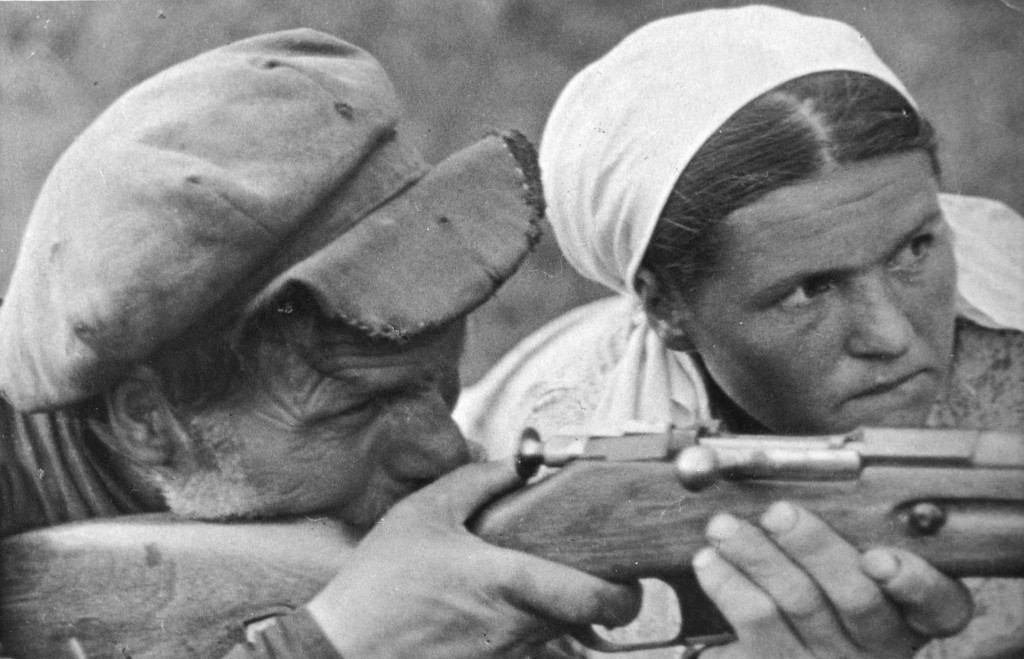
It is important that women’s protest voices be heard from movements with different strategies: we all have something to exchange with each other. Our activists are interviewing representatives of the Militant Anarcho-Communist Organization to remind us that the phrase “women’s place is in resistance” is not just a beautiful metaphor, and sometimes women make the choice to protest radically. For the initiative, whose representatives we interviewed, it is important to damage public infrastructure, not civilians, so all actions are designed so that no one gets hurt. You can read about the women partisans of the past, whom our heroines inherit, in a beautiful text by Maria Rachmaninova.
If you are in Russia, be careful about distributing this material, learn all the necessary cybersecurity guidelines if you are distributing any material about war and resistance.
_________________________________
Do women take part in your guerrilla actions? If so, in what capacity? Does gender affect camouflage and security, maybe women arouse less suspicion and so on?
Yes, we take an active part in guerrilla actions at all stages, from plan formulation and scouting (note: intelligence) to direct action and media coverage. To some extent, the distribution of responsibilities may be due to physical ability, but it often depends not on gender, but on a person’s individual characteristics: some people find it easier to carry a 15-kilogram bucket of igdanite, some can see better, some run faster, and some shoot more accurately.
Gender certainly affects disguise and security: the very presence of a woman in the collective transforms (in the eyes of the public and the police) a dangerous gang of shady types into a harmless group of friends walking late into the night. Because of the sexism ingrained in the ranks of the police, women tend to be less likely to be stopped on the street or in the subway, and less likely to be searched. We’ve had quite a few cases where, for example, when we pass through a metal detector frame, a signal goes off, and the subway policemen and janitors come running and start meticulously checking a young man (who, of course, has nothing to hide), while a girl with a gun stands quietly nearby. So it turns out that sometimes the man is carrying something heavy and the woman carries something dangerous (like a detonator) in a small purse, without arousing suspicion.
Also, in our experience, it is much easier for women in terms of disguise themselves – changing their appearance. At the action itself everyone looks about the same: as blackblock kids, but before and after the action, when it is necessary to look civil, a woman needs to dissolve her hair (wig) and roll up a dress, when as a typical male image, which should not attract attention, allows only minor changes, for example in the color of clothing.
This conversation between Paul Cudenec and the Italian group Resistenze al nanomondo was first published in the July 2022 issue of the printed journal L’urlo della Terra and has recently also been made available online, again in Italian.
1. Resistenze al nanomondo: Can you can tell us about your story, your path, when you started developing a critique of techno-scientific developments and what thinkers you learned from?
Paul Cudenec: I don’t think I could separate my critique of techno-scientific developments from the rest of my opinions and analysis. I have been an anarchist for 30 years now, but even before then, in my youth, I felt a strong instinctive aversion to high-tech consumer society. On the one hand it was associated with everything that I most disliked – big business, the state, the military, authority and control in general. On the other hand it stood against everything that I most appreciated – nature, freedom, community, a sense of historical and cultural continuity. The arrival of CCTV cameras in England was a wake-up moment for me. I worked at the time as a journalist with a local newspaper in one of the first towns to have cameras installed and, since I knew for a fact that there was very little crime there, it was clear to me that this project was nothing to do with fighting crime, as was claimed, but was the roll-out of something much more sinister. I wrote a punk song about this in the mid-1990s (which I put online last year), warning about “the cameras that steal our liberty” and the techno-tyrants who were going to scan our DNA, put microchips in our brains and turn us into robots. With the local anarchist group, which I subsequently helped to create, we used to hold annual protests against the cameras, marking the anniversary of their installation as “Big Brother’s Birthday”.
As you will gather from the above, George Orwell was, unsurprisingly, an influence on me. The history of the Luddites was another inspiration (via Kirkpatrick Sale among others), along with anarcho-publications like Green Anarchist, SchNEWS, Do or Die, Anarchy: A Journal of Desire Armed and various EF! publications. I also read David Watson’s Against the Megamachine, Fredy Perlman’s Against His-story, Against Leviathan, the Unabomber Manifesto plus a lot by John Zerzan and Derrick Jensen. I have more recently been influenced by reading the likes of Miguel Amorós, Jacques Ellul, Theodore Roszak, Charlene Spretnak, Renaud Garcia… But intertwined with that thread of my self-education have been other inspirations. The English nature mystic Richard Jefferies has been very important to me, as has René Guénon, who combined his metaphysics with a strong critique of modernity. I have also read elsewhere about sufism, Taoism, comparative mythology, English folklore, Indian philosophy, German idealism, Jewish anti-capitalist romanticism, Jungian psychology… What interests me, above all, are the connections between these accounts and traditions, or rather, perhaps, the new space that is opened up for our reflection when we consider them together, in the same conceptual context. Continue reading “Resisting Techno-Tyranny: A Dialogue”→
-Interview with comrade Gustavo Rodriguez (Third of three parts)
AI:To what extent was the 1959 revolution willing to destroy the system of domination and its protagonists determined to promote a Social Revolution?
First of all, it is necessary to examine thoroughly who were the forces in conflict in 1959; what were the motivations and; above all, the ideological limitations of those involved. Of course, this is an exercise fraught with difficulties for those who continue to be fascinated by the official mythology1 and; equally difficult for those who -from different points of view, even dissidents- cling to the supposed tendencies raised by certain protagonists (Camilo Cienfuegos, Hubert Matos, Ernesto “Che” Guevara, Pastorita Núñez, for example), as if trying to decipher (at a distance of six decades) what would have been the attitude of this or that character in a specific situation or whether or not he or she was right at a given time and what would have been his or her action if he or she had greater political weight in the process. In that tenor, the legends of Camilo “anarchist”; Matos “socialist”; Che Guevara “Trotskyist” and Pastorita “feminist” arose. All dilettante speculations that in no way help to understand what those figures hypothetically opposed to revolutionary autocracy and bureaucratization represented. Unfortunately, these digressions do not manage to escape from the legends that must be demolished. Neither Cienfuegos was “anarchist” nor Matos “socialist” nor Che “Trotskyist” and, Pastorita, much less “feminist”. By the way, the latter came from the old nucleus of Fidel Castro’s nationalist militancy2 ; as did Huber Matos, Ñico López, Haydée Santamaría, among other members of the “Orthodox Youth” of the Cuban People’s Party (Orthodox)3 who would found the 26th of July Revolutionary Movement (MR-26-7).
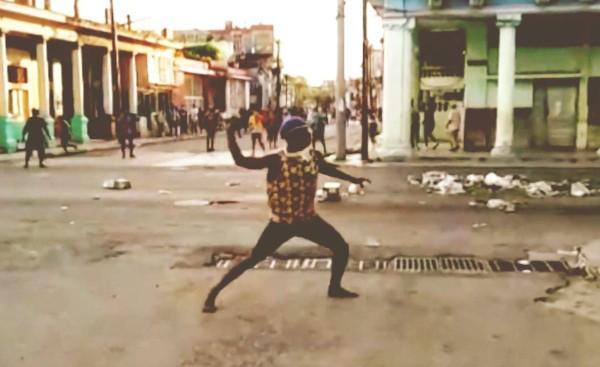
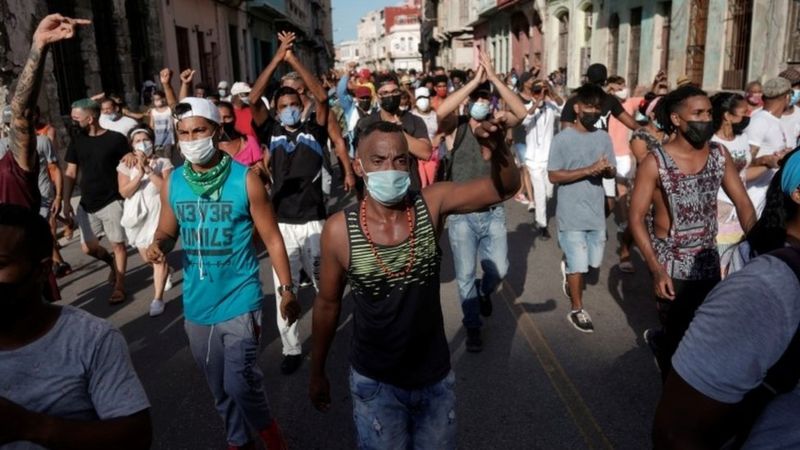
The opposition to the Batista dictatorship was made up of a coalition of traditional nationalist (anti-imperialist) parties4 and the so-called “revolutionary movements” which -from diverse and equally nationalist perspectives- were articulated in the course of the struggle. Among the traditional parties, the following stood out: the Cuban Revolutionary Party (Authentic), which emerged after the nationalist revolution of 1933; the Cuban Orthodox People’s Party, -established in 1947 by Eduardo Chibás, after his break with the “authentic” ones-; the Cuban Revolutionary Nationalist Party (Authentic), which was formed in 1947 by Eduardo Chibás, after his break with the “authentic” ones; the Revolutionary Nationalist Party (PNR) of José Pardo Llada (co-founder of the Orthodox Party) and; the Free People’s Party, instituted by Márquez Sterling and a group of assailants of the Moncada barracks who had broken with Castro and precociously warned: “We come from armed struggle, exile and clandestinity. We have shed blood […] and we invite you to break the hateful conspiracy of silence and fear. Against Batista. Against the Dictatorship. Against the useless blood that serves as a pedestal for new pernicious dictators “5 . Among the “revolutionary movements”, the following stood out: the July 26th Revolutionary Movement (MR-26-J) led by Fidel Castro; the Revolutionary Directorate (DR), created by José Antonio Echeverría – assassinated during the ill-fated assault on the Palace – and led by Faure Chaumón; the Federation of University Students (FEU) and the Radical Liberation Movement, founded by Amalio Fiallo and several “moncadistas” who also distanced themselves from Castro’s dictatorship. Continue reading “Part Three: What’s happening in Cuba? An Anarchic look at the 11-J protests EN/ES”→
-Interview with comrade Gustavo Rodriguez (Second of three parts)
AI:Do you think a U.S. military intervention instigated by the annexationist yearnings of the Cuban exile is possible?
To speak in the singular of “Cuban exile” is to refuse to see the whole picture. We must refer to “the exiles” and, not only for chronological but even “ideological” reasons. One should mention, for example, a first exile, which originated in December 1958 and the first half of 1959, with the flight of high-ranking army and police officers of the Batista dictatorship (most of whom -including Batista- did not obtain visas to enter the U.S.). Another one immediately after, between December 1959 and January 1961, where the aristocracy and the upper classes of the society (sectors that, curiously, had financed the struggle of the Catholic nationalists to overthrow “the black man” who governed the Island in an apocryphal way 1 ). A third wave would follow, which originated between 1962 and 1965, with the departure of the middle class. During those years, Cuban anarchists and anarcho-syndicalists also went into exile; some of them after having served “political imprisonment”. The story would be similar for a large group of rebels who had fought against Batista -including Castro’s former comrades of the 26th of July Movement- who opposed the Stalinist turn of “their” Revolution. From 1966 to 1979, the first leftist dissidents fled in dribs and drabs. 1980 would be a turning point for Cuban migration with the mass departure of the “scum” (an epithet used to designate thousands of artists and intellectuals, considered until then “sons and daughters of the Revolution”). In 1994, a new chapter was opened with the flight of thousands of ” rafters” who risked their lives in order to escape from the “socialist paradise”. These last two migrations stand out for the high incidence of Afro-Cubans from the poorest strata. And, of course, with the different waves of exiles, there is also evidence of diverse political-ideological positions, from the conservative right to the ultra-left (including libertarian socialists, Trotskyists, Maoists, Stalinists, Luxemburgists and “pure” Marxists), without forgetting the more hackneyed expressions of that same National Socialism which, from the extremes of the pendulum, aspire to a Castroism without Castro. A reliable example of that political-ideological diversity was the customary edition of the anarchist magazines Guángara Libertaria and A Mayor, in the heart of Miami.
Once these nuances have been highlighted, it only remains for me to underline that the only thing that gives a certain “unity” to the different exiles is the unison rejection of the dictatorship. This common denominator, in fact, has never exceeded the limits of a local industry (very lucrative) that is far from being a binding force capable of capitalizing some political leadership and, much less, consolidating a uniform and monolithic ideological vision (Fortunately!). And this is where the theoretical-practical heterogeneity comes in, which influences behaviors as disparate as the choice of the method of struggle or the geographical site we choose as residence. Of course, in this extensive political-ideological plot, there is also the annexationist position. However, it is necessary to point out that this political figure had a certain prominence in the 19th century and, at present, it is reduced to an entelechy fabricated by the dictatorship. “Annexationism” is significantly small and caricatured. It is so buffoonish that it leaves no doubt that those who express it -on this side of the Florida Straits- are probably on the payroll of the Cuban State. Continue reading “Part Two – What’s happening in Cuba? An Anarchic look at the 11-J protests EN/ES”→
I am a 67 year old white cis gender female anarchist on parole for life after being convicted of a number of actions in 1984 along with some members of the urban guerrilla group, Direct Action. Since being released from prison, I have been living for almost 25 years now on a small farm that I own near Odessa just west of Kingston, Ontario. I am active with the Prison for Women (P4W) Memorial Collective which has been fighting for a Memorial Garden at the site of the now closed Prison for Women, and a Gallery where the women’s art and writing can be seen in order to give some context to their lives and deaths.We also agitate to improve prison and parole conditions as a harm reduction tactic in order to alleviate some of the suffering, but always within the context of the abolition of prisons and capitalism as the goal, the light that guides us through the darkness
I should also add that my parole conditions have a direct impact on my political activism. In 2012, my parole was suspended for allegedly not telling my parole officer about a Prisoners Justice Day (PJD) film I screened at the Kingston public library in conjunction with a lawyer who outlined our civil rights in the context of large civil disobedience actions. My parole was reinstated by the Parole Board but only after adding this new parole condition in which I must “notify” my parole officer about any political activity in which I am engaged, such as attending events, public speaking, writing, etc. Even though the word is “notify” as opposed to “approve,” they could revoke me for anything. This seems shocking to activists, but any prisoner who has been on parole knows that you can be revoked for anything, anytime. It is very common to be suspended for obscure things like “deteriorating behavior” or “having a bad attitude,” especially if you are not a politicized prisoner. Politicized prisoners usually have some community support and a radical lawyer, so parole suspensions are more likely in the public eye and thus parole officers and the Parole Board are more accountable. “Social prisoners” on the other hand are usually invisible and are less likely to have legal representation so parole officers feel less constrained in terms of suspending them for ridiculous reasons. Continue reading “Harm Reduction Guided by the Goal of the Abolition of Prisons and Capitalism: An interview with former Direct Action member and ex-prisoner Ann Hansen”→