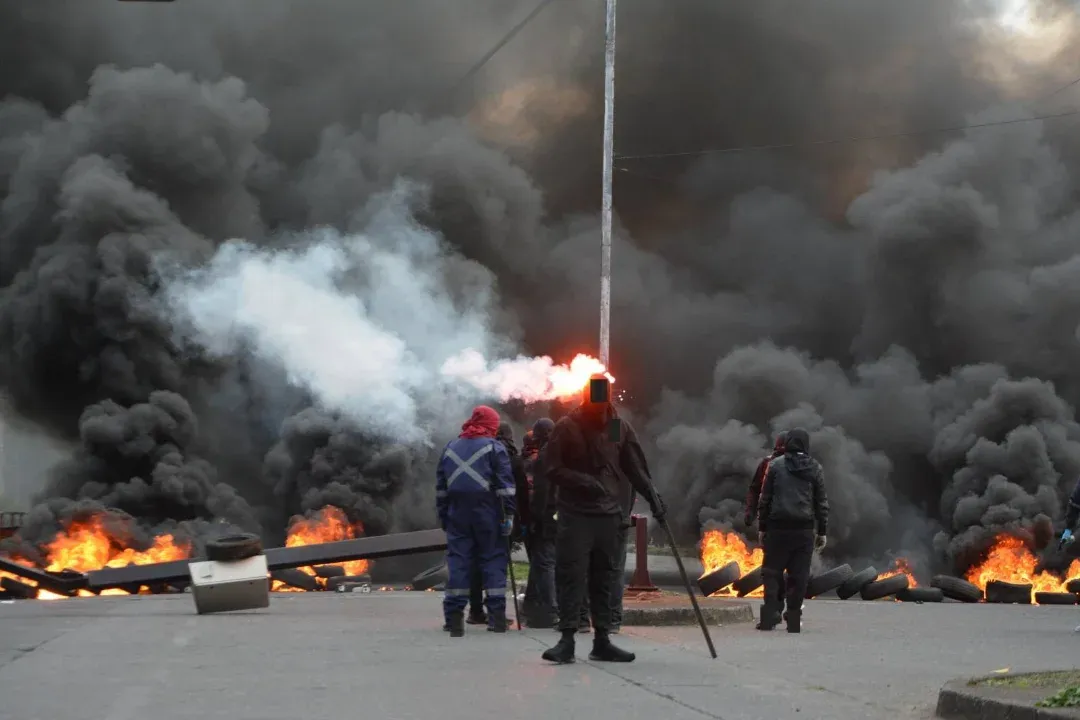
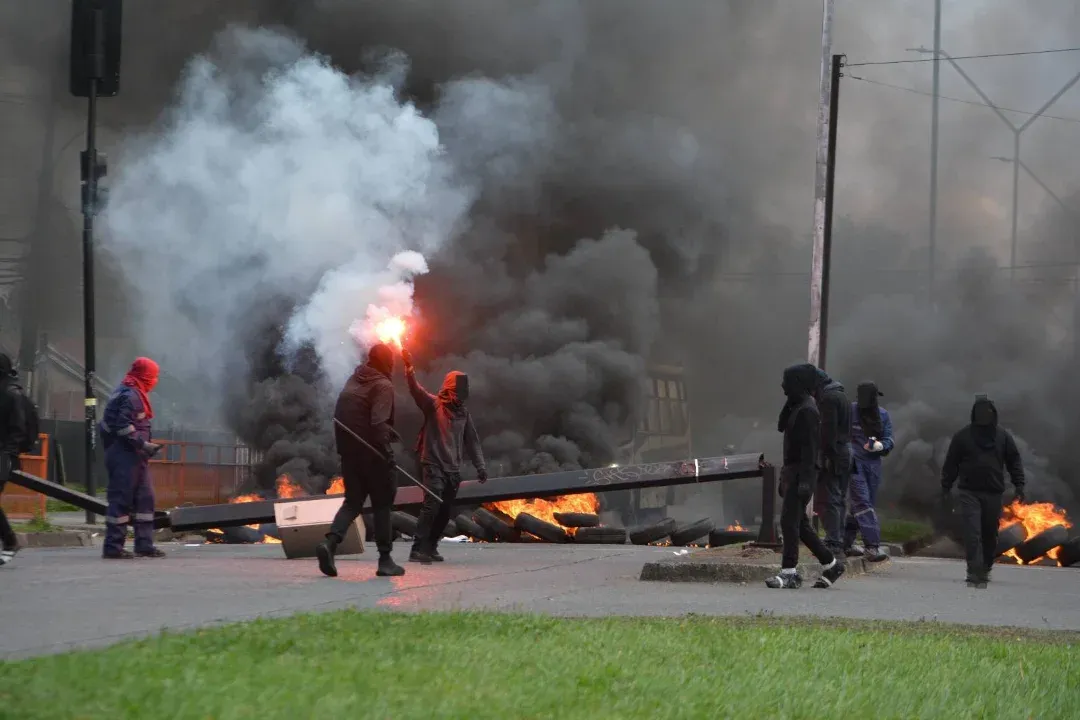
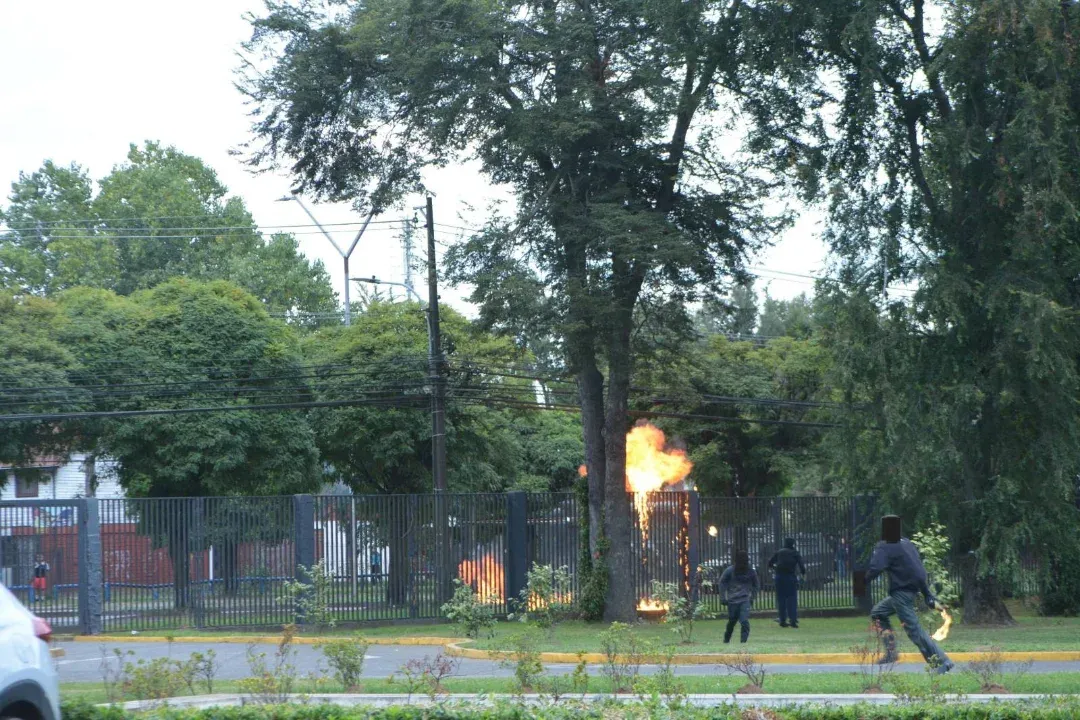
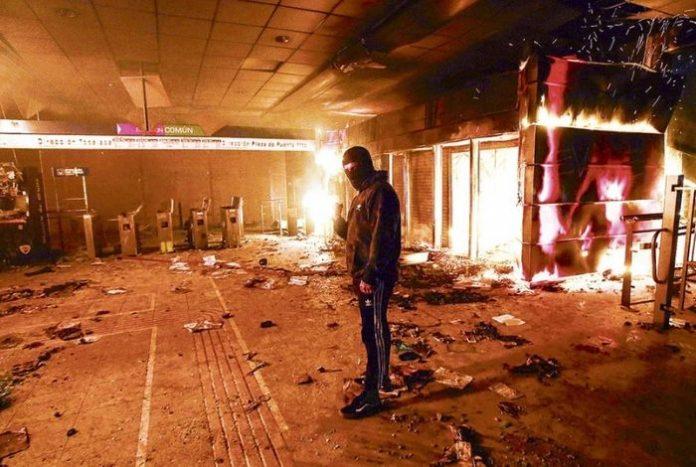
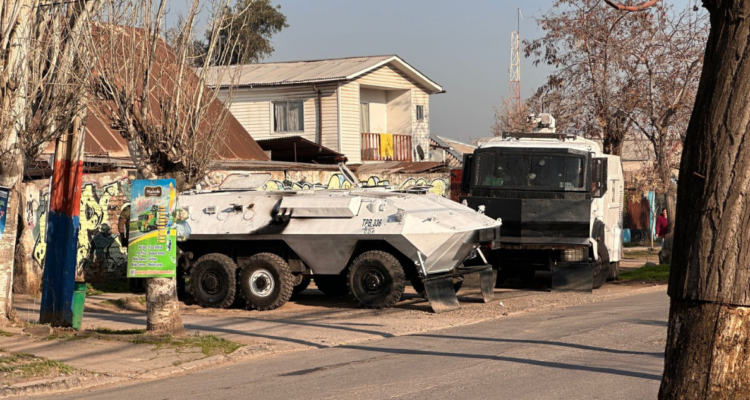
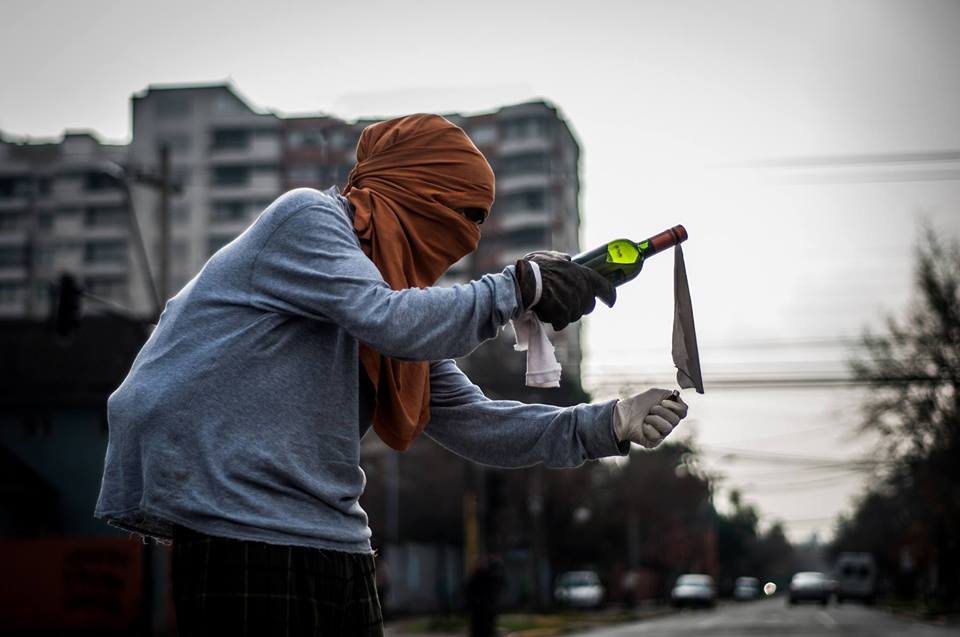
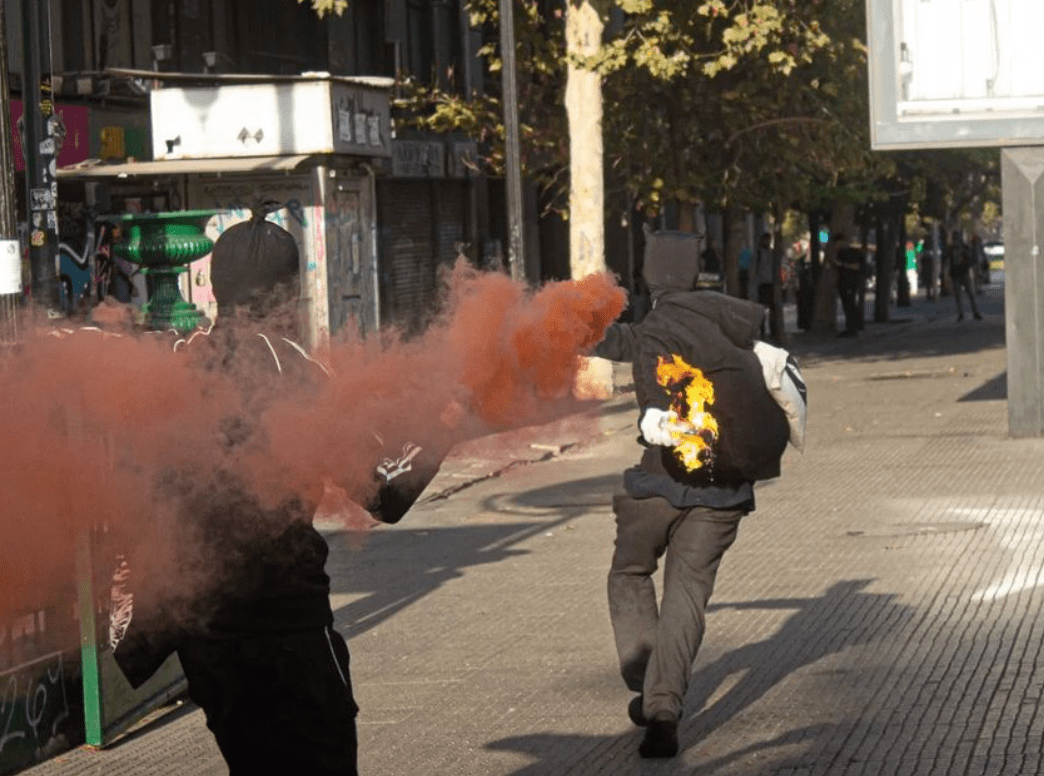
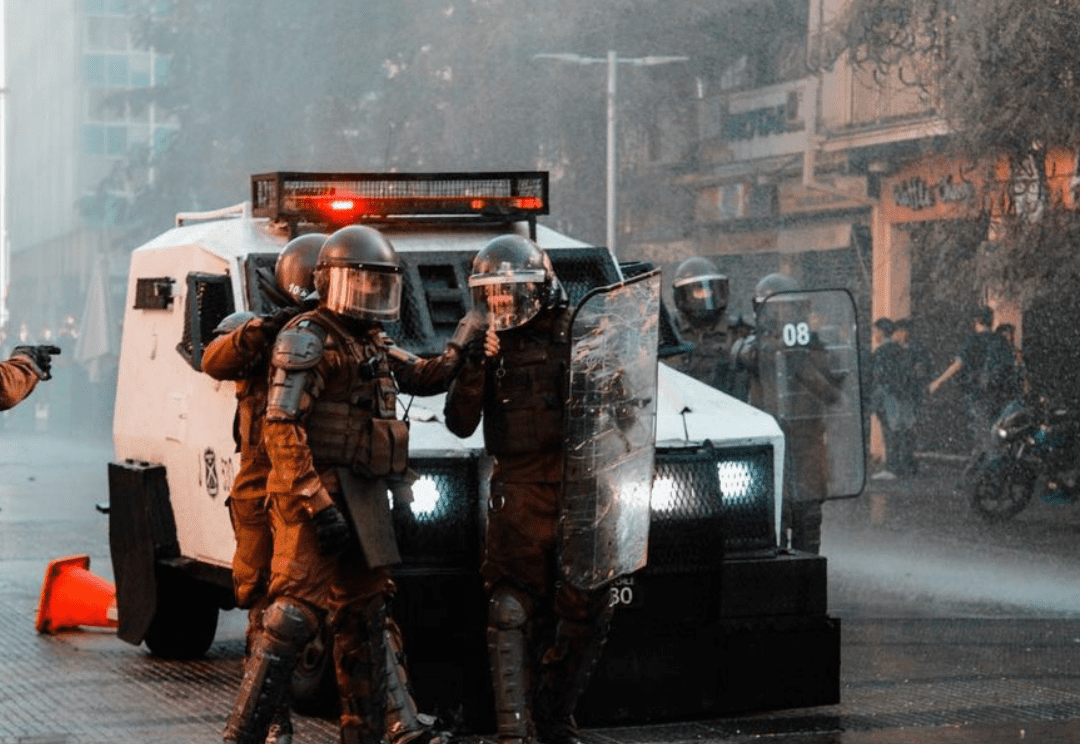
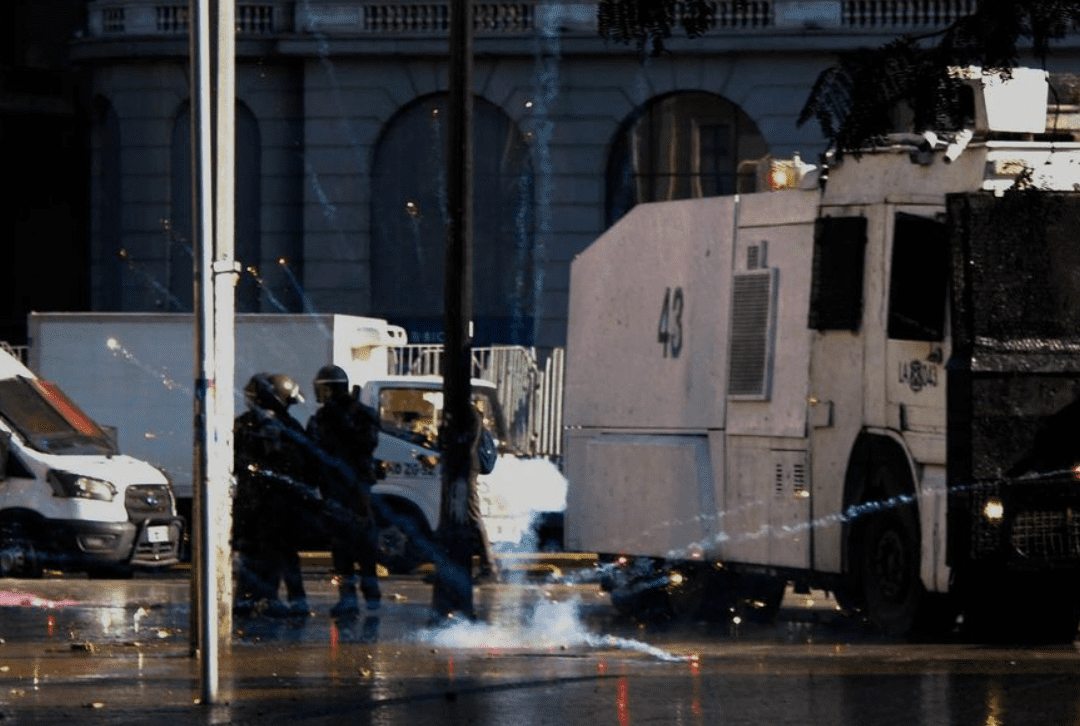
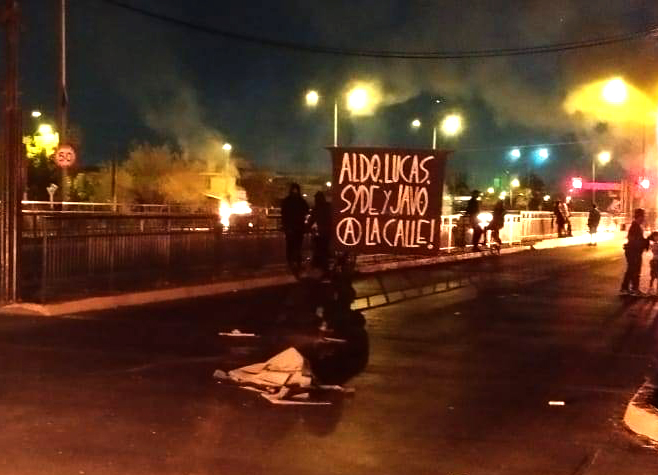
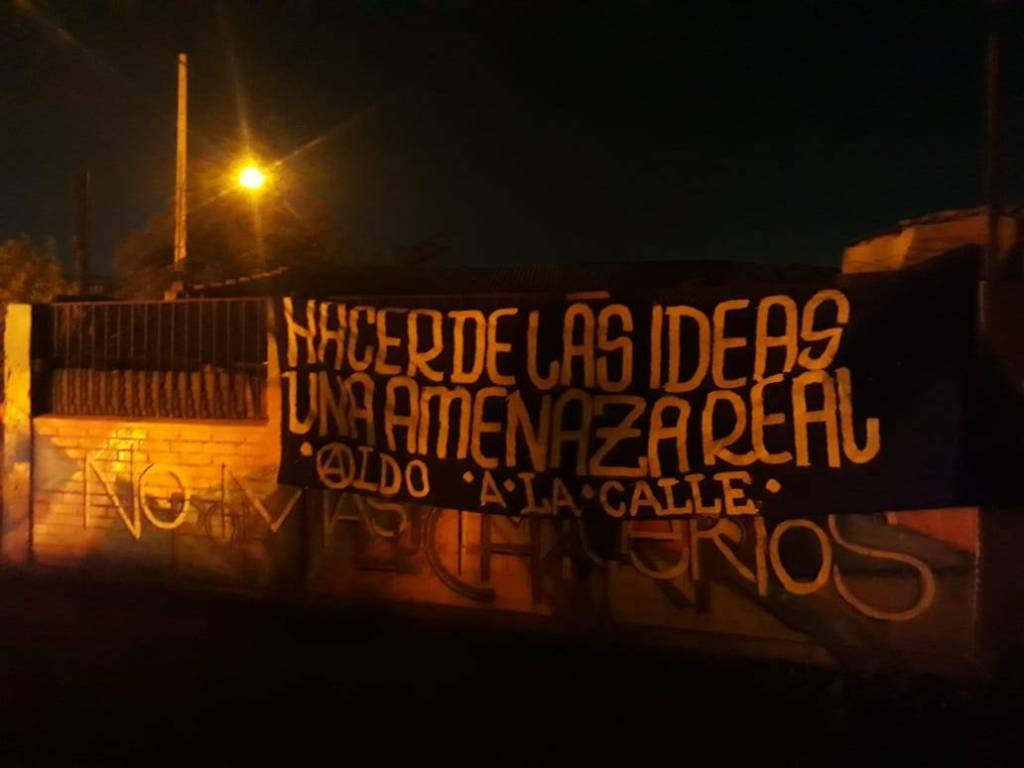
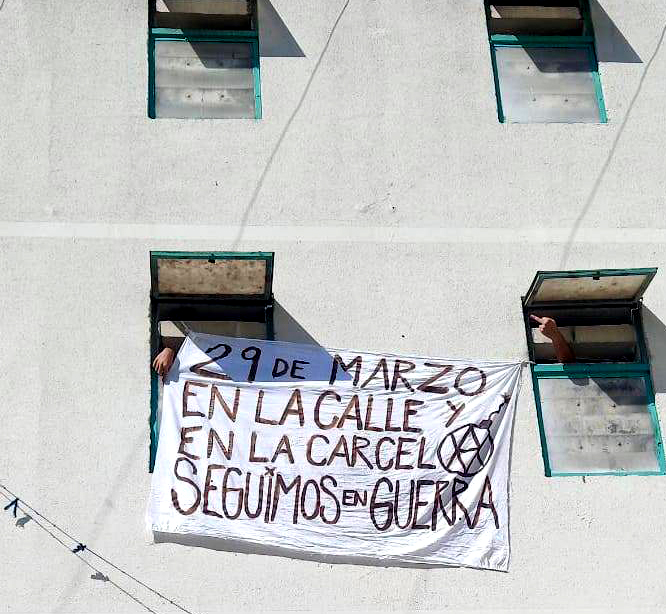
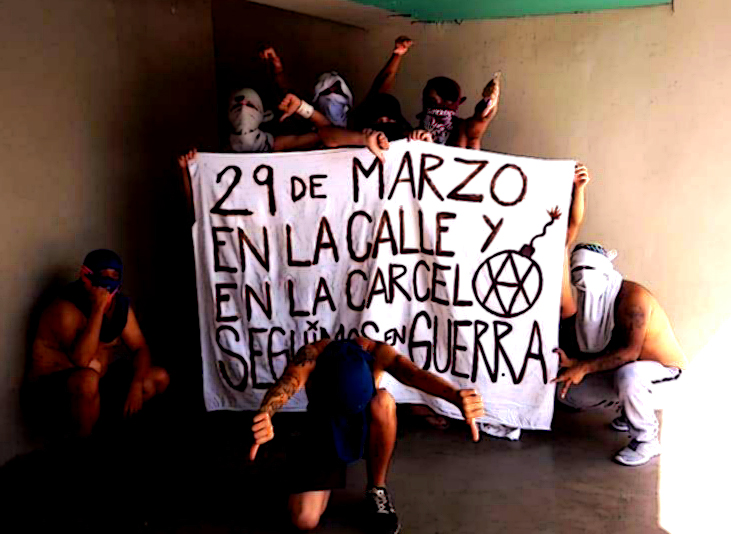
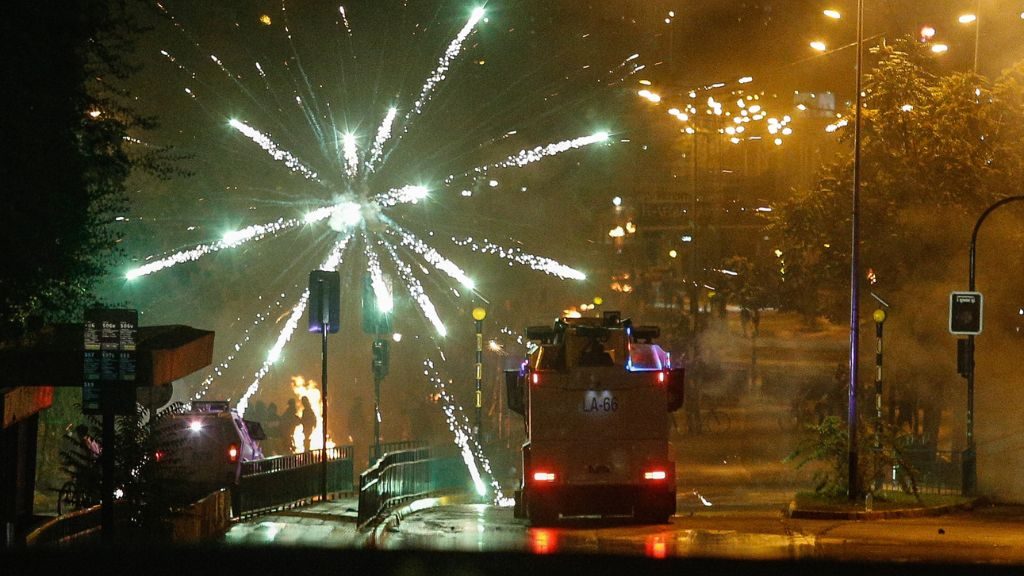
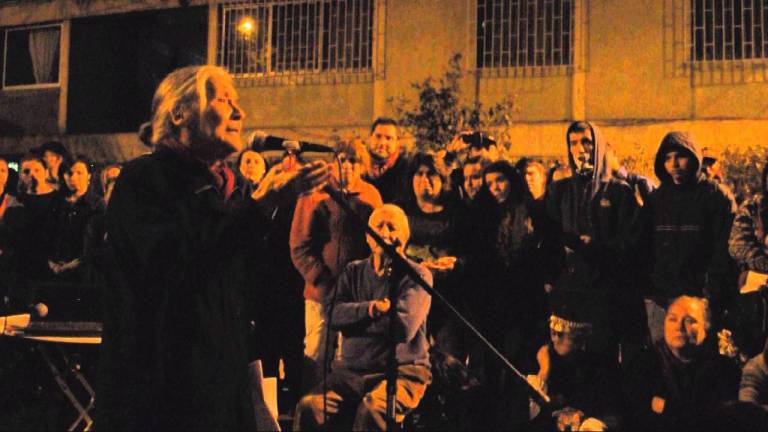
As every March 29, with greater or lesser intensity, a new Day of the Young Combatant is commemorated in different parts of the territory dominated by the Chilean state. This year the date fell on Saturday, causing that on Thursday 27 and Friday 28 high school students from Liceo de Aplicación, Liceo Manuel Barros Borgoño, INBA, Liceo 1, Instituto Nacional and Liceo Eduardo de la Barra (Valparaíso), university students at the Juan Gómez Millas campus, Universidad de la Frontera (Temuco) and Universidad de Playa Ancha (Valparaíso), and comrades in general, were rioting and confrontations with the police in high schools, universities and in the center of Santiago, also different gestures of agitation accompanied all these days.
On the night of Saturday 29th the streets of Cerro Navia, Estación Central, Quinta Normal, San Bernardo, Huechuraba, Peñalolén, among others, lit up. With Molotovs, stones and homemade or industrial weapons, comrades confronted the police in a new commemoration of the Day of the Young Combatant with combative memory for Eduardo and Rafael Vergara Toledo, Luisa Toledo, Mauricio Maigret, Claudia López, Mauricio Morales, Sebastián Oversluij, Luciano Pitronello, Belén Navarrete, among so many other dead comrades who still remain present through anarchic action absolutely far from any iconic, symbolic role or elements of admiration.
Finally, the day left a total of 42 detainees who went to detention control and were released in the course of the following day.
“A spoil towards the lazy louse It is not a simple whim I reflect myself in your eyes To demonstrate my old commitment Hip-hop I wet the towel that cleans The red fist I wave in battle My people are no longer silent awake with their anger The rich with their gold filling themselves with praise The poor with their flowers filling themselves with love We will be the actors of revolutions”
Jhonny Cariqueo Yañez
Seventeen years ago, in the framework of the Young Combatant’s Day in 2008, one of the most violent days of political street violence took place. Specifically, in the commune of Pudahuel, during the commemoration of the previous September 11, corporal Vera had been killed by a bullet in the head, while on March 26, 2008 a powerful explosive device was detonated in a bank of the commune, creating a subversive atmosphere and a spirit of revenge on the part of the police.
Jhonny Cariqueo Yáñez, 23 years old, a young rapper and anarchist who participated in different hiphop and neighborhood collectives, was arrested on March 29, 2008 at the intersection of La Estrella and San Francisco in the commune of Pudahuel, after a commemorative activity for the Day of the Young Combatant. He was taken to the 26th Police Station where he was brutally beaten, during the detention Jhonny began to feel strong pains in his arm and chest and was taken to an emergency center where it was suggested that he undergo tests, however, the miserable police refused to accept the check-ups. On the morning of March 30, he is taken to the 1st Police Station in Santiago, where he is released at 4:00 p.m.
The following day, March 31. Jhonny lies down on his bed and begins to show symptoms of cardiac arrest and is assisted by his family; however, in a few minutes comrade Jhonny Cariqueo dies.
The anarchic memory has been able to maintain the memory of the comrade present in the street, through incendiary action, activities, documentaries, murals, spaces, explosive actions and projects with his name, demonstrating that no death of our comrades is a sentence to oblivion.
Jhonny Cariqueo Presente
Nothing is over, everything continues.
Documentary “Jhonny Cariqueo – The Permanent Revolt” (2010)[in Spanish]
Documentary “Jhonny Cariqueo – Memory and Resistance” (2009)[in Spanish]
Publication “Ícaro, a unique publication on the events of March 29th in Pudahuel” (2009). [in Spanish]
Interview between the band La Lira Libertaria in Chile and JURNAL ANARKI in Indonesia.
1. What motivates you in creating this band? The song “Armate” feels like a homage to the memory of insurrectionary Mauricio Morales, how do you elaborate your music and band with anarchist revolt?
The band was formed to show political solidarity and fill the spaces that we frequented around 2009 and a little before: squat houses and social centers mainly. At first the Lira was a paper piece of popular poetry that we printed that year and that rescues the tradition of the popular poets of the late 19th century and early 20th century, but with anarchist content. The formation as a musical band began later around 2010 in the context of the “Bombs Case” and sought to contribute to the spaces that were hit. The song Ármate is undoubtedly a tribute to the comrade Mauricio Morales Duarte who fell in action on May 22, 2009. The lyrics are an adaptation of one of his poems, and the girl who sings it with us was his partner, which is little known. We wrote it for the second commemoration of his death, and we presented it at the now defunct “Cueto con Andes” social center, where Punky Mauri himself visited and contributed to. Some time later, comrade Luisa Toledo would make her words even more well-known: beautifully violent. Sometimes people confuse this and think that they are words from our dear grandmother Luisa, but she took them because it was her favorite song by the band. That way, the songs and its stories are directly related to our recent political processes, and to the revolt and resistance against the neoliberal model in Chile.
2. From our informal discussion in the past you hinted that most of you come from the specific tendency of combative anarchy, can you tell us more about this?
Yes, we all met at the time we were studying, around 2006 onwards, and we were part of the riots and street-based struggles, like so many young people in Santiago. That is why we lived through the processes of the student rebellions of those years and the protests for the release of political prisoners, environmental projects, the denunciation of capitalist democracy and the anarchist movement.
The insurrectional anarchist movement was constantly attacking the system in that decade and even later, when the band was already formed. That’s what our songs are about, that’s why in them there are stories of attack, escape, prison and joyful rebellion too. The band grew up with this marginal discourse, and with the October 2019 revolt it achieved greater notoriety, since it had been talking about the contradictions of the capitalist model for a long time.
3. People from non-latin speaking countries are amazed by the growing anarchist tension in Chile, especially the diverse anarchic movement, the regeneration of the youth, and the especially heavy repression that the anarchists faced amidst all of this yet still retain their combative and insurrectionary action – what’s really making all of this possible?
As I see it, the commitment to the struggle is explained since it is part of generations and generations of combatants, since the times of dictatorship (1973-1990) and even before. It is linked to our families, to our disappeared detainees, and to the indigenous culture itself, which tells us that the Mapuche tirelessly resisted the Spanish.
In that political environment we grow. This is even stronger considering that democracy stained its hands with the blood of the fighters against the dictatorship, and imprisoned those who continued fighting against capitalism. Figures like Claudia López, murdered in the commemoration of the coup d’état in 1998, and so many other Chilean and Mapuche young people, this fueled since childhood our desire to fight, our desire for freedom and our love for our compañeros.
Perhaps that is the most important component, and what explains everything: the love of the struggle and the memory of the comrades who fell fighting and those who still fight to this day. That is why anarchists, despite being beaten time and time again, maintain their action, because it is also a way of carrying within us our beloved compañeros who were taken from us.Continue reading “Chile: Interview with the band La Lira Libertaria”→
Claudia López Benaiges was murdered on September 11, 1998, after being shot in the back by cops on a barricade in the La Pincoya neighborhood of Santiago, in the context of mobilizations commemorating the Coup d’État in Chile. López was an active feminist, anarchist militant and poet, in addition to studying Spanish pedagogy and dance.
Poem by Claudia López
The celestial litanies that fill the nights of the worlds, they incessantly question the anxious daughters of uncertainty. They explode dazzlingly like bodies that stretch through the walls, that burst forth through the whispers of light, that confront the airy and torrid abysses. The dark bodies of insurrectionary anxiety, of the subversive desire of the lunar chains, that poured onto the earth, they seek their names, those they do not yet have, that lie buried in the roots of the jungles.
As Informativo Anarquista, we aim to provide a brief update on recent events unfolding since the early hours of July 6, prior to the commemoration of the late compañera Luisa Toledo.
– Police conducted a series of raids on Radio Villa Francia, Comedor Popular Luisa Toledo, and multiple residences across various communes including Estación Central, Macul, Santiago Centro, La Granja, Cerrillos, and Maipú.
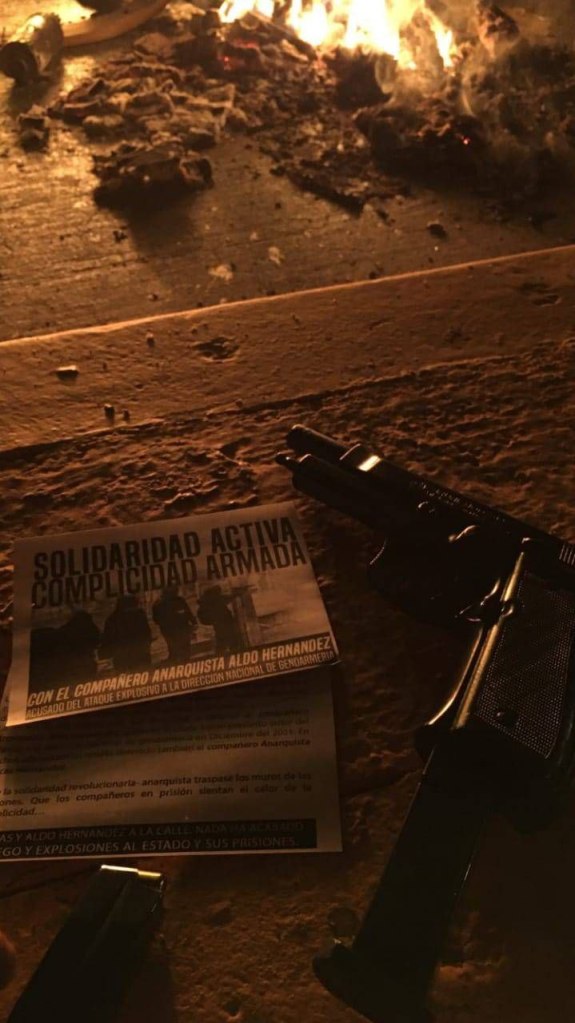
– During the operations, law enforcement uncovered artisanal and industrial weapons such as pistols, revolvers, a rifle, and a submachine gun alongside ammunition at one location.
– An industrial explosive intended for mining was discovered at another residence.
– Moreover, a homemade grenade containing black powder and a tear gas bomb were seized during a separate raid.
Subsequent to these events, on the afternoon of July 6, several individuals were formally charged. As of July 8, one person remains hospitalized. Of the detained individuals, one has been placed in preventive detention, two are under nighttime house arrest, nine have been deemed unlawfully detained, and one is awaiting an appeal.
Today, July 8, the preventive detention of a comrade and the house arrest of two others have been confirmed. The nine comrades previously held unlawfully are still awaiting a decision until July 9. Meanwhile, the comrade awaiting appeal has been placed under house arrest upon payment of bail. However, the Southern Prosecutor’s Office has lodged an appeal, which the Court of Appeals is set to deliberate on Wednesday, July 9. Furthermore, the hospitalized individual has been formally charged and placed in preventive detention.
These raids follow an investigation stemming from the incursion involving an explosive device placed in a Nissan car company in December 2023 and the deployment of a “sticky bomb” on a police vehicle during the March 29 skirmishes, coinciding with Día del Joven Combatiente (Day of the Combatant Youth).
Solidarity with those currently detained or imprisoned.
Greetings to all those present, I would like to begin by thanking you for your attendance to the activity, and also to thank all those who made and make this event possible, once again demonstrating their faithful support and loyal commitment.
Support networks and gestures of solidarity are necessary and indispensable in the frontal attack against all that is established and authority.
My arrest occurs in the context of a new commemoration of the day of the young combatant, a new 29th where the night becomes an accomplice of the insurgent youth that armed with courage they confront the enemy face to face, seeking to keep intact the rebellious and combative memory through anonymous action, and it is precisely in this action where the statements, theories and convictions make sense, that is why I believe it is essential to keep alive this black memory and make it a permanent exercise.
It is in this context that every bullet, bomb or attack carries with it the hatred and rage accumulated over centuries of slavery and inequality, which cry out for vengeance.
I knew very well that anyone who rebels against the tyrant, who tries to alter the established order and who decides to take the path of direct confrontation is always very close to imprisonment or death. That is why when I was kidnapped by the sikarios of power, I immediately accepted my destiny and decided to go ahead without hesitation or regrets, in fact the decision was already taken since I assumed an anarchic and irreducible position. When I threw myself into freedom.
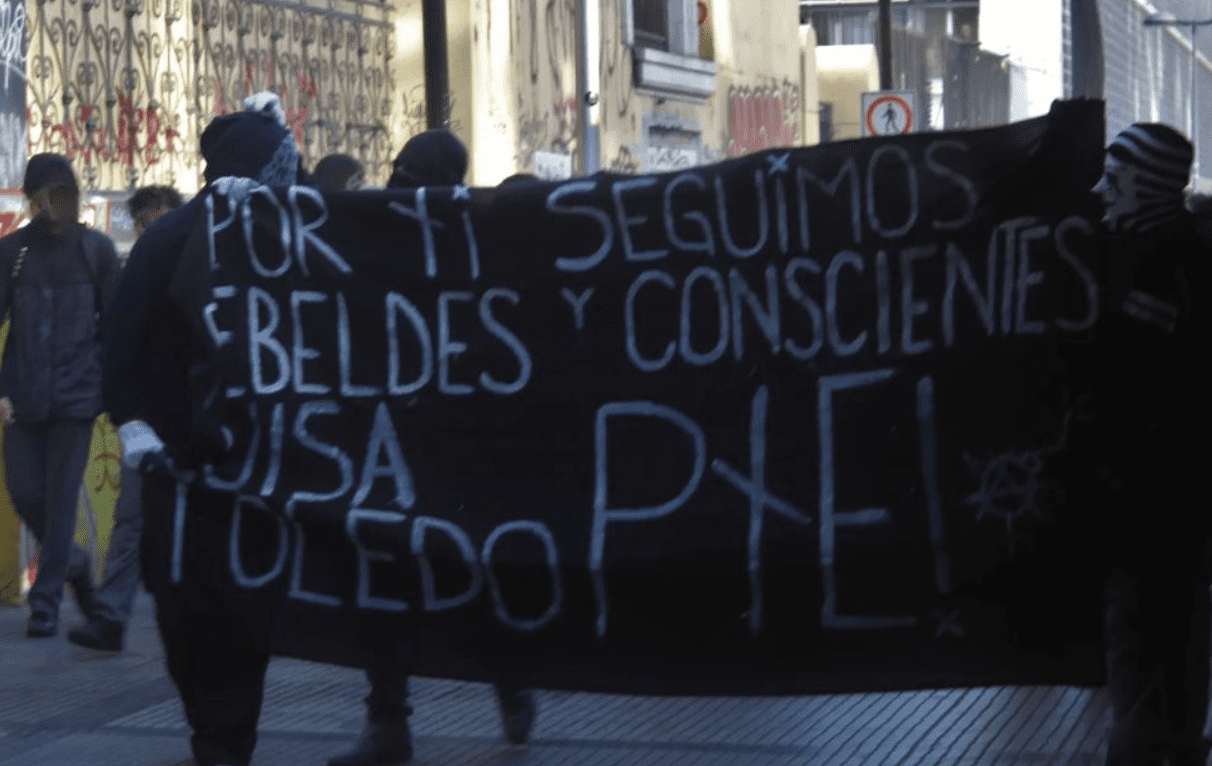
On Tuesday, March 28, around 30 hooded students unfurled a banner and set up barricades and confrontations with Molotov cocktails against the presence of carabineros (COP), on the eve of the “day of the young combatant”. Three of them were arrested, two were taken into custody by the Public Prosecutor’s Office and finally released without precautionary measures.
Banners read: “Because of you we remain rebellious and conscious. Luisa Toledo present” and “Free Gunei”.
Today again we hope you can feel the warmth of our words. We thank you for inviting us to share our feelings and reflections. Autumn has arrived and with it comes that mixture of nostalgia, rage, regret… among other emotions that well up in every young combatant and that day by day leads us to embrace our ideas and act coherently with them. If we are gathered here today, we agree that we must continue to nurture this historical and combative memory that we share among different warriors antagonistic to the system. Generations of fighters have made the streets and towns barricades of confrontation against the police, remembering Eduardo, Rafael, Paulina, Norma, Pablo, Araceli… And all those young fighters who committed their lives to fight against the dictatorship. More than 30 years have passed since their bodies perished but not their convictions, their ideas, their love for freedom. All these young people seeded rebellion and today we continue to learn from their successes and mistakes, every autumn we meet again, to observe ourselves, to contrast our realities, to analyze the disastrous context in which we live and although our present is very bitter we continue to resist. From different trenches our spirit continues committed to this struggle, for decades this flame has not been extinguished and every time a young rebel throws himself with his actions into the infinite abyss of the anarchic, subversive, nihil or insurrectional struggle it means that we correspond to those warriors who left us.
We cannot fail to remember through these words our everlasting compañera Luisa. Within these walls we always strengthen our fortitude with numerous memories and/or scenarios that our comrades live or have faced. Luisa is that weychafe woman who inspired and incited many young rebels to continue fighting, she moved us with her words as well as many times she was there with us in the midst of burning tires. In here our thoughts live a chaotic back and forth, but what has made us unbreakable has been the seed that people like Luisa have left us. Only in us is the way to not undermine, we decay, but we must continue standing. The seeds that Luisa left us are an inexhaustible source, as well as those left to us by her family who have never given up their struggle. Today we are transforming the prison into our barricade. The confrontation here is constant, not only with the prisoners, because sometimes the worst policemen are those who wear the cap in their hearts. Luisa urged us to learn from each of our experiences, to not leave or abandon each other, to leave superficial differences aside, because a huge machine is trying to crush us. In prison everything that we detest and repudiate is gathered and intertwined. In spite of everything we continue to use every tool at our disposal, attentive to every breaking point to slip away and break the isolation and silence. Every morning we remind ourselves of who we are, we will not let confinement rot our roots and rob us of our essence. We remember all our fallen comrades with love and rage. Permanently their spirit emerges wildly against every wretched institution, against every wretched authoritarian. None of you is forgotten, neither those who left us nor those who today are held captive in prisons around the globe. We embrace each one of you, as well as each family who lost their child in combat, each one of them lives in our restless minds and hands. Neither jail nor death will stop the permanent confrontation. In memory of all the fallen and their families.
Luisa Toledo’s persistence in the beautiful exercise of remembrance was probably one of the triggering factors that made us know and commemorate today the murder of Rafael and Eduardo Vergara Toledo by the police and at the same time that this day became the moment in which we evoke all the fallen young combatants.
It is difficult to separate the small and strong figure of Luisa from March 29th, I see in her resilience forged in the immense pain for the loss of her children, as the substrate that has nourished the path of the generations of young fighters of yesterday, today and tomorrow, who continue and will continue to confront domination in its different forms.
Comrades like the mother of the Vergara Toledo brothers leave us multiple teachings, which can be felt in practice, in their example. An example that shows us that no matter how many blows you receive, you can always get up and that scars heal better among comrades and that they are worthy of pride.
With our pains and our dead we continue in the persistent combative memory.
No one is forgotten
Vergara Toledo Brothers
Luisa Toledo Pte!