
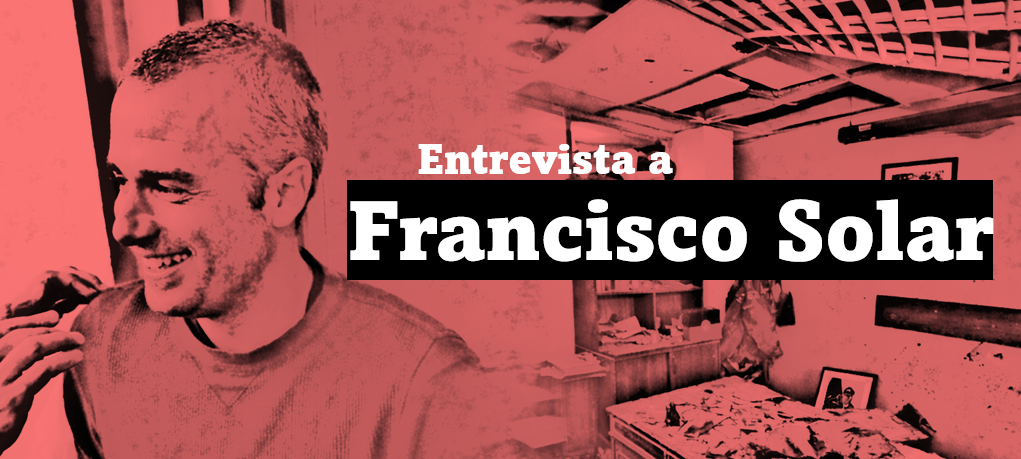
In this fourth interview, we engaged in a dialogue with our anarchist comrade Francisco Solar, acting as a bridge to spread his words and delve deeper into various topics and contexts of interest. His perspective and participation in grassroots projects are vitally important, as they break with the inaction that prison seeks to impose. Throughout this conversation, we address not only aspects related to his personal experience in prison, but also broader political reflections on the ongoing struggles and challenges facing anarchist circles.
1.- How are you doing now? Could you tell us a little about your experience in La Gonzalina prison? What differences do you see between the prison systems in Europe and Chile?
Almost a year ago, I left the maximum security wing where I had spent almost five years and moved to a high security wing with a normal regime, which basically means eight hours of yard time and the possibility of conjugal visits.
Based on the above, my situation is clearly more favorable, as I am not subject to the restrictions of a maximum security regime. However, sharing my daily life with fellow anarchists and subversives who were already in this unit makes prison life much more bearable. Escaping at times from the harmful authoritarian dynamics that exist among prisoners and trying to practice relationships that are contrary to these is a constant challenge and struggle that involves constant questioning. It is clear that we are not an island within this unit; we deal with contradictions and obviously sometimes reproduce behaviors that we say we reject. However, our dynamics, those of the anarchist and subversive prisoners, are different from those of the rest of the prisoners. Our relationships are not based on the stark authoritarianism of the other prisoners, and that is evident.
My daily routine consists of playing sports in the yard, talking and walking with my compañeros, and reading. As I have pointed out in other writings, it is important to have a daily routine, which, at least in my case, allows me to maintain a certain mental clarity and avoid falling into prison despair.
The differences between the Chilean prison system and that of Spain lie mainly in control. The Spanish prison system has managed to discipline life inside prisons through constant and prolonged adjustments to its control strategies. Through the FIES (Ficheros de Internos de Especial Seguimiento, Special Investigation and Security Unit) and dispersion, the Prison Service has pacified Spanish prisons, even managing to turn prisoners into their own jailers, as can be seen in the increasingly numerous “respect modules.”
Although the Chilean prison system is moving towards exercising control in the “Spanish” (or European) manner, the truth is that it is still a long way from achieving this. The control mechanisms are much more precarious and ineffective, which leads, among other things, to the establishment of certain “rules” imposed by the prisoners themselves within prison life. These rules are based on extreme authoritarianism that produces and reproduces relationships of outright slavery among the prisoners themselves. If solidarity was once present in these dynamics, today such relationships have been virtually relegated to make way for ostentation and the aforementioned authoritarianism that makes prison life a hostile environment. Continue reading “$hile: Interview with anarchist prisoner Francisco Solar”




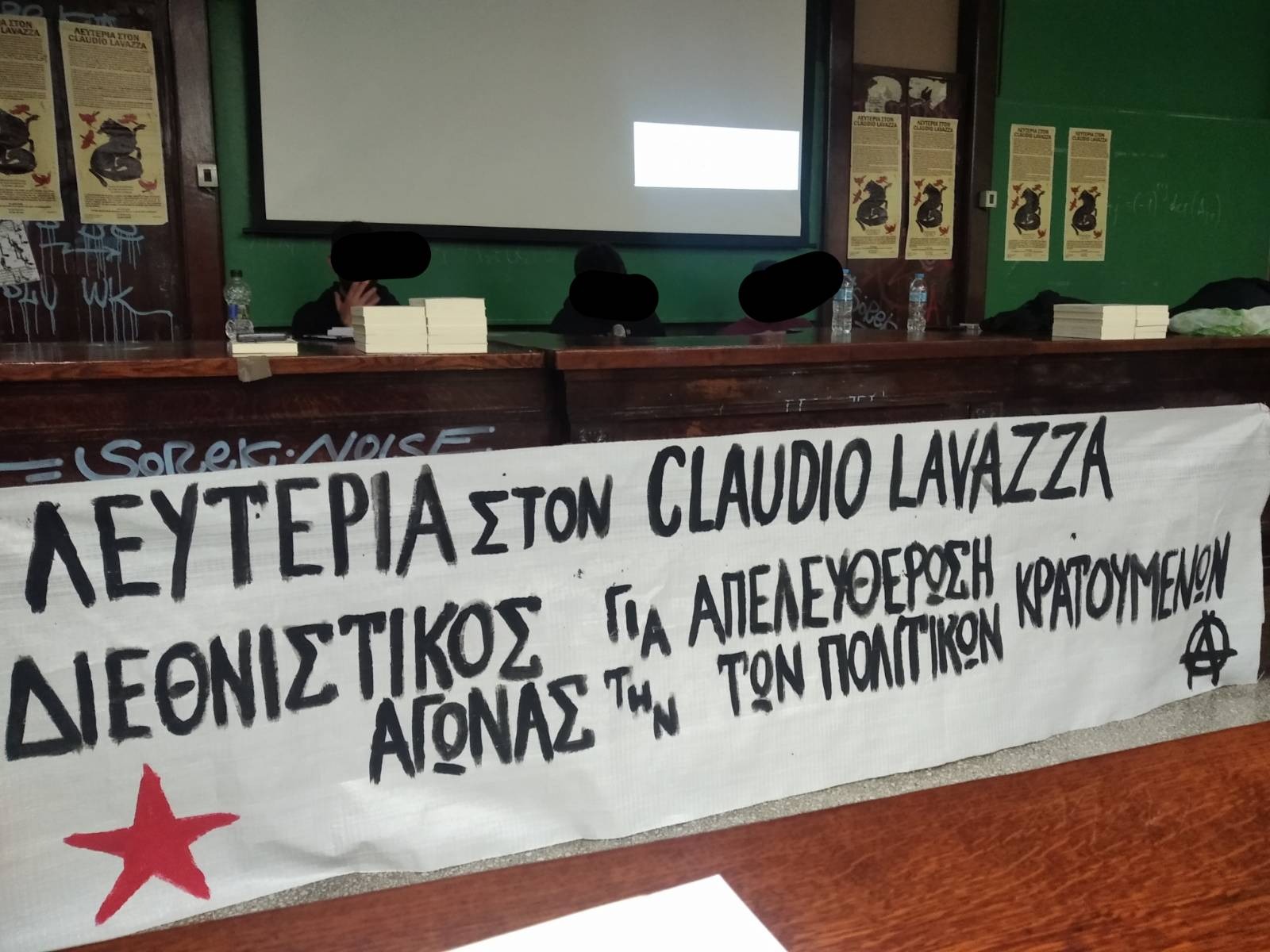
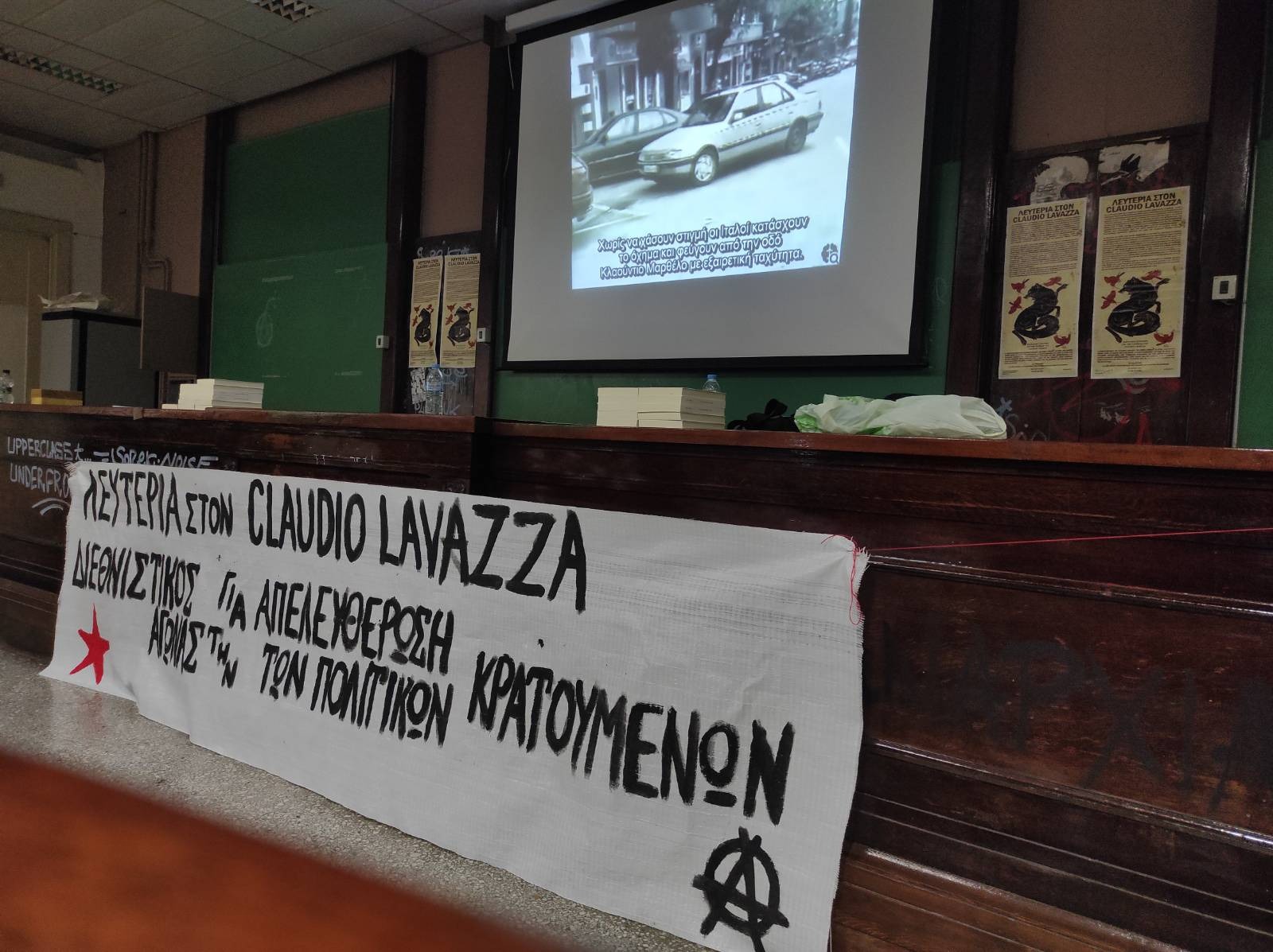
Hunger Strike of Anarchists and Fighting Prisoners in Solidarity with Alfredo Cospito
The 41-bis prison regime is the completion of the prison structure into a masqueraded death sentence. The execution, in this case, does not end in one moment, like with a gunshot, the tightening of the noose, the application of electrical current or the injection of poison into the body, rather it lasts a lifetime in a state of social coma, in a state of non-world. And so, spread through time. Out of this world, the death sentence has evaded history, just like the state pursues oblivion for all the prisoners of the social war who are buried alive in the state of 41-bis. The 41-bis regime has already murdered one fighter, Diana Blefari Melazzi.
The 41-bis regime and the law about “massacre” are the legacy of the european counter-revolution from the time of Piazza Fontana (Strage di piazza Fontana). This civil war never ended. The states, and particularly the Italian one, carry on the counter-revolution so that the flame may never flare up again. All the systems follow, step by step, the examples first introduced as special warfare, e.g. the white cells of West Germany, the F-type prisons in Turkey and the FIES prisons in Spain to the Type-C prisons in Greece or the new high security prison system A.A.; the still active Hitler-inspired law about indefinite extension of one’s sentence on “preventative” grounds, by which comrade Thomas Meyer Falk is being held for another 10 years (25 in total) in Freiburg prison in Germany, to the different methods of extorting declarations of repentance, and from Asinara to Imrali.
Anarchist Alfredo Cospito is fighting for the flame to flare up again. Let’s reassert the fight of the comrade.
It is our duty to defend in deed the battle that Alfredo Cospito is fighting. A struggle for and against time itself. This particular hunger strike does not concern only the comrades in the italian territory, but it is internationalist, and so the star of internationalist solidarity must shine on the side of Alfredo Cospito and all those who are fighting from within a special prison regime. From Greece to every point in the planet – for all those fighting for freedom.
Because defeat is not captivity, but losing one’s faith in the possibility of wining. So, we are collectively going on a hunger strike, according to each one’s capacity, so that we may stand by the side of anarchist revolutionary Alfredo Cospito, but also, against the death regime of 41-bis.
At the same time the struggle against the new prison code in greek prisons is continuing.
Anarchist and Fighting Prisoners
Yiannis Michailedis
(1 day hunger strike)
Dimitris Chatzivasileiadis
(3 day hunger strike)
Thanos Chatziaggelou
(1 day hunger strike)
Iasonas Rodopoulos
(1 day hunger strike)
Kostas Dimalexis
(3 day hunger strike)
Labros Vougiouklakis
(1 day hunger strike)
Panagiotis Vougiouklakis
(1 day hunger strike)
Stathis Nikolouzos
(1 day hunger strike)
Stergios Kalaitzidis
(1 day hunger strike)
Fotis Daskalas
(1 day hunger strike)